Worldbuilding: a swashbuckling campaign

I reviewed The Three Musketeers: D’artagnan recently, but I only realized I hadn’t yet reviewed it because I was deep in the process of creating a T3M inspired setting for an RPG. I knew I wanted the intrigue, the swordplay, the ambition, and the thrill of being small players discovering a much larger political game. So I hunted for and pulled out the themes that felt crucial to T3M’s fun, trying to find ways to create a setting that would evoke those while also incorporating the elements my players contributed.

I’ll lay some of it out for you.

Continue reading

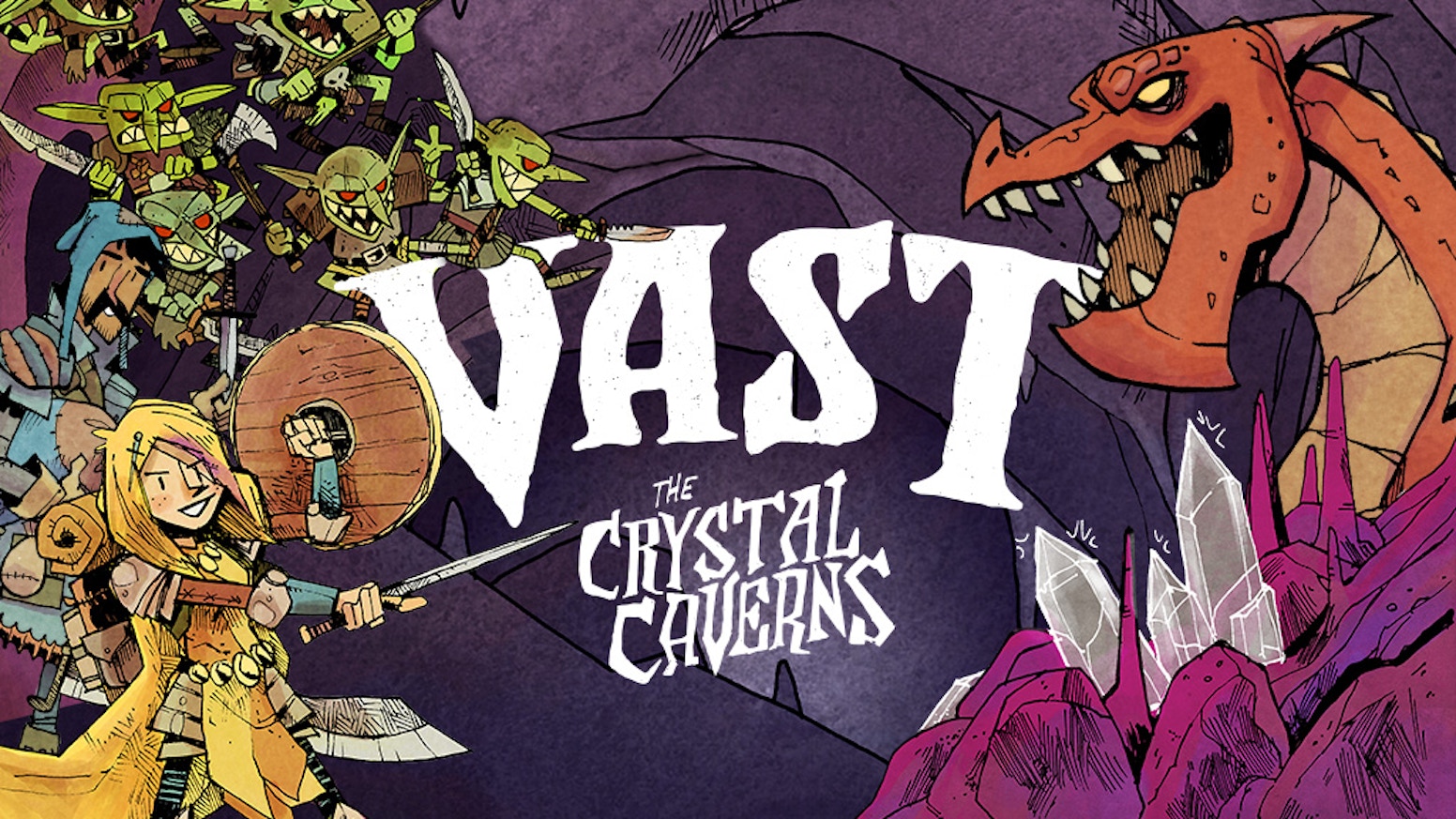
Vast: The Crystal Caverns (boardgame, 2016)

What an incredible premise. What a fun game! If only it were playable without constantly referencing reams of paper on rules, errata, and commentary on the rules and errata.

Vast is admirably ambitious. It’s designed for up to five interlocking, competing, asymmetrical roles that all fit together beautifully to make this boardgame a nail-biting, neck-and-neck race toward victory. With a few important caveats, each player has their own rules reference sheet for their role, encompassing everything they could need to know in order to play the game. And with another few important caveats, everything can flow smoothly as each player chases their own victory conditions, pushing the game onward towards a thrilling conclusion.

Those caveats?

Continue reading

David Drake, 1945-2023

Rest in peace, David Drake. May your memory be a blessing.

I did not know David Drake, but I knew his work. I reviewed a number of his books here. Recently, when a friend was looking for a very particular flavor of genre fiction, I recommended Drake. I said, “He may not write the most poetic or literary story, and you might be able to spot tropes from a long ways off, but damn does he know how to drive plot.”

From what little I know about Drake’s writing habits and his collaborations, I admire him. He apparently knew the arc of each story well enough to write detailed plot outlines (there’s a free example here), and would then hand those off to his collaborator and take second billing. He thus helped other writers get published and break into the market. Eric Flint, if my memory of various author’s notes serves, found those outlines to be extremely helpful with their shared Belisarius series.

David Drake also clearly wrote to release some of the awfulness he’d experienced while serving in Vietnam, especially in his Hammer’s Slammers series. He was of the generation of genre authors, especially military fiction authors, whose lives had been turned sideways by the war. His post here from 2009 states his feelings about the war pretty eloquently.

Relatedly, I appreciate Drake’s military fiction; its sense of grim loneliness and futility, blended with camaraderie and the occasional glimpse of something more admirable, feels like a fitting portrait of war. It fits with what I’ve heard from my veteran friends who’ve been in combat. Unlike other mil-fic I’ve read, Drake’s stories don’t pretend that there’s some inner nobility or heroism inherently brought out by war. Nor does he pretend that wars accomplish much good.

I never dug deeper into David Drake’s political leanings. Given my frustration with other mil-fic authors, perhaps I wanted to protect myself from unwanted knowledge. It’s easier for me to read Drake’s work and appreciate it when I don’t feel immediately repelled by him. We’ll see whether I risk learning more. It won’t happen today.

If you want to read Drake’s books, you can find some of them here in the Baen Free Library. I can’t recommend the Larry Correia or John Ringo titles that appear nearby without wreathing my recommendation in enough caveats to float a lead brick. Stick with David Drake instead.

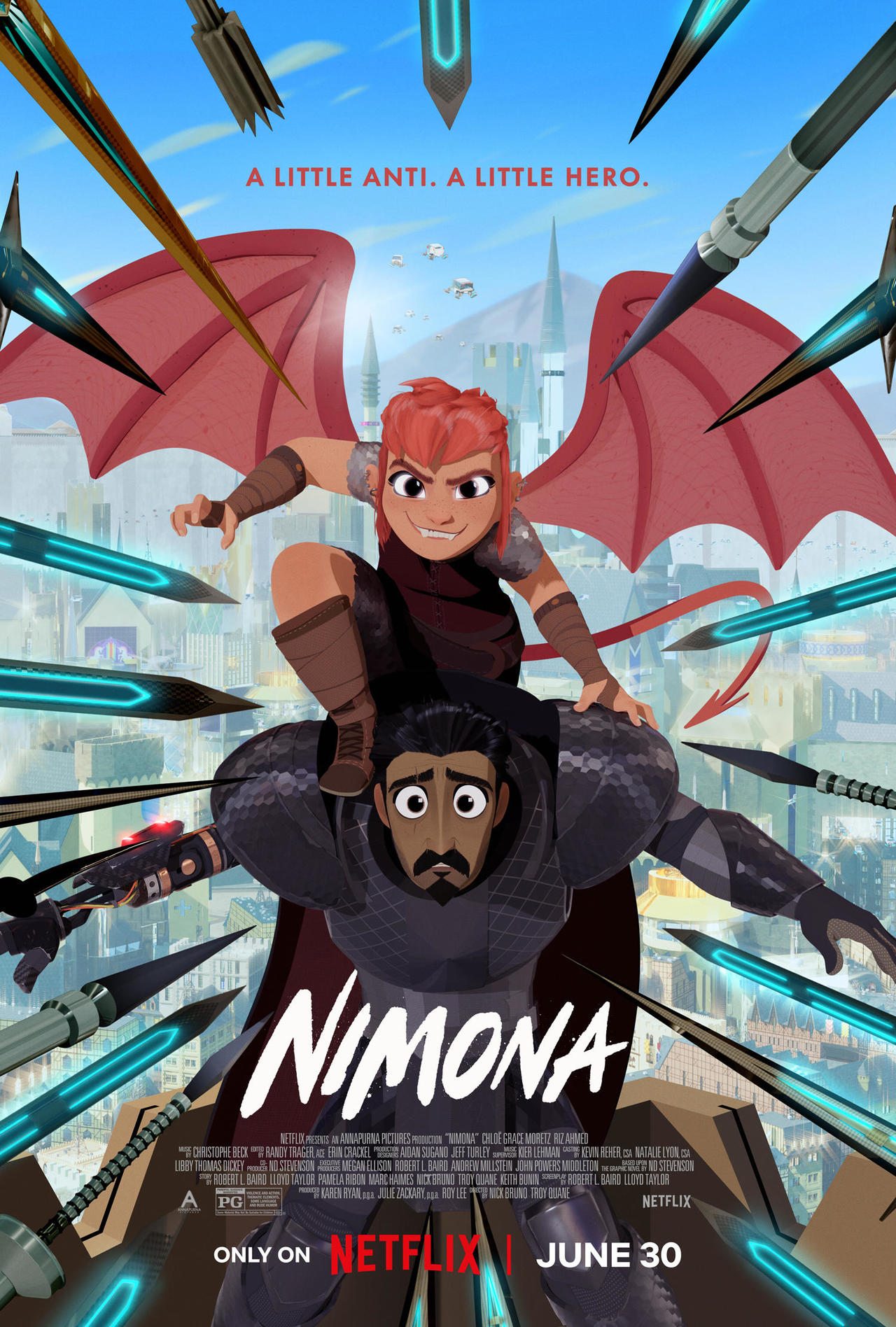
Nimona (Netflix 2023)

I loved the comic by ND Stevenson

I loved this movie too, right up to the end, even though it was clearly its own take on the story. 90% of this movie, maybe 98% of this movie, did more or less everything I wanted. The actors, animators, and writers did a marvelous job. Then, at the very end, the movie really frustrated me.

I can’t meaningfully talk about this movie, and how I feel about it, without spoiling the end. Suffice to say I didn’t expect this totally predictable ending. I wish they had written a different one. I’ll mark the spoilers below.

Continue reading

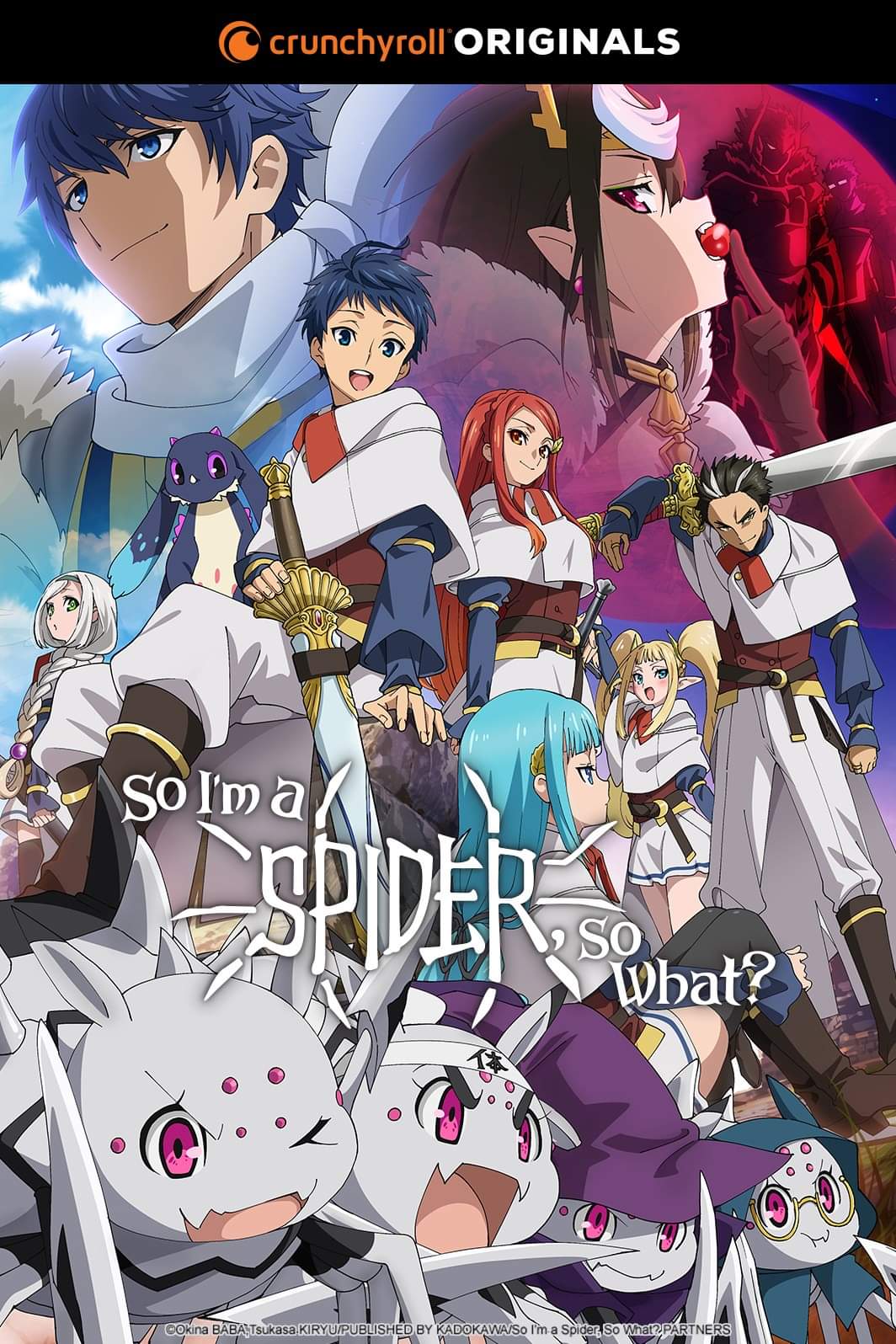
So I’m A Spider, So What? pulls out neat tricks

I just wrote about portal fiction and isekai anime, stories about people from one world (usually ours) transposed into a second world. All the stuff I said about loving this genre is still true. And, having just inhaled So I’m A Spider, So What? (an isekai anime about a schoolgirl reincarnated as a spider in a fantasy world), I’ve got some more thoughts for you about the show.

I inhaled the show, and…

Continue reading

When will I learn? Reading Freya Marske around family

I’m reading the new Freya Marske book, A Power Unbound, to review for GeeklyInc. I made a mistake.

To be clear, I have no regrets about reading this book. I enjoyed the prior two (you can find my thoughts on them here and here), and…

Continue reading

The Black God’s Drums, by P. Djèli Clark (2018)

The Black God’s Drums is a sprint. It’s a sprint full of flavor, a window into another world that feels overflowing and wild and vibrant—a fantastical reimagining of our own world’s history, bringing us to a “might have been” that feels true and honest and exciting, with plenty of our own world’s horror worked in. It’s quick, here and gone again, and a greater pleasure for it.

Thinking about a recent conversation with a fellow book-nerd friend, I have to warn you:

Continue reading

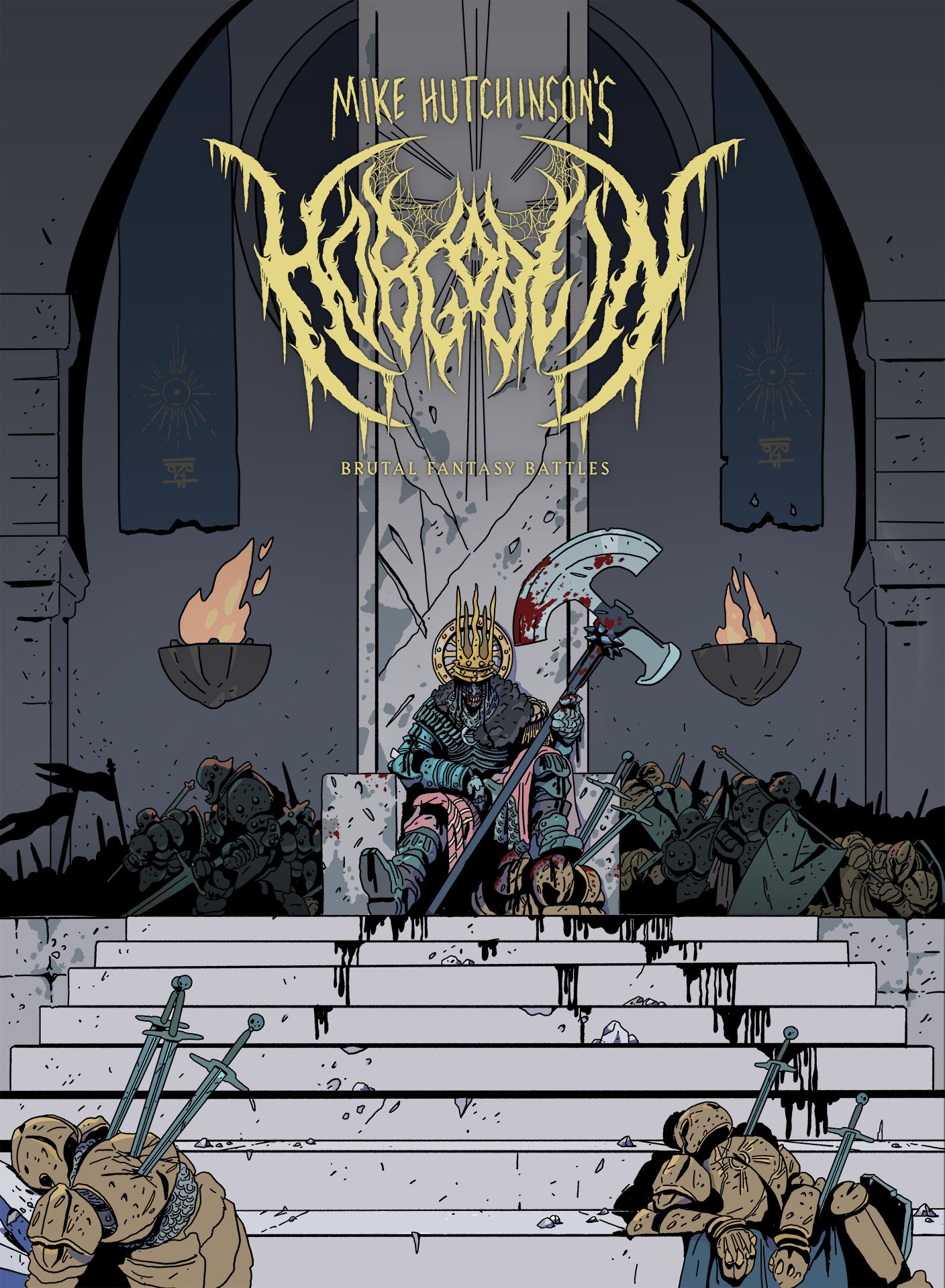
Hobgoblin (from Mike Hutchinson)

Yesterday I played my first match of Hobgoblin. It was a delight, and an epiphany.

I’ve wanted something like this for years. I was in middle school when I got a copy of the core rulebook for Warhammer Fantasy. I read through that book cover to cover, and then I read it again. I bought a faction’s army book (for the Skaven) with all their special rules and abilities, and read through that over and over too. I bought my first box of models. I yearned to play.

Continue reading

The Golden Enclaves, by Naomi Novik

I’ve deeply enjoyed reading Naomi Novik’s Scholomance series. I’ve recommended it to many people. And now, having finished it, I’m going to recommend it to you again.

This is how I started my review for the first book in the series:

“[W]hat if Harry Potter, but the school is *literally* a death trap full of monsters and there aren’t any adults around to ‘help?’” Add some socioeconomic inequality, teen drama, a pinch of prophecy, and an antisocial and justifiably angry teen girl for a narrator, and you’ll have a pretty good idea of what Naomi Novik’s A Deadly Education is like.

The Golden Enclaves delivers a solid close to that story. It is the third and final book in the series and—while the book ends with room available for more sequels if Novik changes her mind—the story is definitely concluded here in ways that will satisfy most readers. “Most,” because I know some folks will just want the story to keep going with these characters forever, which I believe is all according to plan for Novik (or at least a feature rather than a bug).

This book does what I wanted it to do. It resolves many hanging plot threads, it answers a series of questions I’d had since the first book, and—maybe most importantly—it dreams up a future in which people are able to make the world a better place, by hook or by crook. It has hope.

*That’s* the bit I’m most impressed by. That hope.

This book is full of a lot of struggle. It’s full of lots of traumatized kids. People die, or are hurt in awful ways.

But it’s hopeful. And it’s not hopeful in the Harry Potter “let’s go back to the world as it was, and pretend that without resolving any of the issues we’ve discovered everything will be fine” kind of way. It’s hopeful in the “let’s do our damndest to make the world a better place, without destroying it in the meantime” kind of way. The whole series has been hopeful like that, but this book really sticks the landing. And I love it for that.

So many YA and YA-adjacent stories are dystopian, and the resolutions to their dystopian problems rarely feel hopeful or real to me. Either the dystopian world remains awful, or the attempted fix doesn’t work, or the fix works but reeks of deus ex machina and only works because the author says it does.

Novik set up a whole bevy of problems in the first two books and made it clear that the world was an unfair and often awful place. She offered (difficult, dangerous) ways for her characters to work around those problems.And this book, like its series as a whole, manages to follow that thread through to the end without either disappointing me with a total lack of plausibility or falling into hopelessness.

Annnnnnd I hadn’t realized until now that I never reviewed The Last Graduate, the second book in this trilogy. That was an oversight. I’m not going to rectify it before I finish this post though, so here goes.

A warning: if you didn’t like El’s voice as the narrator in the first two books, this series might not be for you. Novik was extremely successful with her creation of her narrator’s voice. She does a good job of keeping everything inside El’s head, and of maintaining El’s voice as a consistent thing. Novik also manages to weave her story and world through El’s unreliability as a narrator without leaving us, her readers, totally bereft of clues that El might not be the most objective and reliable observer. I really admire that. It’s one of the things I love about these books. If that bothers you… you’re out of luck. Try a different series.

A separate warning: one of my friends mentioned El knowing or narrating a few things in this book that seemed outside of her scope of knowledge. I didn’t notice those as I was reading—I was quite caught up in the story and may have missed them. You might stub your toe on them though.

I’m not planning to dive deep into the plot of this book, but I will say that reading more will probably spoil you for the previous books with implications if nothing else. I’ll also casually drop in a few spoilers after this paragraph without further warning. If you care about that, I suggest giving the first book a go. I loved all three, I recommend them, and Novik has done a good job of starting this series as she meant to continue it. The series isn’t bereft of twists, but it’s very thematically consistent—if you like the first book you’ll probably like the rest, and vice versa.

The Golden Enclaves picks up precisely where The Last Graduate leaves off. Very precisely. And the rest of the story doesn’t honestly take all that much time as the setting reckons it. There’s a little slow period near the beginning as El tries to recover from her time in the Scholomance (more or less a machine for traumatizing children until they’ve survived hell). But after that, things move a bit faster. And they snowball wildly out of control, as El finds out what’s been going on outside the Scholomance while she and all the other kids were locked in hell.

Despite this—or actually because of it—there’s still plenty of time for Novik to ladle in several more hefty servings of revolution and commentary on inequality, until they become a driving factor of the story. That’s perfect, because it’s part of what I’m here for. She also adds more queerness, as she did in The Last Graduate, but where it felt unforced in The Last Graduate here it feels more like a surprise.

Don’t get me wrong, I’m still here for it. I’m glad that Novik added more queerness, I’m glad to see it in this story. And next time I would love to see her do more of that earlier in a series. Having El find out that she’s surprise-bi in book three, however, felt a bit like a curveball given how carefully Novik sets up almost every other story element, like Novik improvised that element where she’d planned all the rest. Or maybe I was too oblivious, because one of my friends was shipping El and Chloe really hard at the end of book one.

Anyways. My words and thoughts are wandering.

If you want to read about wizard revolutions, or about magically obstinate people warping the world around them into a less destructive and more just place, this is for you.

I love this book. I love this series. I recommend them both. I hope that you enjoy them too.

p.s. my partner pointed out that I gushed more about this book in person than I did here, and I’ve made a couple edits following that. Don’t hold my gray brain weather’s bland tone against this series, I really did delight in these books, and in sharing them by reading them aloud to my partner.

The Black Tides of Heaven, by Neon Yang

The author’s name has changed since initial publication, hence the different name on some hard copies and publicity images

The Black Tides of Heaven, by Neon Yang, left me feeling a little narratively unmoored.

I suspect that the biggest cause for that was my own fault: I put the book down about halfway through, and then took over a month to return to it and finish it. But that means that I’m writing this from an odd place. I’m not sure how much my perspective has been shaped by that prolonged delay, and I can only recommend that you take my review with a grain of salt or three. The book certainly seems to have worked better for other people than it did for me.

Part of my sense of being narratively adrift grew from the way in which the book is divided into sections, with each section separated from the last by a big temporal gap. Each section felt like an extended short story about that time period in our POV character’s life. But chaining those extended short stories together into one novel didn’t feel like it created the narrative cohesion I wanted.

In some ways, this is the opposite of the cool technique that Martha Wells used for her first four Murderbot novellas. Where Wells wrote a series of four stories that each gave a snapshot of emotional development and then kept them in separate novellas to let them stand on their own and build on each other, Yang has written those separate stories and put them all in one book. It didn’t work as well for me.

Writing is all about adding just enough to let your audience fill in the rest, without adding so much that they get tired of it. I think Yang went just a little too light for me. I could sketch out the narrative arc and tell you what the points of growth and resolution were, but it didn’t feel like there was quite as much connective tissue between the narrative dots as I would have liked.

Maybe, if I’d expected the book to consist of those discrete mini-stories beforehand, I’d have a different opinion of it now. Maybe, if I hadn’t put the book down halfway through, I’d feel like Yang cut out just the right amount of material. Instead, none of the smaller segments individually brought me the kind of narrative movement or growth that I wanted. And the individual segments didn’t quite gel together to make the larger whole feel quite right either.

But…

Maybe I’m still looking at this the wrong way. There are several other books out by Yang, all in the same series, at least one of which looks like it’s supposed to be semi-contemporaneous with or closely following this book. Perhaps those, in connection with this one, would give me the more complete perspective and narrative arc that I’m looking for. I’ll probably pick those up and read them just to find out. Maybe not right away.

Having said all that, I should add that The Black Tides of Heaven has solid child-parent struggles, a setting that feels refreshingly distinct from standard Western fantasy, and lots of good queer content. And it’s well-written! I feel bad complaining so much above when the fault may be my own. Whoops.

So, if any of those things sound interesting to you I suggest checking the book out. And I recommend reading it all in one go, or at least not stopping for over a month right in the middle. That was definitely a mistake on my part.