This is the last part of Chapter 2, still in need of edits. But it’s here for you to read. Enjoy.
Here’re the other pieces thus far: prologue, chapter 1 (pt.1, pt.2), chapter 2 (pt.1, pt.2)
All those things I’ve said before still hold true! This is still the material that needs rewrites. As most Chapter 2’s are wont to do, it follows immediately after the end of Chapter 1. I’d suggest reading all of Chapter 1 first.
Enjoy!
This is still the unvarnished, needs-to-be-revised material that I was showing you last time. This time around, I’ve got the second half of chapter 1 for you (the first half is right here). It comes complete with the bits that make me reach for the delete key, subsumed by the frantic urge to improve my own work. But it’s better than the first two times I wrote it!
Enjoy.
I’m sharing this with you immediately after having gone through it with my mentor, knowing full well that there are many changes that I want to make. It’s a little painful to give it to you when I know that there’s so much more to be done. But I’ve got to share something, and if I wait for it to be perfect you’ll never see it. Real artists ship, right?
I’m also not giving you the entire chapter in one go, because that would be 4.5k. Here’s the first half, instead, coming immediately after the (also to-be-revised) prologue from before. Enjoy!
Sorry everyone. I’ve been pulled from my regular posts by school work, and until now I didn’t have any kind of extra material lying around that I felt okay about putting up here. I warn you now that I will likely not finish Miska’s story here this time around. But if you liked Miska before you’ll be happy to know that you’re about to get a few weeks of Miska posts. I figure doling out the first few chapters in chunks is appropriate. They’re way better now: I’ve written and rewritten the story a few more times, and I have the prologue and then some ready to share with you.
Here’s that prologue…
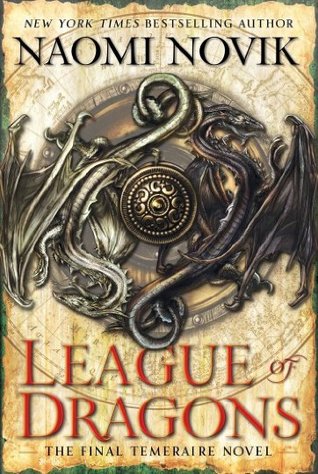
I’m surprised to find that I’ve only reviewed one other book in this series in any depth.
As that review mentions, I’m definitely a fan of the Temeraire series. But more to the point, I think that League of Dragons is an excellent finish to this series. Better than many of the preceding books, which is difficult. Better than some of the really good preceding books, which is even harder.
In many ways, this book shows Novik doing exactly the opposite of what Stirling so loves; she somehow manages to cut out all the slow bits of the novel while keeping all the pieces that are important to the story. But that’s wrong, because it’s not like this is a non-stop action adventure. This takes plenty of time to devote itself to social intricacies, diplomatic considerations and the like… but Novik knows what matters, and she takes out everything else. She has a narrow focus on the heart of this story, and she has honed it until it delivers exactly that. Yes, there’s a little extra around the edges, but only enough fat to let you enjoy the flavor without overpowering the piece itself.
I want to stress, from personal experience, just how hard it is to do that. I can only imagine how much material must lie on the cutting room floor. There have to be scenes, long and involved scenes, which simply didn’t end up necessary to telling this story in the best way. The clarity and relative brevity of this story speak volumes about the discipline shown by Novik (and presumably her editor) in making this book, and I think I’ll return to this book to appreciate this for some time to come.
Funny. I’ve hit this point in the review, the one where I could start delving into further intricacies to tell you about particular bits of goodness, but I don’t want to spoil it for you. It’s enough that this is a good series about dragons. That it is also a story about a British man in the early 1800’s who learns that, maybe, more people are people than he had realized is (exceptionally good) gravy. The fact that it somehow encompasses adventure and social intrigue and feels like period fiction in the best possible way only makes it better.
If you haven’t read the series yet, you have a great deal to look forward to. Except that book about Australia, which is unfortunately rather sluggish but let’s not talk about that. Go ahead and enjoy.
I don’t have anything elaborate for you today. I’m going to be a panelist (and a moderator) at Arisia, starting this evening, and that’s keeping me busy.
If you’re there and want to see me, check out these panels:
I hope you have a good weekend!
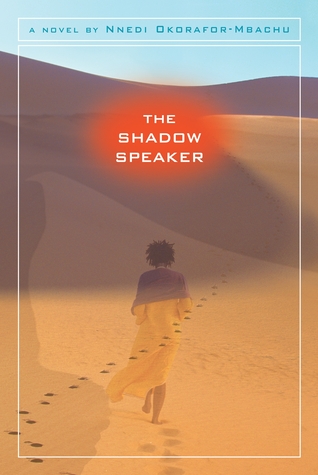
Yet another excellent book that I’ve found through this semester’s syllabus. Nnedi Okorafor’s combination of a post-apocalyptic setting with fantastical afrofuturism is absolutely magical. I would strongly recommend this book for so many reasons; the setting might honestly be the least of them, despite how much I like it.
I understand that there’s a sequel in the works, titled Stormbringer, and I can’t wait to get my hands on that too.
My posting won’t go back to normal for the next two weeks, I think. I’m too distracted by the things I have to finish for my last two sets of classes.
On the up side, I have had a chance to look at lots of books recently, and I have a few to recommend.
Naomi Novik’s Uprooted is a fun story in an awesome fantasy setting. My only reservations revolve around how it follows a bunch of romance genre conventions in a way that I find a little less appealing. This isn’t because I have something against good romance work — I love Bujold’s romance stories — but because I don’t like the dynamic between the two romance leads as much as I like the rest of the story. And to be clear, most of the story isn’t very heavy on the romance. But it is definitely there.
Hmm, that sounds less like the recommendation I thought I was writing and more like a warning. It’s a fun book, and I *do* recommend it. It has an Eastern European setting with witches and magic and Baba Yaga type stuff! What more could you want? I rather enjoyed it.
And, on the picturebook front, I strongly encourage you to look at Water Is Water, published last year. It is gorgeous. It has so much detail and setting layered into each image. As a Vermonter, it gave me little nostalgic quivers. It’s worth reading.
 Fistful of Wits