2/3rds through Cold Fire, by Tamora Pierce

I’ve gotten stuck.

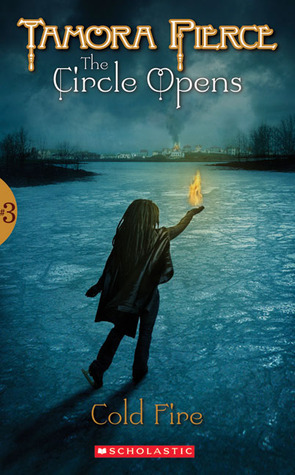
I loved Tamora Pierce’s Circle of Magic series, her first quartet about Sandry, Briar, Daja, and Tris. I was eager to read the next quartet. For the most part, I still am.

I breezed through the first two books in this quartet. Sandry’s book (Magic Steps) and Briar’s book (Street Magic) both went by so quickly that I nearly inhaled them. Daja’s book, Cold Fire, has really slowed me down.

I try to find times in the day when I can sneak in a little bit of reading. Often enough this ends up being at night while I’m lying in bed. I’ll read a chapter, then set the book down. Except with Cold Fire reading a chapter leaves me feeling sick to my stomach. Stopping there doesn’t help.

I’ve discovered the hard way that I find it difficult to read a story about arson, especially when lives are lost.

Continue reading

Rewatching Ted Lasso S1

I feel more complicated about the character of Ted Lasso as I rewatch this show. For one, as Ley says, his vibe is very much Manic Pixie Dream Coach. More importantly, I feel as though early on the show distracts from Ted’s flaws because he means well and is the protagonist… and I feel grumpy about that.

I see more of Ted’s shadow (to borrow from Jung) coming to the fore as I rewatch the show. The first time through, I was just keeping up with the writing and admiring the show’s construction and delivery. This time, I have the chance to pay more attention to what’s going on, and to notice the elements that are clearly laid out and planned for later exploration.

It’s a well-written show. Ted is a well-written character. He’s flawed, though we don’t explore that as much in the beginning of the show. He’s admirable and likable in his attempts to catalyze the personal growth of the members of his team (along with everyone around the team), and to drive their transformation into a mutually supportive whole.

In pursuit of that goal he also transgresses or ignores people’s stated boundaries while ‘trying to make things better.’ His transgressions felt off the first time around. They feel more insufferable on a rewatch.

The first example that springs to mind for me is how Ted explicitly ignores Rebecca Welton’s stated preferences when he promises to show up again the next morning despite her saying that he shouldn’t. It’s a small thing. But this small thing is done with a powerful “aw shucks I’m just trying to do right by everyone” attitude, a real “I’m a nice and earnest guy” vibe… and that attitude plus the show’s narrative focus on Ted as our protagonist blurs Ted’s transgressions into the background. 

Maybe Ted is oblivious to the ways he’s transgressing. I think I could empathize with that Ted more, even though it would still feel painful to see. But I don’t think he’s oblivious, at least not with Rebecca—he responds (in)directly to Rebecca’s request by saying that he won’t honor it. And the show validates his actions.

I know how well things will go for Ted. I know how his efforts will ultimately pay off for himself and those around him. The show might not hide that Ted is doing something disrespectful, but it certainly slides it to you in a shit sandwich with such a smooth delivery that you could blink and miss it. We’re also given a brief glimpse of Ted’s relationship with his wife that strongly implies that this sort of behavior is not exactly surprising from Ted—and yet that moment is used mostly to build emotional depth and vulnerability for Ted, rather than to point out that he might have a pattern of self-sabotage via transgressing boundaries. That makes his other boundary transgressions all the more painful to me.

Maybe I’m more sensitive to this because I know more now about Jason Sudekis’s personal life around the time of making Ted Lasso. There are some painful parallels, complete with separation and custody conflicts as he and Olivia Wilde parted. In some ways, Ted is Sudekis’s chance to tell his version of his story, to portray the best version of his story and make himself a victimized tragic hero. No doubt these parallels help Jason Sudekis play Ted Lasso (his own life mirrors his art, he can bring all those pieces to his portrayal of the character!). But I think he’s too close to the experience and too caught up in it—Sudekis’s portrayal of Ted (specifically in the third season) feels more like a polemic or like self-soothing rather than an empathetic nuanced exploration. Worse, these similarities makes the show’s blurring of Ted’s flaws feel bad in a self-indulgent way.

Now, none of this makes the show bad. I still love Ted Lasso. I still think it’s extremely well-written and well-executed. My love for it from four years ago remains. If anything, I’m more impressed by the ways in which the story’s foundations were laid so long in advance. And I’m also finding the ways that it lands differently as I rewatch it.

Some Desperate Glory, by Emily Tesh

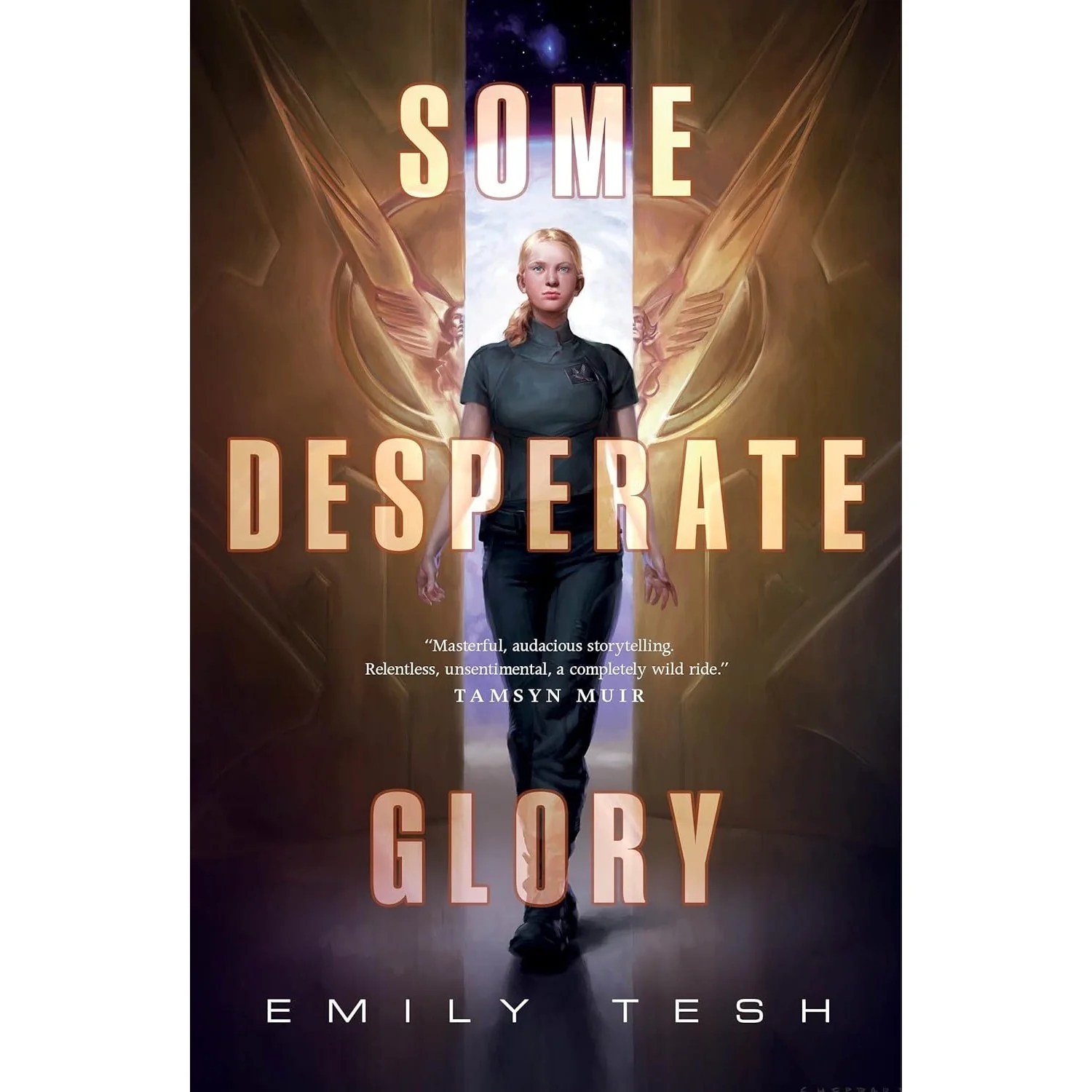
Emily Tesh’s book Some Desperate Glory is an excellent sci fi story (“queer space opera” quoth many other reviewers) about living inside fascism, coming to terms with and recognizing that fascism, and trying to find ways to resist that fascism even when resistance seems impossible. It’s grim. It’s painful. It feels uncomfortably true, real, and relevant. I mentioned it in passing earlier this spring.

This isn’t a book I wanted to feel was more relevant after I finished it, but here we are.

This is also a book that deals with sexual abuse, assault, forced pregnancy, and suicide. I think the story handles them well, but they’re still rough. You’ve been warned.

With all that said, why does this book still feel hopeful to me?

Continue reading

Squire and Lady Knight, by Tamora Pierce

I finished Lady Knight one day after finishing Squire. I absolutely inhaled that last book in the series. Tamora Pierce did well, as I’ve come to expect. The story of Lady Knight felt more satisfying in so many ways, but I don’t think it would have felt that good without Squire there to lay the foundation for it.

If you’re recommending these books to kids, it’s worth noting that Lady Knight bridges a big (and fascinating) gap in genre, content, and target audience age. I’m not saying that you shouldn’t give these books to kids—I think you should! But you may want to read them yourself, and be ready for the way in which the story’s tone shifts near the end of Squire and throughout Lady Knight.

Continue reading

First Test, by Tamora Pierce

First Test, by Tamora Pierce, was published in 1999. It’s an excellent middle grade fantasy story grounded in one girl’s struggle against gender discrimination, hazing, and abuse while she pursues her dream of knighthood. First Test takes place in Tortall, the same story world as Tamora Pierce’s series about Alanna the Lioness. Where Alanna sought and (spoilers for that series) achieved knighthood while hiding that she was a girl, our protagonist Keladry seeks to follow openly in Alanna’s footsteps. But while that path is now officially open to a girl, reality hasn’t yet caught up. If you want a middle grade story about a young girl facing adversity and misogyny in a hostile school environment, this is a solid option.

First Test is, first and foremost, a story about a young girl and her struggles. Young Henry probably would have loved it… but he probably wouldn’t have read it (I mean, I didn’t read it, but I also wouldn’t have). Even if it had caught my interest, being mocked by my peers for reading ”a girl’s book” was a real and pressing concern. That was a big part of why I missed the Alanna books when I was young.

Oddly, that social pressure also feels connected to First Test’s message.

Continue reading

Prince of Fortune, by Lisa Tirreno

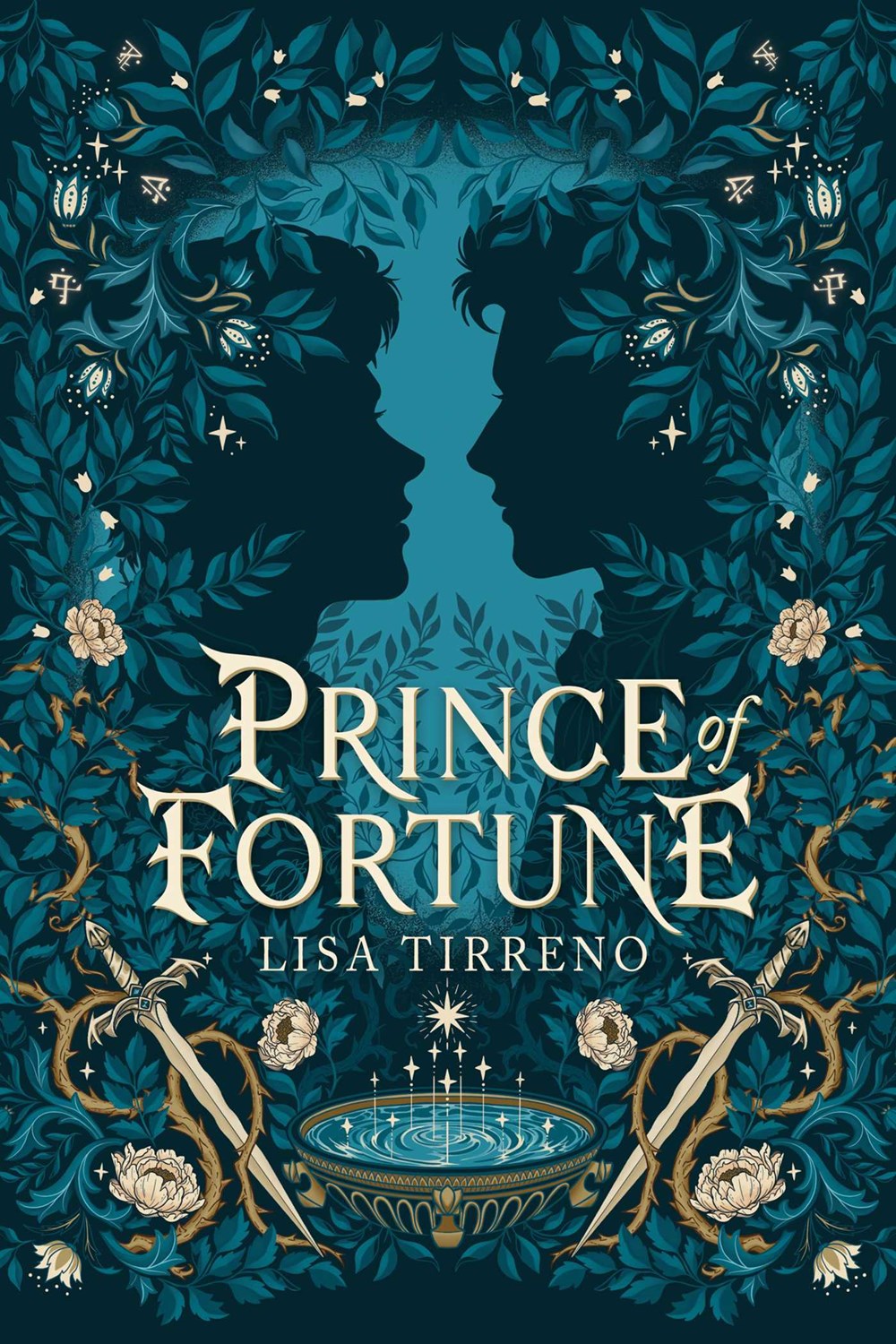
Lisa Tirreno’s Prince of Fortune is a romance in a fantasy setting with strong Regency era vibes, gender equality, and open queerness. It’s sweet, cute, heartwarming, and feel-good despite a hefty dose of political intrigue and a small helping of combat and war. Even better, it doesn’t try to make itself a series; you can pick this book up, enjoy the story’s gay romance and warm fuzzies, and know that everything has come to a close when you put the book down at the end. I found that soothing.

Would I want more?

Yes. And (kind of) no.

Continue reading

A Practical Guide to Evil, most of the way through

A Practical Guide to Evil is a YA-ish fantasy web serial set in a world with capitalized Good and Evil. The gods (which definitely exist) created this world to settle a wager about whether Good or Evil would triumph, but it is up to the world’s occupants to determine which way the contest will go. Of course, not every person is equal in this contest.

By a combination of exertion, will, strife, and trauma people can take on the mantle of a Name (an archetypal role) on either side of the conflict. Those Names are bound to tropes (varying by the person’s side in the conflict) which can entrap or empower. Some Names (Black Knight) are clearly on one side of the conflict (Evil), but others (Apprentice) can arise on either side. No two people can hold the full power of one name at a time; where there are multiple pretenders to a Name, those pretenders must settle whose vision of the Name and its purpose will win (Evil tends to do this with violence, Good rarely has multiple contenders).

I love all of that. This wholehearted embrace of archetypal story as a narrative toy and tool for a larger fantasy series is great. It’s what convinced me to read it in the first place.

Better yet, people in the series are aware of these Names and tropes. They embrace the study of Name-lore, learning the ways in which a Name may be caught by trope and pattern and story. They try to use that knowledge to their advantage. That’s a delight.

But it’s not all a bed of roses.

Continue reading

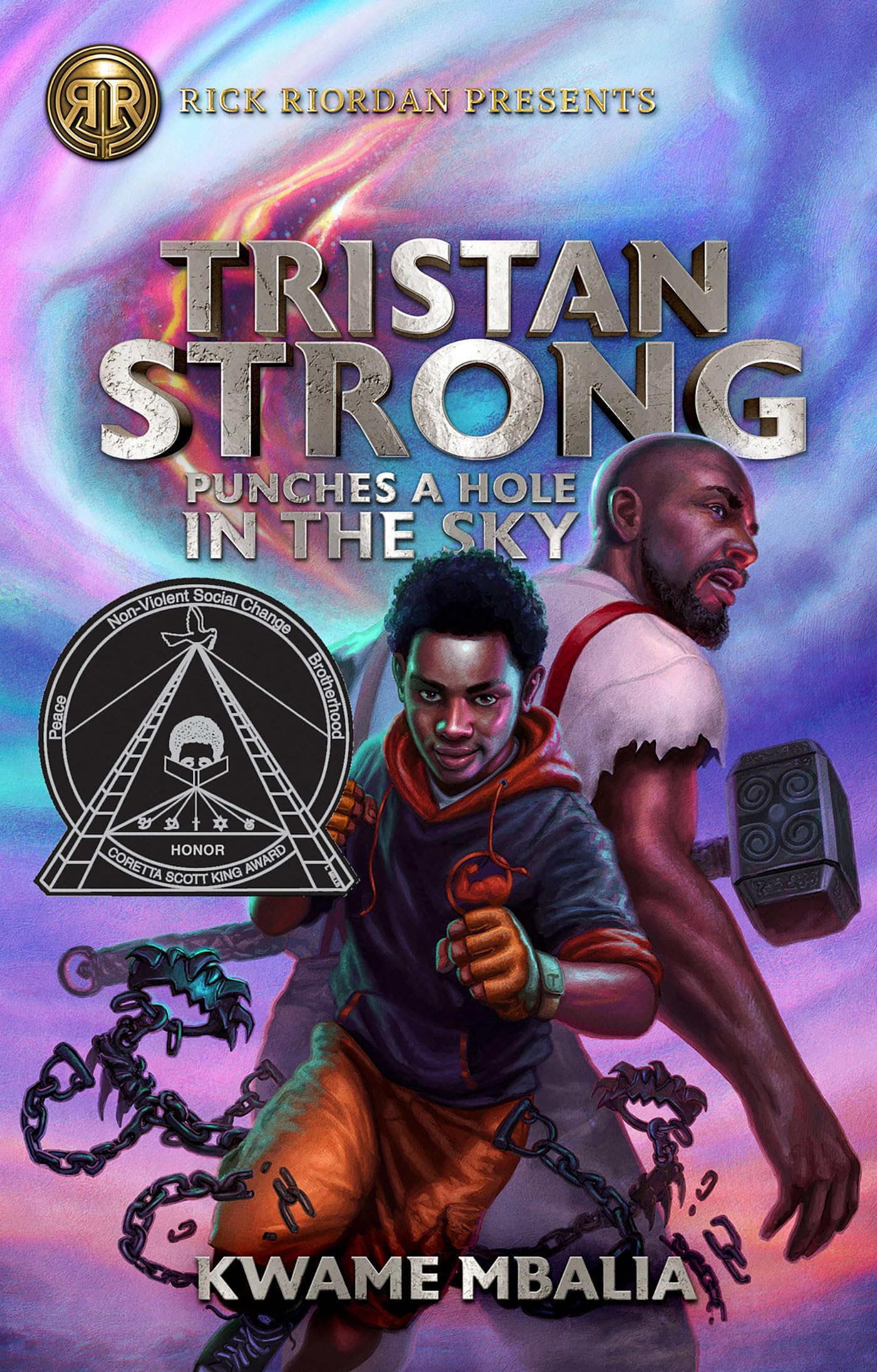
Tristan Strong Punches A Hole In The Sky, by Kwame Mbalia

I love a good middle grade adventure story. That’s precisely what this is. As you might expect from something published under Rick Riordan’s imprint, it’s full of mythology and folk tales and legends. Tristan Strong Punches a Hole in the Sky, by Kwame Mbalia, is all about one young boy’s discovery that the stories he’s grown up with (African-American stories with American folk heroes like John Henry, African trickster figures like Anansi, and those who blur the lines like Brer Rabbit) are all far more real than he ever could have believed. It’s fun, it’s pretty fast, it’s (heh) punchy. This is a good book.

I admit, my appreciation for this book is influenced by my desire for more high quality middle grade adventure stories aimed at boys. There’s a lot more to unpack there, some of which can be better understood by reading Of Boys And Men by Richard V Reeves. Read on for some of those details, as well as my few quibbles with Tristan Strong.

Continue reading

The Countdown Conspiracy, by Katie Slivensky (2017)

Katie Slivensky’s The Countdown Conspiracy is an upper middle grade adventure story all about six young astronaut candidates preparing for an international mission to Mars. Set on a near-future Earth still recovering from a global war fought over asteroid-mining rights, the story begins with a captivating slow burn and piles of intrigue. The Countdown Conspiracy builds from there to high stakes thrills and a satisfying, ever-escalating race towards the conclusion. I really liked it. A lot.

I’ve fallen off the querying-wagon again, but this book has revived my excitement and renewed my hope. Surely if people enjoy this they’d enjoy Bury’em Deep.

Why do I like this book so much?

Continue reading

Flash Fiction: Never Goes Smooth (4/4)

New_daModena

The villain of our story thus far.

Time for another bout of flash fiction, the final part of Chuck Wendig’s four part flash fiction challenge!  In this case I used a piece that eventually became titled Never Goes Smooth, a low-fantasy low-life adventure story.  It was started by Probably False, continued by Matthew Gomez, the penultimate piece was penned by Pikabot / Peter MacDonald, and then I added my two cents.  If you like ne’er-do-wells with swords and attitudes who have to figure out what to do when they get the short end of life’s stick, you’ll probably like this.  Enjoy!

Continue reading