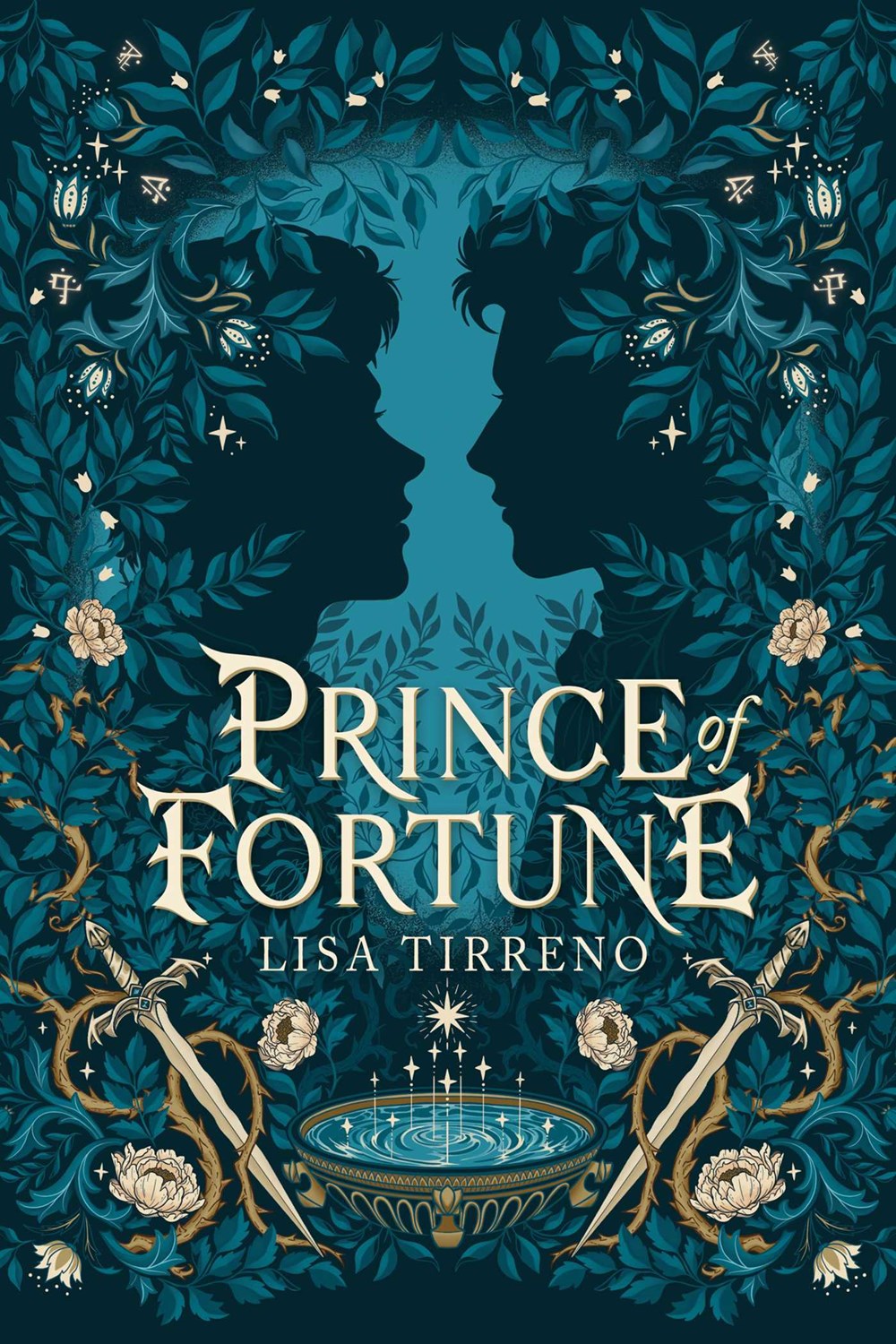
Prince of Fortune, by Lisa Tirreno

Lisa Tirreno’s Prince of Fortune is a romance in a fantasy setting with strong Regency era vibes, gender equality, and open queerness. It’s sweet, cute, heartwarming, and feel-good despite a hefty dose of political intrigue and a small helping of combat and war. Even better, it doesn’t try to make itself a series; you can pick this book up, enjoy the story’s gay romance and warm fuzzies, and know that everything has come to a close when you put the book down at the end. I found that soothing.

Would I want more?

Yes. And (kind of) no.

Continue reading

A Practical Guide to Evil, most of the way through

A Practical Guide to Evil is a YA-ish fantasy web serial set in a world with capitalized Good and Evil. The gods (which definitely exist) created this world to settle a wager about whether Good or Evil would triumph, but it is up to the world’s occupants to determine which way the contest will go. Of course, not every person is equal in this contest.

By a combination of exertion, will, strife, and trauma people can take on the mantle of a Name (an archetypal role) on either side of the conflict. Those Names are bound to tropes (varying by the person’s side in the conflict) which can entrap or empower. Some Names (Black Knight) are clearly on one side of the conflict (Evil), but others (Apprentice) can arise on either side. No two people can hold the full power of one name at a time; where there are multiple pretenders to a Name, those pretenders must settle whose vision of the Name and its purpose will win (Evil tends to do this with violence, Good rarely has multiple contenders).

I love all of that. This wholehearted embrace of archetypal story as a narrative toy and tool for a larger fantasy series is great. It’s what convinced me to read it in the first place.

Better yet, people in the series are aware of these Names and tropes. They embrace the study of Name-lore, learning the ways in which a Name may be caught by trope and pattern and story. They try to use that knowledge to their advantage. That’s a delight.

But it’s not all a bed of roses.

Continue reading

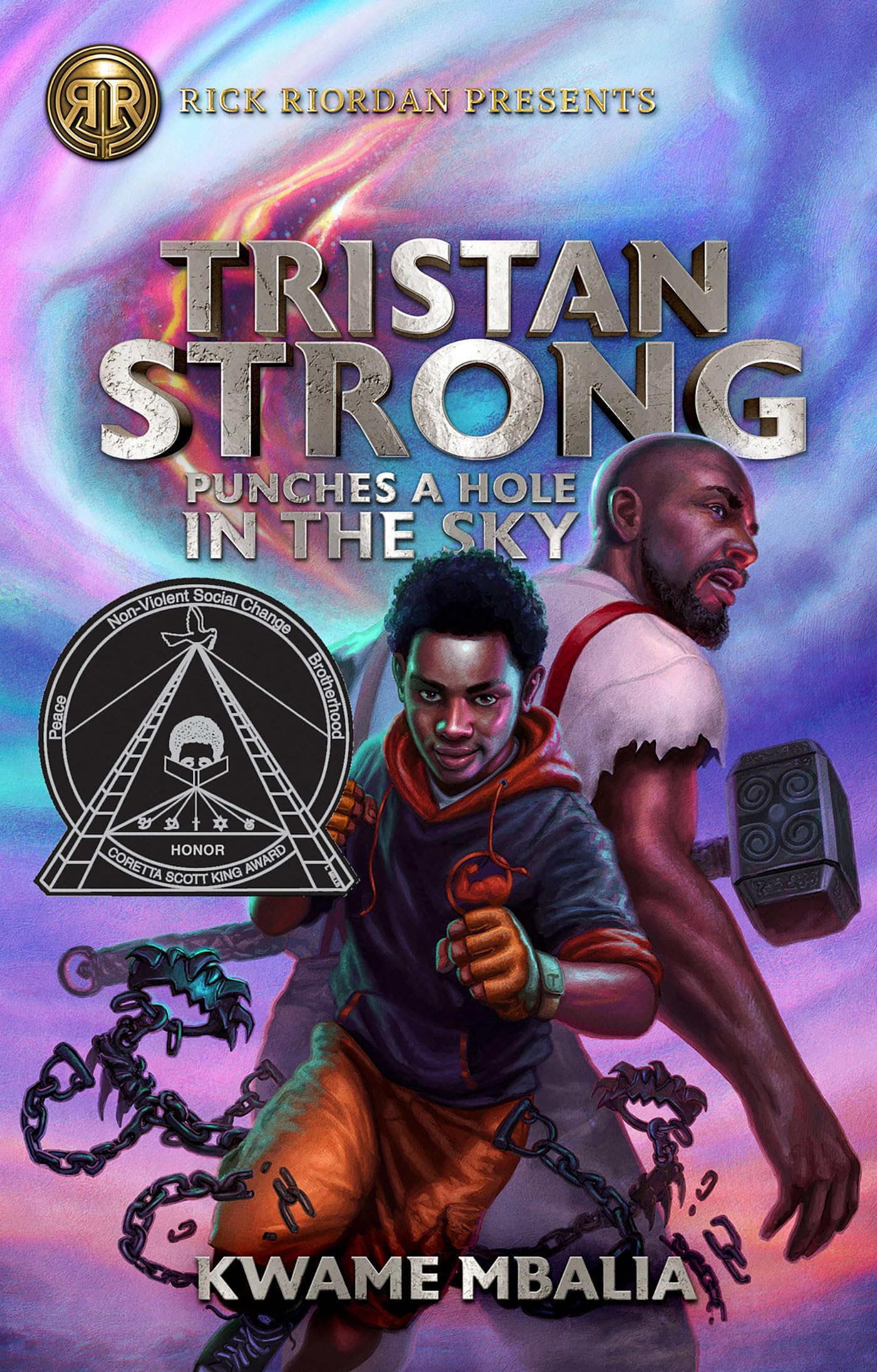
Tristan Strong Punches A Hole In The Sky, by Kwame Mbalia

I love a good middle grade adventure story. That’s precisely what this is. As you might expect from something published under Rick Riordan’s imprint, it’s full of mythology and folk tales and legends. Tristan Strong Punches a Hole in the Sky, by Kwame Mbalia, is all about one young boy’s discovery that the stories he’s grown up with (African-American stories with American folk heroes like John Henry, African trickster figures like Anansi, and those who blur the lines like Brer Rabbit) are all far more real than he ever could have believed. It’s fun, it’s pretty fast, it’s (heh) punchy. This is a good book.

I admit, my appreciation for this book is influenced by my desire for more high quality middle grade adventure stories aimed at boys. There’s a lot more to unpack there, some of which can be better understood by reading Of Boys And Men by Richard V Reeves. Read on for some of those details, as well as my few quibbles with Tristan Strong.

Continue reading

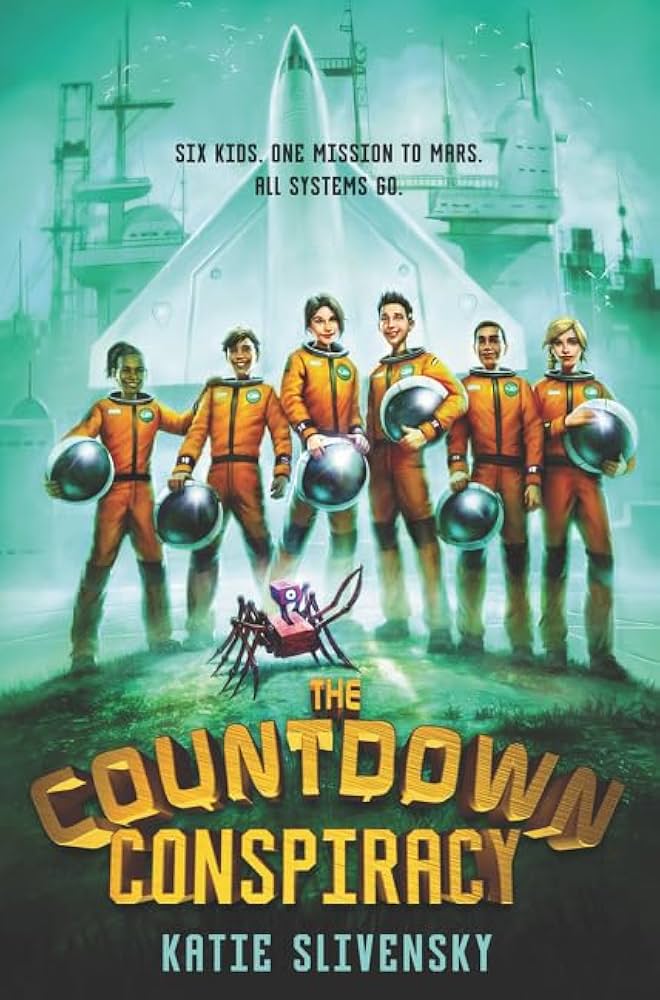
The Countdown Conspiracy, by Katie Slivensky (2017)

Katie Slivensky’s The Countdown Conspiracy is an upper middle grade adventure story all about six young astronaut candidates preparing for an international mission to Mars. Set on a near-future Earth still recovering from a global war fought over asteroid-mining rights, the story begins with a captivating slow burn and piles of intrigue. The Countdown Conspiracy builds from there to high stakes thrills and a satisfying, ever-escalating race towards the conclusion. I really liked it. A lot.

I’ve fallen off the querying-wagon again, but this book has revived my excitement and renewed my hope. Surely if people enjoy this they’d enjoy Bury’em Deep.

Why do I like this book so much?

Continue reading

Flash Fiction: Never Goes Smooth (4/4)

New_daModena

The villain of our story thus far.

Time for another bout of flash fiction, the final part of Chuck Wendig’s four part flash fiction challenge!  In this case I used a piece that eventually became titled Never Goes Smooth, a low-fantasy low-life adventure story.  It was started by Probably False, continued by Matthew Gomez, the penultimate piece was penned by Pikabot / Peter MacDonald, and then I added my two cents.  If you like ne’er-do-wells with swords and attitudes who have to figure out what to do when they get the short end of life’s stick, you’ll probably like this.  Enjoy!

Continue reading

The Sorcerer’s House, by Gene Wolfe

sorcerershouse-strip1


I should probably re-read this book.  In fact, from what I understand I should probably read and then re-read a good deal of Gene Wolfe‘s work.  There’s a lot of it that I haven’t bothered to pick up at all, but the attention he pays to the construction of his novels is something from which I stand to learn a great deal.  It’s no surprise, then, that The Sorcerer’s House is a slowly unfolding marvel of consistent inconsistency, even on my first read-through.  And what the devil do I mean by that?

I’ll start with the narrator.  We are treated to the sometimes pleasing, sometimes grating prose of one Baxter “Bax” Dunn, as the entire story is told through the lens of his letters (with the addition of a few letters that were sent to him).  It is an epistolary, and as such we are entirely at the mercy of Bax’s representation of events as he begins to deal with moving into (squatting in, really) what appears to be a supernaturally expanding house.  But one of the few things that we know of Bax is that he was recently released from prison after being convicted for fraud.  There are other confounding factors at play as well, hinted at but generally sidelined as being of little relative importance, but I’ll leave those for you to discover when you read the book.  Suffice to say that the narrator is tremendously unreliable, to the extent that I’m not sure how much of the book actually happened (I’m certainly unsure how much happened as he represented it, and I think I’ve caught at least one lie).  As if that wasn’t enough, he often walks forward or back through the course of events until you’re working hard just to keep the timeline straight in your head.

On a similar note, I’m impressed by how palatable Wolfe manages to make a character I so grew to dislike.  Dislike might be the wrong word for it; there were so many things about Bax which I found so unlikeable or frustrating, but he exuded such amiable bonhomie that I found it difficult to hate him for very long, as he’s perhaps the very definition of sleazy but charming.  I can only imagine it was second nature to him.  The fact that I’m able to tell you all of this about Bax is part of what I so admire about Gene Wolfe.

There’s a great deal more to say about this, but as per usual I’m going to segregate the spoilers.  So for my pre-final closing thoughts, or whatever you call this bit, I just want to say that this is a fascinating read even if you don’t end up liking Bax very much.  And if you can deal with the several-decades-old gender relations.

Continue reading