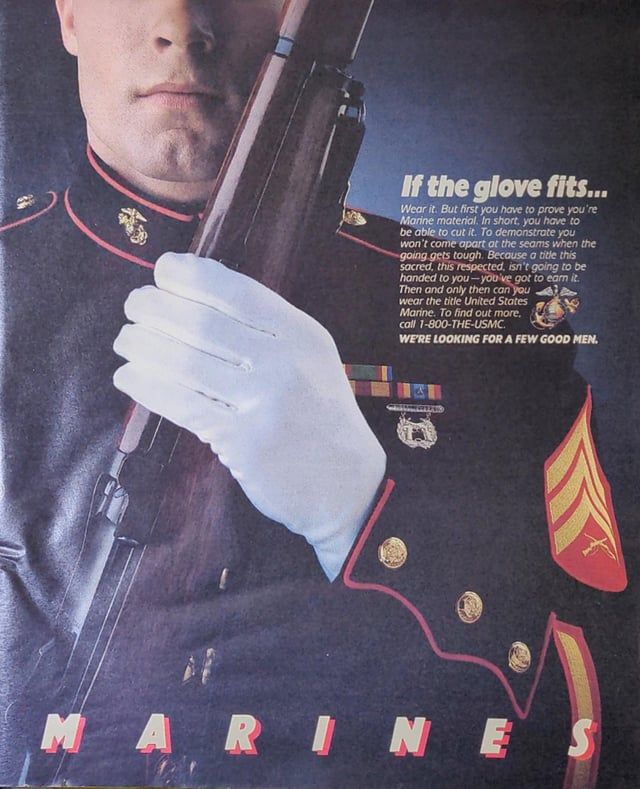
Boots, halfway through: A Marine-shaped box

The less morbid option for a Marine-shaped box

I’ve watched more of Boots, finishing episode four and just barely starting episode five. The show’s message feels clearer now. My initial curiosity is congealing into grim resignation.

Boots isn’t bad. It’s well crafted. The character portrayals and overt construction of masculinity that piqued my curiosity still remain. I can still enjoy picking through and examining them. I can enjoy stripping them for parts.

The show isn’t bad/wrong, the storytelling isn’t bad/wrong, but I like Boots less now.

Why?

Continue reading

Boots (Netflix 2025)

I’ve seen the first episode of Boots, and I have mixed feelings. 

I’m not sure how to engage with the show. It’s the sometimes funny, sometimes awful story of a young gay man named Cameron Cope who joins the Marines (in 1990, when homosexuality in the armed forces was still criminalized) without really knowing what he was getting himself into. Boots is based on the book The Pink Marine by Greg Cope White (no relation to the best of my knowledge), which is apparently a memoir of White’s own time in the Marines.

I’m unsure about Boots because I’m not sure what Boots is trying to say, or what conclusion it’s reaching towards. Does it have a negative message about being in boot camp as a young gay man in 1990? Does it have a positive message about that?

Is it both?

Continue reading

Rewatching Ted Lasso S1

I feel more complicated about the character of Ted Lasso as I rewatch this show. For one, as Ley says, his vibe is very much Manic Pixie Dream Coach. More importantly, I feel as though early on the show distracts from Ted’s flaws because he means well and is the protagonist… and I feel grumpy about that.

I see more of Ted’s shadow (to borrow from Jung) coming to the fore as I rewatch the show. The first time through, I was just keeping up with the writing and admiring the show’s construction and delivery. This time, I have the chance to pay more attention to what’s going on, and to notice the elements that are clearly laid out and planned for later exploration.

It’s a well-written show. Ted is a well-written character. He’s flawed, though we don’t explore that as much in the beginning of the show. He’s admirable and likable in his attempts to catalyze the personal growth of the members of his team (along with everyone around the team), and to drive their transformation into a mutually supportive whole.

In pursuit of that goal he also transgresses or ignores people’s stated boundaries while ‘trying to make things better.’ His transgressions felt off the first time around. They feel more insufferable on a rewatch.

The first example that springs to mind for me is how Ted explicitly ignores Rebecca Welton’s stated preferences when he promises to show up again the next morning despite her saying that he shouldn’t. It’s a small thing. But this small thing is done with a powerful “aw shucks I’m just trying to do right by everyone” attitude, a real “I’m a nice and earnest guy” vibe… and that attitude plus the show’s narrative focus on Ted as our protagonist blurs Ted’s transgressions into the background. 

Maybe Ted is oblivious to the ways he’s transgressing. I think I could empathize with that Ted more, even though it would still feel painful to see. But I don’t think he’s oblivious, at least not with Rebecca—he responds (in)directly to Rebecca’s request by saying that he won’t honor it. And the show validates his actions.

I know how well things will go for Ted. I know how his efforts will ultimately pay off for himself and those around him. The show might not hide that Ted is doing something disrespectful, but it certainly slides it to you in a shit sandwich with such a smooth delivery that you could blink and miss it. We’re also given a brief glimpse of Ted’s relationship with his wife that strongly implies that this sort of behavior is not exactly surprising from Ted—and yet that moment is used mostly to build emotional depth and vulnerability for Ted, rather than to point out that he might have a pattern of self-sabotage via transgressing boundaries. That makes his other boundary transgressions all the more painful to me.

Maybe I’m more sensitive to this because I know more now about Jason Sudekis’s personal life around the time of making Ted Lasso. There are some painful parallels, complete with separation and custody conflicts as he and Olivia Wilde parted. In some ways, Ted is Sudekis’s chance to tell his version of his story, to portray the best version of his story and make himself a victimized tragic hero. No doubt these parallels help Jason Sudekis play Ted Lasso (his own life mirrors his art, he can bring all those pieces to his portrayal of the character!). But I think he’s too close to the experience and too caught up in it—Sudekis’s portrayal of Ted (specifically in the third season) feels more like a polemic or like self-soothing rather than an empathetic nuanced exploration. Worse, these similarities makes the show’s blurring of Ted’s flaws feel bad in a self-indulgent way.

Now, none of this makes the show bad. I still love Ted Lasso. I still think it’s extremely well-written and well-executed. My love for it from four years ago remains. If anything, I’m more impressed by the ways in which the story’s foundations were laid so long in advance. And I’m also finding the ways that it lands differently as I rewatch it.

Squire and Lady Knight, by Tamora Pierce

I finished Lady Knight one day after finishing Squire. I absolutely inhaled that last book in the series. Tamora Pierce did well, as I’ve come to expect. The story of Lady Knight felt more satisfying in so many ways, but I don’t think it would have felt that good without Squire there to lay the foundation for it.

If you’re recommending these books to kids, it’s worth noting that Lady Knight bridges a big (and fascinating) gap in genre, content, and target audience age. I’m not saying that you shouldn’t give these books to kids—I think you should! But you may want to read them yourself, and be ready for the way in which the story’s tone shifts near the end of Squire and throughout Lady Knight.

Continue reading

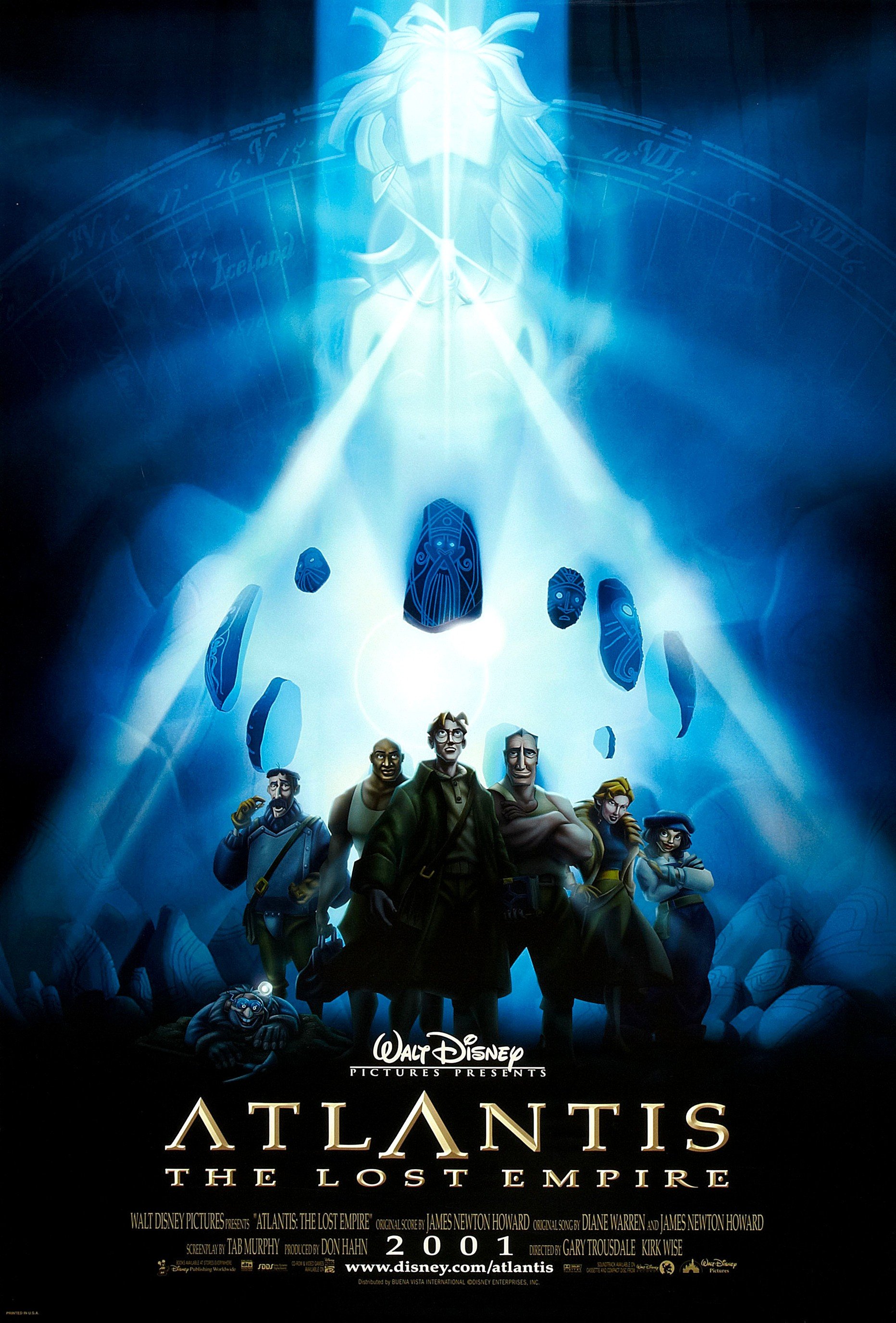
Atlantis: The Lost Empire (2001)

Visually, I love Atlantis: The Lost Empire. It’s gorgeous.

I love Mike Mignola’s style, which permeates everything in this movie. I’m very fond of his Hellboy comics, and had no trouble with this movie’s resulting un-Disney-like animation. Admittedly, some of the animation choices felt a little weird, like the animators struggled at times to convert the character designs into moving figures in ways that felt good. Yet at other points (especially in the movie’s climactic fight scenes) those same characters moved fluidly and naturally through a variety of perspectives, surpassing my expectations beautifully. My love of Mignola’s designs smoothed over the awkward bits for me, and I was very happy overall. If you don’t like Mignola’s art style, or you don’t like the movie’s character designs, you might not enjoy this as much as I did.

Narrative-wise, this movie is… fine? It’s both good and bad.

I love adventure stories, which Atlantis is. I love them so much that I’ll put up with a lot. That said…

Continue reading

Vicarious Squirmy Awfulness

I used to think I loved adventure stories because I’d grown up on them. The truth, I’ve realized, is a bit stranger. I’d rather watch bloody violence and explosions than sit through those gut-wrenching nail-biting moments of social awkwardness that fill so many romances, dramas, and comedies. Those moments fill me with a vicarious squirmy awfulness—the characters may experience emotional or social anguish, but my response is visceral, often literally painful. 

When I last reflected on this in my review of Trying

Continue reading

Dandadan (2024)

Dandadan is a lot. Episode one made me nervous. It also caught my attention. I stuck with the show, and now episode seven has made me cry big, heartfelt tears.

This show is not what I expected. It frequently has an extremely middle school-ish feel, yet it has also sent me on an emotional rollercoaster. It’s goofy and weird, with an upbeat and sometimes jarring energy. While it is written about (and presumably for) young teens, it feels less siloed in its gender appeal than many other shows I’ve seen aimed at a similar age range.

This show is definitely not for everyone, but… I really like it. Let me tell you why.

Continue reading

Time Cut (Netflix 2024)

Time travel and slasher movies seem like a rare combination, but there might be something in the air. Last week I watched Totally Killer and really enjoyed it. I think the universe heard my enthused raving, because Time Cut just came out.

I have, in the course of a few short days, seen the number of time travel slasher movies I’m aware of double. Maybe this is the new Moore’s Law and next week I’ll learn about two more? Anyway, I liked Totally Killer a lot, so I had to give Time Cut a try.

Continue reading

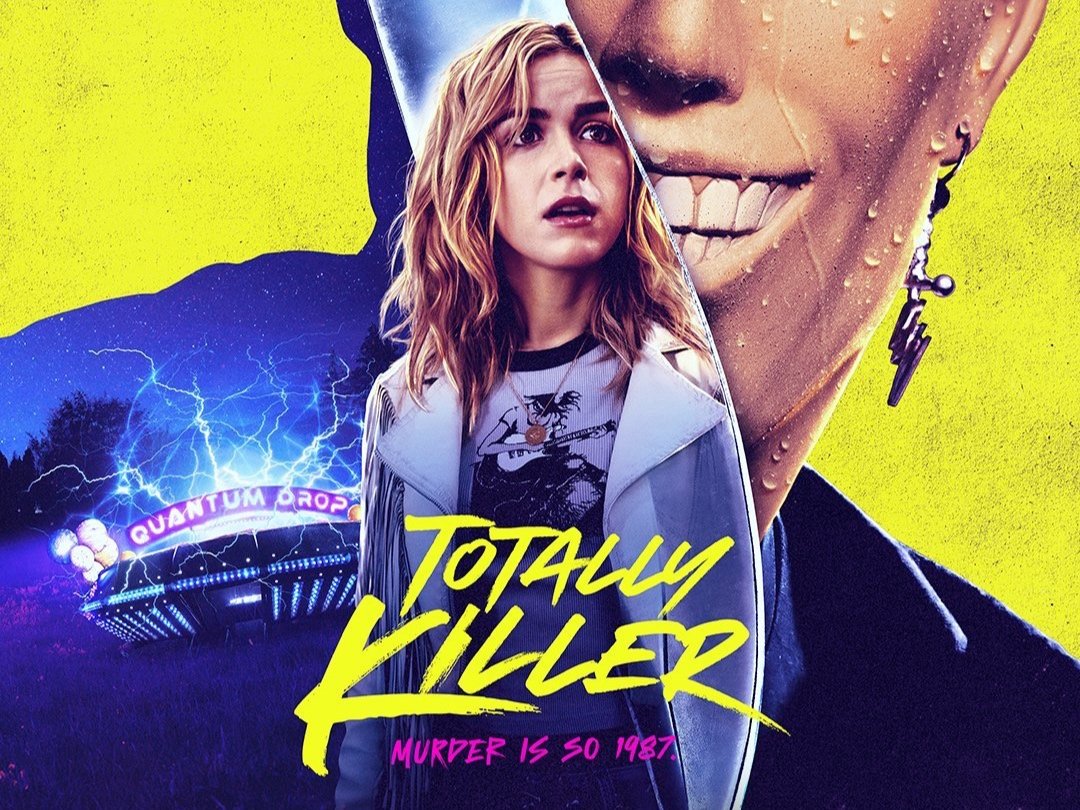
Totally Killer (2023)

Totally Killer has been sitting on my to-watch list since it came out last year.

I’m glad I finally got around to watching it. I had a damn good time. I’m very aware, however, that I was watching this movie through the lens of my love for time travel movies. I have a weakness for them. I feel less comfortable rating this movie as part of the slasher genre—I don’t have the context, it’s not a genre I know as well.

Yes, in case you missed it, this is a time travel movie that was caught in a horrific lab accident and fused with a slasher flick: teenage Jamie Hughes from 2023 is thrown back to 1987 and tries to save her mother and her mother’s friends from a serial killer, without creating a paradox that will erase herself from existence. Your mileage may vary, but I…

Continue reading

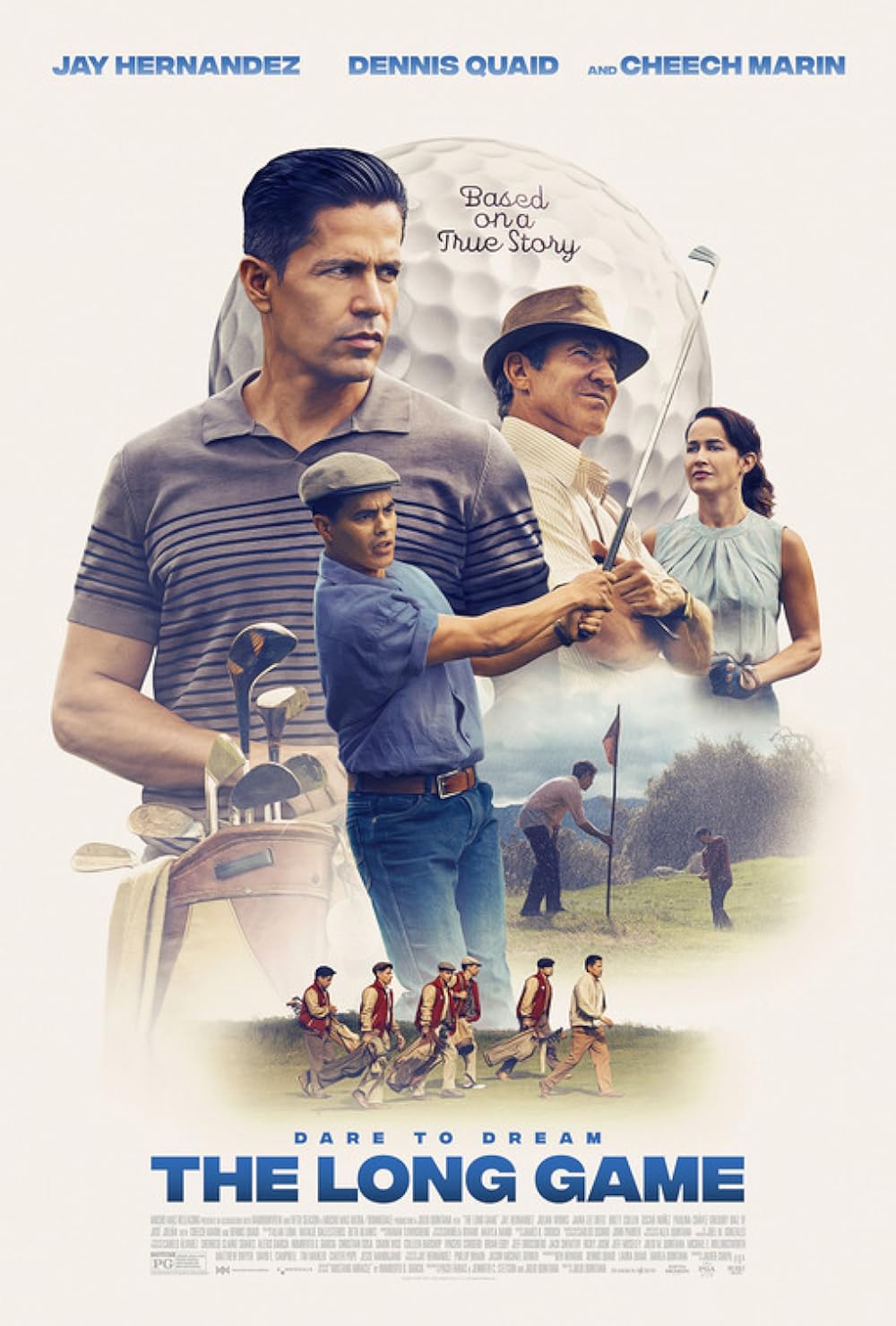
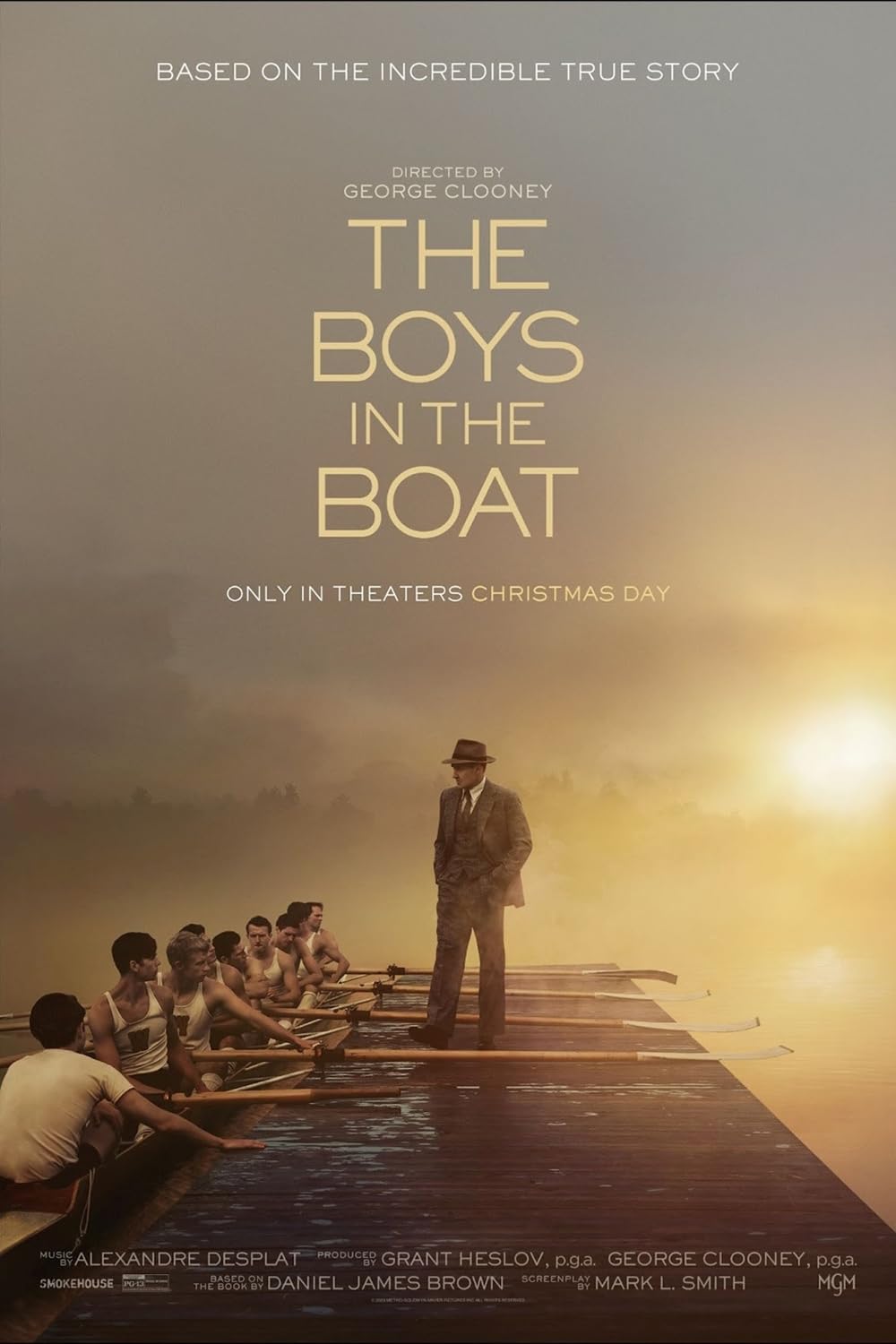
Underdog Sports Movie Showdown, The Boys in the Boat vs The Long Game

I flew this week. On my flight, I watched The Boys in the Boat and The Long Game.

Each movie is a triumphalist underdog sports movie. Each movie is dedicated to a sport that I know little about. I think I’m marginally more fond of or impressed by crew (specifically, eight-person rowing teams) than golf. I like the drama of team sports, and appreciate the skill required to work that smoothly together, even if I have little interest in crew in general. I admire the skill and tenacity of golfers, certainly, but if I had to pick between a movie about golf and a movie about crew, well…

I’d pick the boat.

I’ve heard that you’re supposed to be more prone to enjoying movies that you watch on an airplane. Perhaps that’s because they pull you out of the noisy, cramped tin can soaring through the air at uncomfortable speeds and deposit you (for a limited time) in some other world of dramatic and emotional experience. Regardless of whether what I’ve heard is true, it can’t rescue a movie from simply being worse than its competition.

And “worse than the competition” is a galling and ironic position for a triumphant underdog sports movie to be in, don’t you think?

Continue reading