Furiosa: A Mad Max Saga (2024)

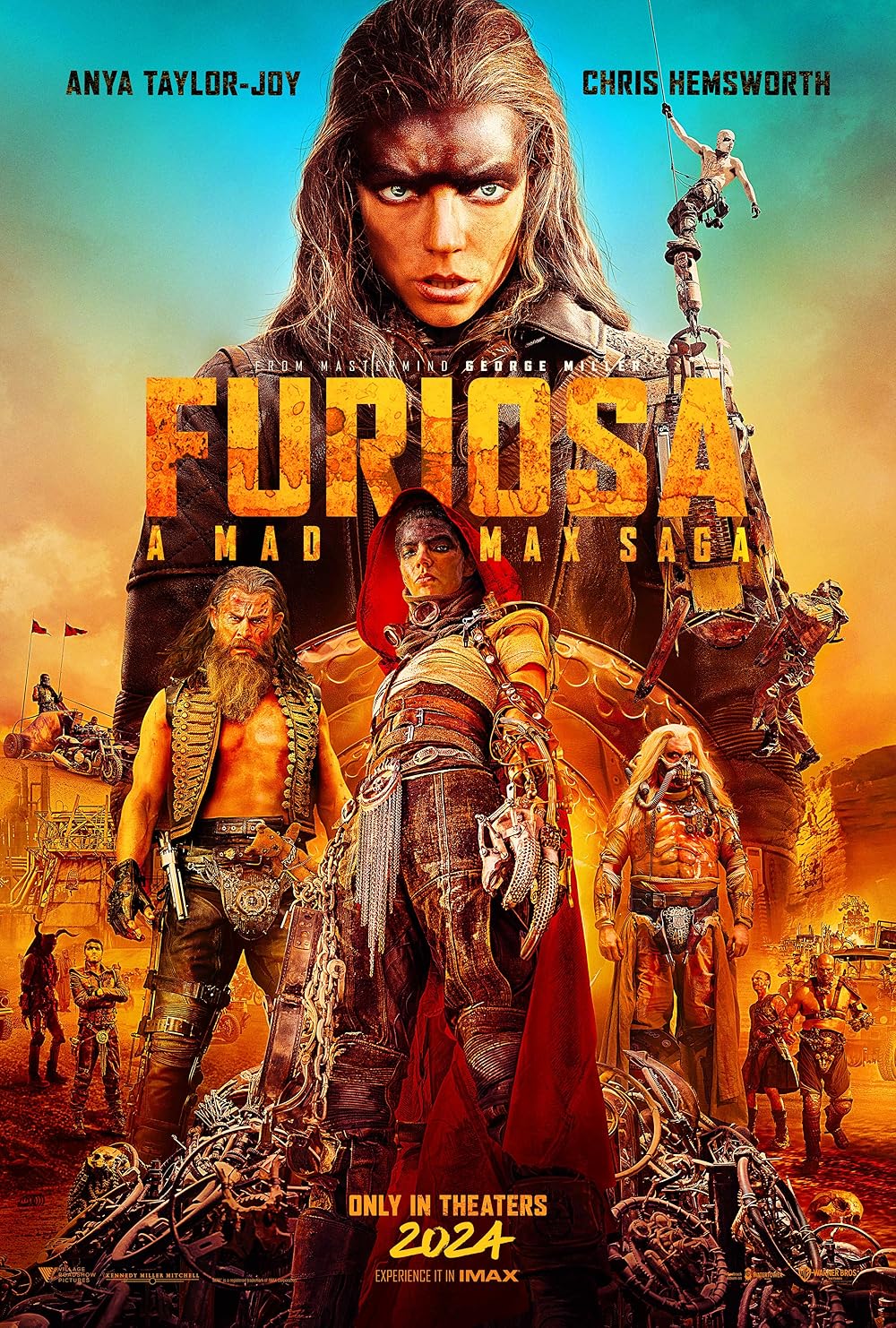
The more I think about it, the more I think it’s unfair to compare Furiosa to Fury Road. The problem is that I keep making that comparison anyway.

I keep making that comparison despite the fact that they’re fundamentally different styles of movie. It doesn’t help that they’re both in the same setting, no other movie in the setting came out between them, and their storylines tie directly together. Somehow it doesn’t matter that one was honed to a razor edge of high speed clarity while the other literally has “saga” in the name (sagas, not exactly known for being fast paced stories).

Fury Road told an extremely snappy story with its boot firmly on the accelerator at all times. Furiosa tells a rather long story at a slower pace, split into multiple segments by literal chapter breaks. Fury Road builds all of its characters’ backgrounds up through quick snippets and rapid-fire context clues, while Furiosa sits us down and tells us—in detail—how things came to be. They’re in the same setting, but they have wildly different approaches to storytelling. They just happen to exist next to each other in both story-time and release date.

What I’m saying is…

Continue reading

Vicarious Squirmy Awfulness

I used to think I loved adventure stories because I’d grown up on them. The truth, I’ve realized, is a bit stranger. I’d rather watch bloody violence and explosions than sit through those gut-wrenching nail-biting moments of social awkwardness that fill so many romances, dramas, and comedies. Those moments fill me with a vicarious squirmy awfulness—the characters may experience emotional or social anguish, but my response is visceral, often literally painful. 

When I last reflected on this in my review of Trying

Continue reading

Dandadan (2024)

Dandadan is a lot. Episode one made me nervous. It also caught my attention. I stuck with the show, and now episode seven has made me cry big, heartfelt tears.

This show is not what I expected. It frequently has an extremely middle school-ish feel, yet it has also sent me on an emotional rollercoaster. It’s goofy and weird, with an upbeat and sometimes jarring energy. While it is written about (and presumably for) young teens, it feels less siloed in its gender appeal than many other shows I’ve seen aimed at a similar age range.

This show is definitely not for everyone, but… I really like it. Let me tell you why.

Continue reading

Time Cut (Netflix 2024)

Time travel and slasher movies seem like a rare combination, but there might be something in the air. Last week I watched Totally Killer and really enjoyed it. I think the universe heard my enthused raving, because Time Cut just came out.

I have, in the course of a few short days, seen the number of time travel slasher movies I’m aware of double. Maybe this is the new Moore’s Law and next week I’ll learn about two more? Anyway, I liked Totally Killer a lot, so I had to give Time Cut a try.

Continue reading

Totally Killer (2023)

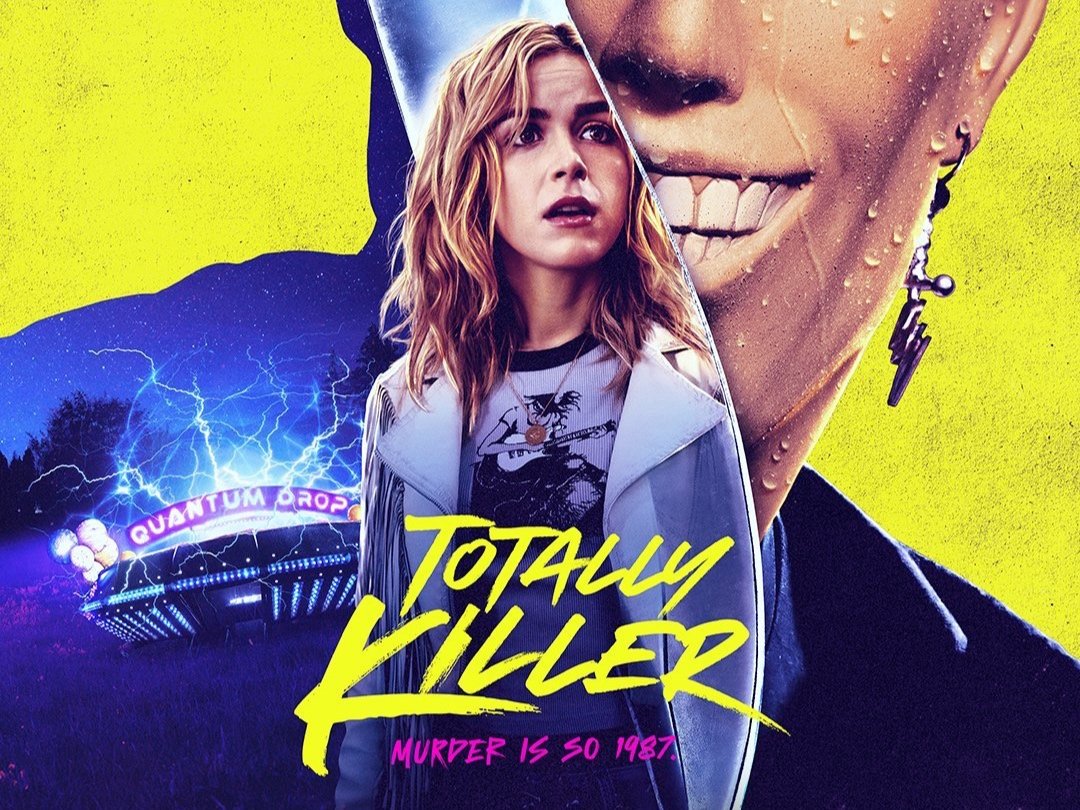
Totally Killer has been sitting on my to-watch list since it came out last year.

I’m glad I finally got around to watching it. I had a damn good time. I’m very aware, however, that I was watching this movie through the lens of my love for time travel movies. I have a weakness for them. I feel less comfortable rating this movie as part of the slasher genre—I don’t have the context, it’s not a genre I know as well.

Yes, in case you missed it, this is a time travel movie that was caught in a horrific lab accident and fused with a slasher flick: teenage Jamie Hughes from 2023 is thrown back to 1987 and tries to save her mother and her mother’s friends from a serial killer, without creating a paradox that will erase herself from existence. Your mileage may vary, but I…

Continue reading

Cascade Failure (on GeeklyInc)

I promised to link my review of L.M. Sagas’ Cascade Failure when it posted on GeeklyInc, but that entirely slipped my mind. The review is up! It’s been up for almost a month. My apologies.

In case you are deathly allergic to clicking external links, here’s the tl;dr…

Continue reading

Monarch: Legacy of Monsters, after season 1

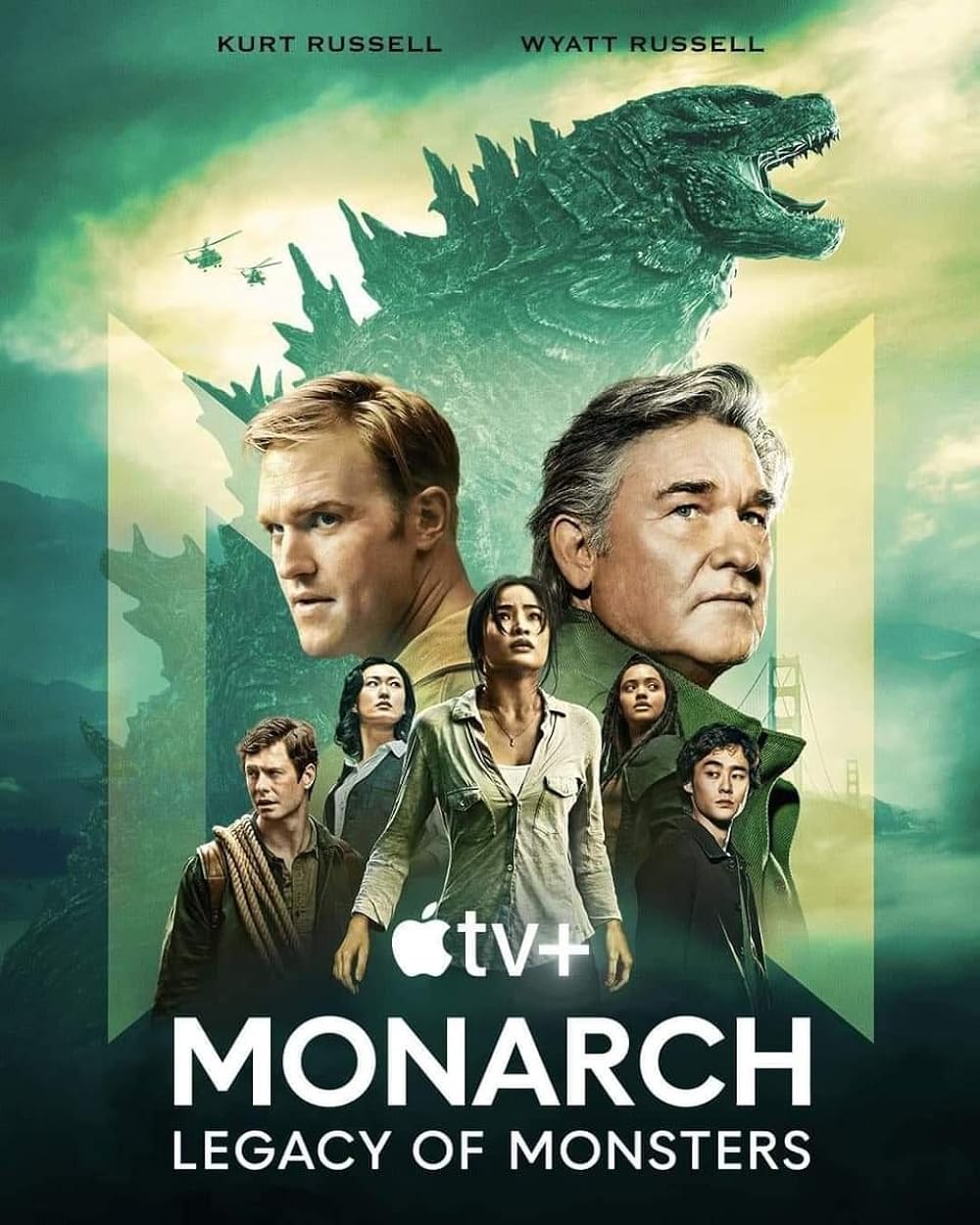
What’s my verdict after finishing season one of Monarch: Legacy of Monsters? No spoilers, I liked it. I even loved some of it. But I didn’t love all of it equally—for one, I didn’t care much about the big monsters most of the time.

My lack of interest in most of the monsters turned out just fine! That didn’t detract from the show, because Monarch is far more focused on people, and humanity, than on giant stompy monsters. And it was Monarch’s focus on people that I loved.

I think there are some interesting details in why I loved the parts I loved, and what didn’t work as well for me. Come check it out.

Continue reading

Stranger Things s4 and breathing room

I enjoyed Stranger Things season 4.

But the last episode felt rough for me. Maybe that’s because it was almost two and a half hours, or maybe that’s because it was interrupted more than once.

I paused the last episode a couple times due to normal life, including once right at the height of the climax when the show had already been drawing out the tension for as long as possible. Turns out that last pause was the hardest on me.

I’ll come back to that.

Stranger Things has previously been pretty good about modulating its narrative and dramatic tension. The show has woven pauses into the bigger action sequences, with each interlude giving the audience time to breathe and notice how tense they are, and giving characters time to express how previous consequences are still effecting them—it’s the moment for characters to reel from the last blow, collect themselves, and push themselves unsteadily to their feet. It’s also the moment when the audience can be reminded what’s at stake in the narrative, why the tension matters. There’s a basic rhythm to these moments. If you are paying attention you can usually guess where and when the pauses will happen, even without paying attention to the background music (though that does help).

A quick aside:

These breathers are an elementary fight-scene choreography technique. In a fight scene they’re vital to giving your performers a chance to rest, check in with each other between bouts of action, and sell the drama of the fight. Almost exactly the same is true of these pauses in any other high tension segment of narrative. While these pauses are less mandatory in written work (written characters aren’t facing physical limitations after all), written action sequences still benefit from them. First, that’s because pauses are believable, and they help build the audience’s sense of a written character as a relatable, exhaustible being. Second, each pause is a chance to reorient your reader to the larger scene, to pull back slightly from the rush of the moment and take stock of the situation (whether that’s an internal emotional experience or an external assessment). Third, pauses allow the audience to unwind a little bit—they don’t release narrative tension so much as let it settle into a more stable state while you ready yourself for the next bit, a resolution-in-miniature.

Many big exciting movies these days forget these pauses, or use them on what feels like the wrong rhythm. This is wild speculation, but… maybe that’s because so much is done with CGI now? Animated figures don’t need time to check where they are in the choreography, they don’t need to take a moment to breathe, they don’t feel how the last four big stunts (done over who knows how many takes) are wearing them down.

But those pauses aren’t actually for the actors. You could easily edit a film to remove all the downtime. I just think the film would be worse for it. That’s because the pauses are there for the narrative and the audience. Missing those breathers also gives the audience no time to breathe. There’s no moment to let recent consequences sink in, there’s no time to see the ways in which the characters are reeling, there’s no time to process the emotional weight of whatever just happened.

The only thing worse, to my mind, than having no downtime is having pauses where characters feel none of the consequences of what just happened to them. Telling stories is about spinning lies so consistently that they all ring true. Ignoring the last lie you told introduces discord and undermines the whole thing (which happened for me in the last episode, when *SPOILERS* Nancy, Robin, & Steve don’t seem to suffer any ill effects from their several scenes of almost-dying *END SPOILERS*).

So, back to my poorly timed pause.

The last episode of season four is a heck of a ride. It’s long, it’s full of action, there’s a ton of build up and payoff. And for better or worse they draw the tension out, and keep ramping everything up, for a long time.

That progressive heightening of tension might have been tolerable if I hadn’t paused right at the peak. But I did. I paused for a little over half an hour to eat dinner, and I did it before the episode gave me any resolution in its dramatic climax.

That pause—without a breather’s usual resolution-in-miniature—gave me time to reflect, when I think I was supposed to just finish the narrative ride. In that pause, I could recognize how much the show had wrung out of its escalating tension, how it had pushed past its previous limits, and how it had pushed me to my limits. I just felt worn out, a side effect of how successfully the show had pulled me in and connected me to these characters and their story.

On further reflection, I think I noticed this so acutely because Stranger Things has previously done a good job of including breathers and not pushing its escalation too far. Or maybe I’m full of it and would have felt just as wrung out in previous seasons if I’d paused at just the wrong time. Either way, I really hope that season five takes a slightly more balanced approach.

It looks like they’re setting themselves up for a big finale, and if they try to maintain peak intensity for as long as they did with the last episode of season four I’ll be too worn out to enjoy it as much as it deserves. Furthermore, if they don’t build in those pauses they’ll fall into the same trap some MCU movies do: lots of big flashy scenes and moments of great import, without the variation in action and tension, or the foundation in narrative consequences, that lend meaning and emotional weight to those big scenes. I think they’ve set a big task for themselves; they’ve got four seasons of previous drama to (mostly) resolve, and bigger stakes than before.

My hope is that season five will take the time it needs, and the slow scenes it needs, to build its drama. I’m down for some big flashy stuff, yes, but it was the small-scale moments of emotional poignancy that grabbed me in the first few seasons: the emotional stakes, the fear and uncertainty, the mystery. That’s way more exciting to me than a big set piece of blockbuster spectacle. I don’t know how they can best deliver those things given what they’ve established so far, but I really hope they do.

A Desolation Called Peace, by Arkady Martine

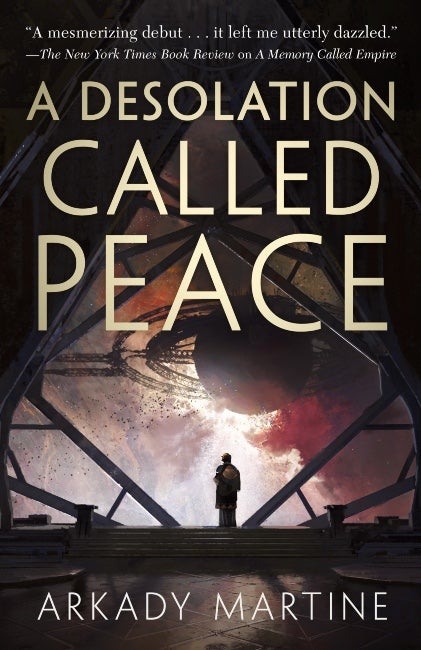
Arkady Martine has written another excellent book. A Desolation Called Peace branches out from the space covered in A Memory Called Empire, and while I know there’s more that could be squeezed from the first book’s subject matter I think this evolution serves the story (and the reader) well. And don’t worry, Martine doesn’t abandon anything she built before. Instead, she calls forward elements which had been waiting in the wings; it’s more of a shift of focus than a dismissal of the old.

Specifically, where the first book asked “what does it mean to be human, or a person? Who draws the line, and where?” as a running background theme, this book puts that front and center. And I love that. Those questions are important at any time, but they’re integral elements of a totalizing imperial worldview, and as such they’re critical to this story and setting. Honestly, those questions are part of what I love about science fiction in general, and they’re a big part of what I love about this series in particular.

Now, this book felt a little slower to me, more gradual or less heart-in-throat until nearer to the end. But it’s no less fraught. In many ways, the excruciatingly complicated fusion of the personal and political feels more poignant here, even as the book and that fusion explore new themes. And yes, Martine is still good at digging into the ways hegemony wraps itself around everything, strangling like a ligature until conformity (or death) is achieved.

Now, about this book feeling slower… I wasn’t sucked in head first the same way that I was for the first book, not until further into the book than last time. I’ve had a hard time telling how much of that comes from different reading circumstances, like changes in the time I set aside for reading, versus how much comes from differences between the two books. Either way, I’m pretty sure it took me much longer to read A Desolation Called Peace than it took me to read A Memory Called Empire

But the magic that Martine conjures in the first book is still present. A Desolation Called Peace is still full of heartfelt complicatedness, and confusing wants and desires and struggles, and its *really good*. The conflicts brought to the surface here are wonderful. I like seeing them on the page. I haven’t seen them in other books any time recently, and it feels really good to see Martine explore the ways in which hegemony and empire worm their fingers into everything, no matter how intimate or pedestrian.

Unlike with some other series (e.g. Becky Chambers’ books), order matters here; you should absolutely read A Memory Called Empire before you read this one. If the first book wasn’t to your liking, I’m afraid this one probably won’t be either. But if you’re not a light reader, and if you want good intrigue, ethical dilemmas, questions of humanity, interestingly alien aliens, and the baggage of empire… this is your deal.

A Memory Called Empire, by Arkady Martine

Arkady Martine absolutely knocks this one out of the park. 

A Memory Called Empire is a lot of things, but at its heart is a bittersweet tension of love, admiration, and despair for a culture and civilization which will destroy one’s own. It’s about being caught on the outside, stuck as an outsider despite so much work done to fit in. And it’s a thriller about loyalty and betrayal, both expected and not, from without and within.

It’s an excellent book, as I said when I mentioned it a couple weeks ago.

I’ve struggled to write anything more here, and thrown out a few hundred words that might spoil the book for you. Exploring what Arkady Martine does so well without giving away her story is… challenging for me.

She’s managed to write a compelling culture, one in which I can see traces of several historical imperial courts and practices, and held it up for us the readers as a deep and multi-layered thing tantalizingly out of reach of our own comprehension. The fraught weight of meaning is present and palpable, but just enough is lost in translation for us to experience it mostly as our narrator does, unable to be a full part of it as anything but barbarians.

Speaking as someone who studied linguistics, and specialized in the production of ideology and ideological identity through political speech, this book is a delight. Speaking as someone who loves studying political science, international relations, history, and the rise, fall, and gradual mutations of empire, this book is marvelous. And as someone who deeply appreciates heartfelt stories juxtaposed with intrigue and danger—wow.

I’m trying not to ruin anything for you. Please just go ahead and read the book. It’s really good.