What about a 2X game?

I’ve been watching people play Civ again, as a writing break. It’s less dangerous than letting myself play the game, what with the likelihood of one-more-turning through the rest of the day. But all this Civ-watching is tickling a game idea I’ve had for a few years.

Years ago, there was an article on RockPaperShotgun reviewing a 4X game in which the writer mused on why there weren’t any 3X, or 2X games. For those unfamiliar with the term “4X,“ in this context it stands for “eXplore, eXpand, eXploit, eXterminate”—a series of objectives common to many real-time and turn-based strategy games, considered foundational to turn-based strategy games like Civilization. But that writer’s comments resonated with me. And while there are first-person exploration games and walking simulators (which might count as 1X games), I’m really curious about a map-based game.

Civilization, and games like it, engage me most during the early stages. It’s the exploration that really does it for me. The discovery of new possibilities, the uncovering of new places of interest, and the process of learning how to connect the places you already know with the places you’ve just found. These are similar to the themes and experiences that I love in exploratory RPGs.

By the time that I’ve reached mid-game, the game often feels more stagnant. I can usually run the numbers at that point and have an idea of whether I’ll win or lose, or I know that the focus of the game will shift to the (almost) inevitable grind of fighting some other group. I’ll need to declare war on someone else, or they’ll declare war on me and I’ll need to defend myself. And even there, I can often tell beforehand how those challenges will play out. It doesn’t help that the AI isn’t very good at using its military in most Civ games. This means that the game, which had been exciting and engaging and full of discovery, slows down and fills with busy-work and micromanagement.

I expect some people really like that stuff. Sometimes I find it rewarding too.

But I’d love to see something else. I’d love to see a game that is predominantly about exploration, and about making connections. Maybe it’s about spreading out from one point and building trade networks? Maybe it’s about finding ways to connect things you’ve discovered with your home. I’m honestly not sure, except that I know I want the game to be more about discovery and exploration than about any of the other eXes.

What’s kept me from making this, for the most part, is not having made time for it. That, and the pandemic, which has made playtesting with excited friends more difficult. But I want to try putting together something with index cards, flipping tiles from the top of a deck as you uncover new spaces. There are definite limitations to doing this by hand instead of programming it, but at least it would avoid needing to a) refresh my ancient programming skills to be able to program such a game, and b) figure out how to generate satisfying maps through procedural generation. Instead, I simply need to puzzle through how to make satisfying maps via kludge and fiat with tile placement.

If you do know of something like this, I’d love to hear about it. I’ll be sure to share whatever I discover, when and if I try it myself.

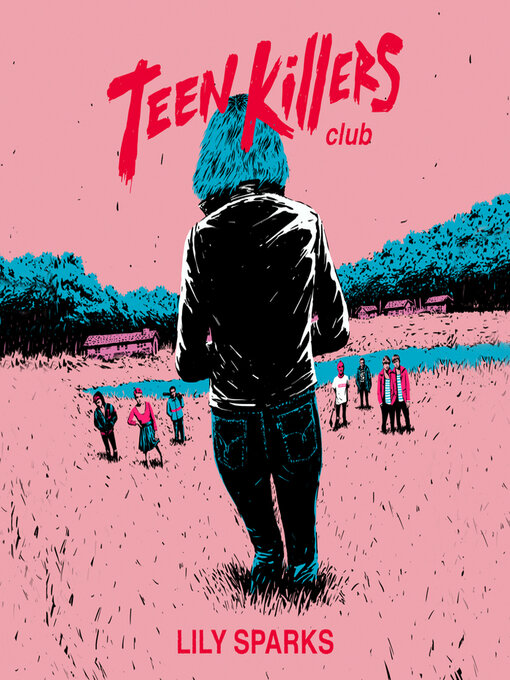
Teen Killers Club, by Lily Sparks

Sometimes books read like TV shows. This is one of those times. Hardly surprising, given that the author has a background writing for TV dramas. She does a good job of it here, too.

Lily SparksTeen Killers Club handled me roughly. I loved it. Riding its ups and downs, I felt emotionally whipsawed and had to set it aside a few times to take breathers and regain equilibrium (something our poor narrator never has a chance to do). By the time I finished, I felt like I’d just gotten off a roller coaster. I wandered around in a daze for an hour or so, still locked in admiration for the ways the story had pulled me back and forth time and again. Because for all that I’d been on a ride, it was an impressive ride. Sparks knew how to grab my heartstrings, and she did it fearlessly. The book had caught me and reeled me in, and pulled me along for the whole thing.

Well, not quite the whole thing: at the start I was partly distracted by needing to finish another book. But it was easy to slip back into it after finishing the other book. Then, of course, it was hard to put it down.

And yes, I’m on board for reading the sequel (which I suspected would exist, but wasn’t certain about until writing this). I’m a little concerned about it, for reasons that are lightly spoiler-y and which I’ll share in more detail below. Blandly put, I’m not sure which genre tropes the story-to-come will follow. There are a variety of options available, after all. But the story’s overall tone could go in several directions, and I won’t know how well it will fit my palate until I read the dang thing—which I will definitely do.

All of which is to say, if you like YA teen drama and serial killers and murder mysteries, this is a great book for you. Be ready for a heck of an emotional ride.

Now.

I can’t go into detail about this without implied spoilers for the book. But this series of observations are eating my brain, so here goes.

*IMPLICIT SPOILERS*

This varies by subgenre, but dramas don’t like to kill characters or let them stay dead. This is especially true of TV dramas, which often suffer from what I’ll call a dramatic conservation of characters.

I say suffer, but in moderation this conservation is a positive thing. Because dramas build up value in their characters, investing them with growth, backgrounds, and relationships that make them richer and more interesting, these dramas are loathe to sacrifice their developed main characters or let them die—even when that death would make sense. This dramatic conservation of characters feeds into the “main character glow” or “plot protection” that shields developed characters from death. But this conservation also provides the audience with reliable narrative focal points, and both encourages and rewards the audience’s emotional investment.

Some stories are more prone to this than others, but I think it’s especially prevalent in character dramas that specialize in arranging (and rearranging) their characters along various social faults of contention. Characters twist or are twisted into new disagreements, the situation is milked for all the drama it can hold, and then some new development arises that prompts another realignment. The longer a story runs, the more realignments happen, and the more strange situations people end up in as the writers try to deliver new and exciting stakes. This is the process that leads to jumping the shark. It’s also the process that results in somebody being caught in a terrible accident or dangerous what-have-you and then miraculously surviving (possibly with some character-altering development, like amnesia).

Usually, dramatic conservation of characters is maintained. Usually the characters don’t actually die, or if they do they aren’t actually gone for all that long. That’s part of the reason that so few character deaths are treated seriously in these stories… or at least, why so few are treated seriously amongst these stories’ audiences. The genre-savvy know from past experience that characters don’t usually die or stay dead.

This, sadly, only makes it harder to actually up the stakes in these genres.

It doesn’t help that these stories sometimes try to up the stakes by killing off people the audience has little attachment to. Instead of demonstrating that the situation is dangerous, this only reinforces the relative safety of the main characters. Scalzi’s Redshirts is all about this trope as it exists in Star Trek. Other stories try to demonstrate how dangerous and gritty they are by killing off characters seemingly at random—sometimes this works, and sometimes it just feels like the author is trying to be edgy.

I think character death in these stories usually works best when it’s given space and weight, or at least makes an impact on other characters (I’ve written a bunch of posts about this). There are a handful of exceptions.

But the thing that’s eating at me, the thing I’m concerned is going to happen in the sequel, is that Sparks won’t let characters die when they really ought to… or will kill more characters just to show that she can. She’s set herself up for a tricky path going forward, and I suspect *EXPLICIT SPOILERS* based on the end of the book that she won’t let characters stay dead when that would actually fit her story well. But I don’t know! Maybe she’s just lulling me into a false sense of security. As I said above, I’ve got to read the sequel to find out. *END SPOILERS*

Still on board for YA drama about teen serial killers, with some murder mystery on the side?

Get thee to the library (or bookstore).

TUNIC

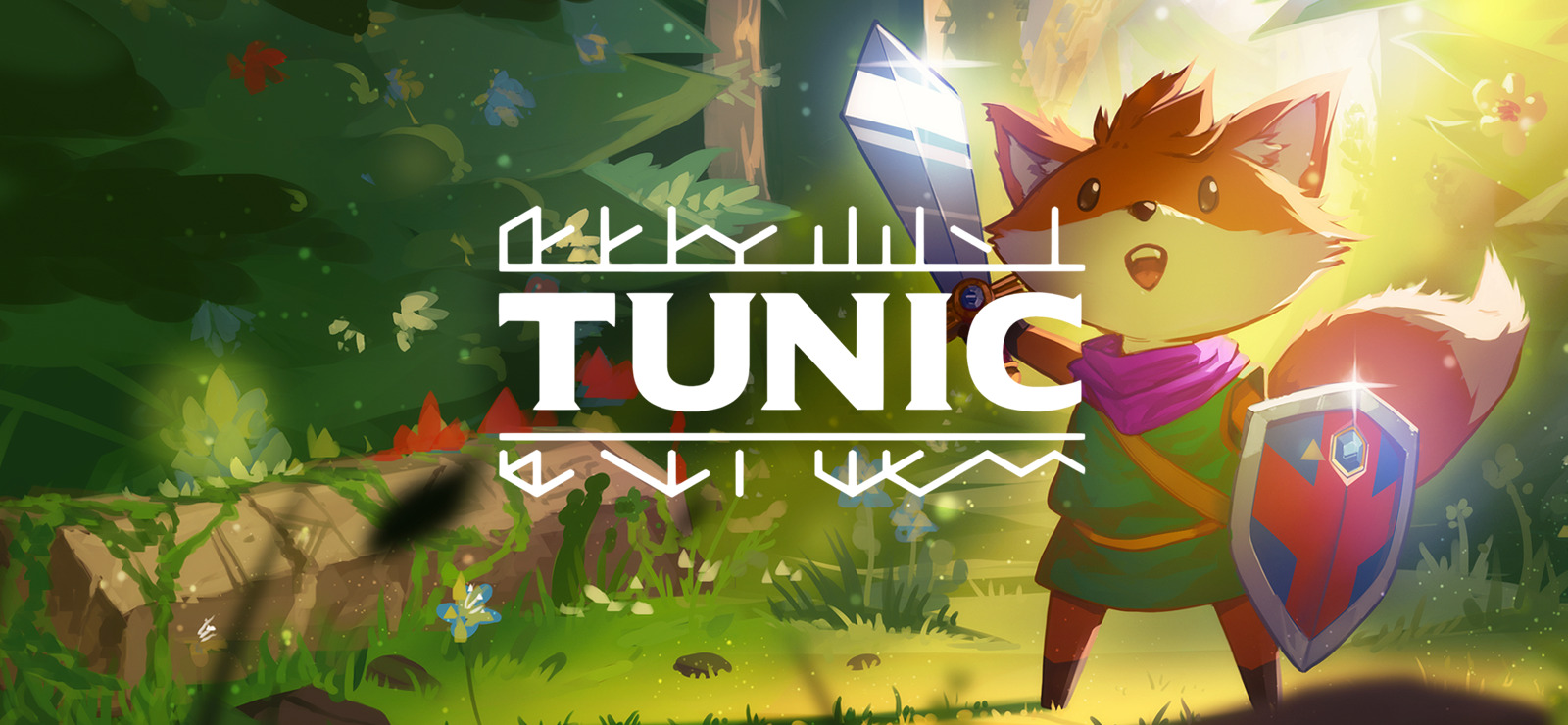
TUNIC is good. It’s great. It has a goofy, simple name that has encouraged Google to serve me both articles about the game and articles of women’s clothing, and it’s drawn me in magnetically over the past two weeks. There have been nights where I’ve had to peel myself away from the computer, and gone to sleep still puzzling over how to get past the latest obstacle I’ve found. It’s worth checking out.

This game has never had a name that, to my mind, properly acknowledged its potential. I first saw it teased at PAX East years ago, when it was still called Secret Legend. From what I can tell, the game has grown significantly since then.

And it’s good.

Other people have already made this quip, but they’re on the right track: TUNIC is a Souls-like by way of Zelda nostalgia. But that’s not all. In many ways, TUNIC reminds me of a less bloodthirsty Hyper Light Drifter (HLD) with more puzzles and more Metroidvania-esque exploration. It’s softer aesthetically, with all its gentle shapes and bright colors, and less challenging in its basic fights. But it still rewards—and requires—mastering its combat-mechanics in order to progress. As is traditional, boss fights are designed with the expectation that you’ll die a number of times. You’ll gradually learn the bosses’ patterns and how they change over the course of the battle, and might find sneaky ways to use those patterns against them.

TUNIC starts you off slowly, a classic ”wild Link” waking on a sandy shore. It introduces its mechanics in a dribble, offering you new equipment and consumables in chests hidden throughout the game—some hidden better than others. It even gives you an in-game manual. But TUNIC requires you to collect every manual page you want to read, and (again like HLD) almost all of its in-game text is in an unfamiliar script.

Just enough of the manual is in English that I haven’t needed to translate the script in order to understand how to do things yet. But nearly the entire “Background Story” page is impossible for me to read, along with other big chunks of the manual. So making a translation is on my to-do list; there are enough pages mostly in TUNIC’s script, enough clues and explanations that I can’t read yet, that I think it is worth it.

Frustrating as this might be, it’s part of what sets TUNIC apart from other similar games for me. It has somehow doled out just enough information to keep me feeling hooked and encouraged, and I haven’t yet spent long enough mashing my head against a wall to despair. Better yet, while there are clues hinted at in the manual, there are also secrets the manual carefully doesn’t explain or mention, which only opens up the feelings of possibility even further.

Given what I heard about the game developers giving their early reviewers a Discord channel where they could share questions and hints about what they’d discovered so far, my hope is to find other people who are playing and compare notes with them. Maybe I’ll do that on the official Discord server; while I’d prefer to confer with friends, the community there looks like it’s doing a decent job of not spoiling things for the most part. And that’s good, because I don’t want spoilers! And I don’t want to spoil anything for another player. I might be willing to tell people that yes, there’s an item that will allow you to do something, or that yes, there’re hints pushing me to investigate in another direction… but I want to find the actual discovery for myself. The few hints I saw on the official server reassure me that I’ve barely scratched the game’s surface, even though I’d thought I was pretty far along.

I guess that makes sense. So far, I’ve just kept finding more things hidden around the world of TUNIC. And every time I discover a new tool or technique, I revisit all the old places I’ve already been and hunt for what I might have missed. So far, I’ve missed a lot! But I’ve also uncovered tremendously cool things, and it’s that feeling of discovery that I love so much. The satisfaction of puzzling out how to do something—how to open a door I’d struggled with or how to sneak my way past it—is what feels so rewarding. I don’t want to ruin that for anyone. And if that’s something you enjoy in a game, I have to recommend this to you.

If you’re able to play it, and if you like Zelda-ish games with many deeper puzzles, and don’t mind an occasional tricky boss battle… damn. Try TUNIC.

The Orpheus Plot, by Christopher Swiedler

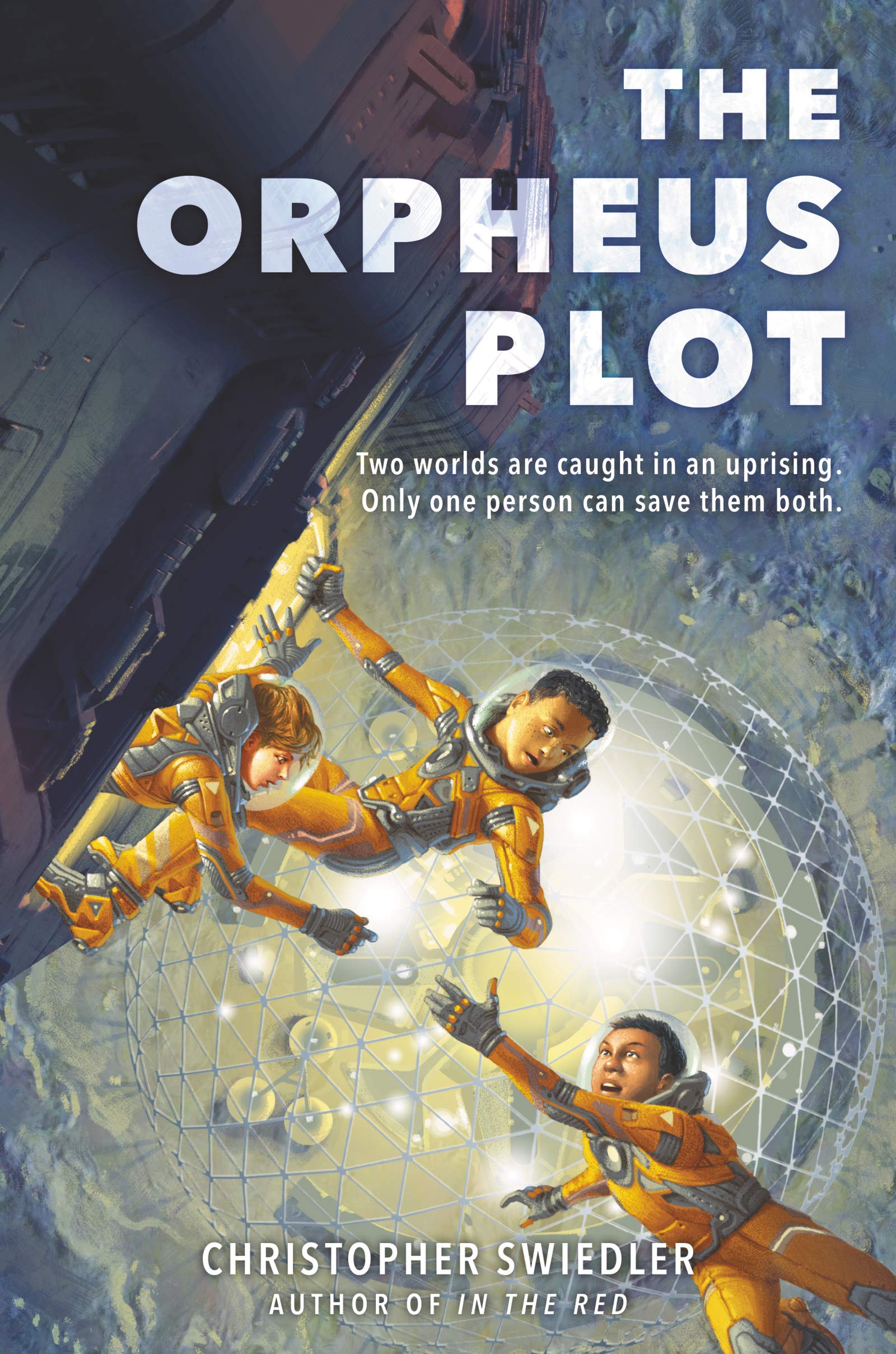
The Orpheus Plot is fun, and an excellent comp title for Bury’em Deep. Its dramatic arc has a similar structure, it has good kid vs adult conflict, and it digs into some moral quandaries. Even better, it’s all about a young teen coming into his own through his larger struggles against the powers that would control him and his world. It’s more than that, too, but those are parallels enough for me to know that I should reference this book. That fact that it’s also space-adventure MG sci-fi, vanishingly rare, is just icing on the cake.

The biggest reservation I had with In The Red is resolved here; The Orpheus Plot clearly digs into the social questions and issues of its setting, rather than more or less pretending those things don’t exist. I’m glad it does. I can see how In The Red’s narrator might not have been aware of those larger struggles, but I think The Orpheus Plot is more interesting and more rewarding for focusing so much on the societal struggles of Inner System-vs-Belter politics and the struggles of life in the Belt in general.

Now, because of how similar our stories are (and because I do actually think both my story and Swiedler’s are good) most of my quibbles about this book are smaller scale and more personal. If you want middle grade space sci-fi I can already tell you to pick this up. If you want me to pry a little deeper, keep reading.

First, a few thoughts about some of the emotional arcs.

Some of the emotional resolution later on felt a little rushed or unexpected. There were hints of social and emotional arcs that had outgrown the established material without enough support in place for their final end points—mostly in the narrator’s interactions with other students towards the end. And there were a few places as the climax rolled on where it felt like a scene or interaction happened because it needed to be in the story and the main character needed that push, rather than because the story world led us there… just normal issues, spots where I felt like I could see the seams that revealed the story’s artifice. Also, those interactions are classic genre tropes, and they don’t feel out of place so much as they feel noticeable.

Now, a bigger difference between The Orpheus Plot and Bury’em Deep: I think Christopher Swiedler has more positive opinions of hegemony, authority, and the system than I do. That, or he’s less willing to question such things in fiction for middle grade readers.

Relatedly, there are some ways in which Swiedler’s space-future feels remarkably staid. There isn’t much queerness (I think I recall one mention of a non-het couple?), and neither the hegemonic center nor the frontier fringe have much visible divergence from our own social norms. That feels odd.

Historically speaking, divergence from shared social norms increases with time and distance. “The past is a foreign country,” to quote L.P. Hartley. People telling stories about the past usually put considerable effort into rewriting, recontextualizing, and even obscuring pieces of the past in order to make history match the author’s social standards, preferring to highlight the places where things are still the same (and make up commonalities where they need more). Many Westerns are an excellent example of that, ignoring the queer, non-traditional, and racially intermixed communities that developed on the frontier of the expanding US in favor of writing about strong independent straight white men.

But the future is a foreign country too. I wanted more of a departure from our own ideas of how society works, more ‘foreign-but-recognizable’ social conventions. The Orpheus Plot clearly has some, and highlights the differences between Belters and Inner System folks, but I wanted more of them. I wanted to know that there were “total weirdos” out there somewhere, and I wanted to feel more confident that life as we know it feels totally foreign to our narrator—that, from our narrator’s perspective, we readers would be uncannily different.

But I think the key to this, the reason this story feels more staid or in line with authority, comes back to the stories it most reminds me of. This story’s narrative arc reminds me of Treasure Island, or a reimagining of something from C. S. Forester’s Hornblower or Patrick O’Brien’s series. And whatever issues this story might raise with authority (the Navy, Inner System-dominated politics, etc) those authorities are still presented as less-bad than the alternative.

I’ll go into further detail, but there’ll be some *SPOILERS*.

So, this story is more than a modernization of those old Age of Sail adventure stories. But while we’re exposed to the ways in which the system is clearly bad for Belters, and we’re given a sympathetic view of Belters’ complaints, the story’s key revolutionaries are never painted with anything but a villainous brush. Heck, the big villain—leading the revolution—is almost comically evil, engaging in some really tropey, mustache-twirling bad stuff. And we never see enough of his side of things, or hear enough about his story, for those actions to feel anything but melodramatic. Moreover, he’s enough of a scumbag the rest of the time that it’s easy to ignore the validity of his larger complaints. No matter how much sense some of his complaints might make, and no matter how the narrator might pointedly agree at times, he’s still obviously bad rather than complicated.

It’s okay to have bad guys in your stories. But I wanted there to be more complication to the central conflict, rather than having the most sympathetic revolutionary (not that main baddie) feel more like a less-charming Long John Silver. 

Part of the struggle here is just time and focus in the book, I think. That less-charming Long John Silver, a Navy crewmate involved in the lower decks’ conspiracy with the revolutionary Belters, never quite has enough narrative focus to become a helpful replacement parental figure. Without that narrative focus, without the warm fuzzies of a friendly older ally on the ship, we (and the narrator) don’t quite feel close enough to him to wonder why he makes the choices he does. That means that even when he offers us a little more moral complexity near the end of the story, it doesn’t carry as much narrative weight as it could have, had there been more connection there.

Plus, our narrator is so concerned with making it in the Navy and not rocking the boat that we never get as much honest reflection on how the Navy isn’t doing well by the Belters. There’s a brief scene where that becomes relevant, but it’s not in the forefront enough of the time, the way it’d need to be if the story were really digging into the oppression experienced by the Belters. Honestly, I’m not sure how the story would have worked if that had been written differently. I suspect the book would have had to be longer. *END SPOILERS*

Anyway.

I don’t know that I did a better job (in Bury’em Deep) with any of the issues I’m critiquing in The Orpheus Plot. But I think interrogating those points, poking the issues and digging deeper, is really important. And maybe, I hope, doing that in fiction for kids will invite their further reflection.

The Orpheus Plot is good space adventure fun. If that’s what you’re hankering for, do yourself a favor and pick it up.

Update, 3/17/22

Today’s been an odd one. I’ve been productive on other projects, but without a specific book or game lined up to review, I’m at a bit of a loss here.

I’m partway through two books, Teen Killers Club by Lily Sparks, and The Orpheus Plot by Christopher Swiedler. The Orpheus Plot is another middle grade sci-fi book in the same setting as In The Red, this time with slightly more focus on politics and intrigue (a Belter kid wants to join the space navy, which is almost entirely composed of people from Earth, Mars, and the Moon). It does some of the things I’d wanted to see from In The Red, dealing a bit more with the social expectations of people in this setting and how that creates and influences political conflict, so that’s a plus. I’m about halfway through; I’m enjoying it, and I won’t render any verdict yet.

Teen Killers Club caught my attention for being a potential comp title for one of my friend’s YA projects. I’m about a quarter of my way through that one, so I have even less to go on, but at the moment I’d call it a fusion of Holes, Suicide Squad, and the surge in fiction about serial killers from a couple years back. It feels like one-part thriller, one-part mystery, one-part teen camp drama, and it ate a good deal of my time earlier this week and stopped me dead in my tracks in the middle of The Orpheus Project. I’m enjoying it so far.

I’m also rereading Naomi Novik’s socialist-Harry-Potter-but-different The Last Graduate, this time out loud to my partner. They’ve been loving these books (they insisted that I start this one the day after I finished reading the first book, A Deadly Education, to them). That’s good, because I love them too. But I’m not able to read multiple chapters a day because by the time I start reading it’s usually already late. So there’s been an amusing and agonizing dance of trying to find places where I can stop each evening that will both keep them hooked and give them enough breathing room to actually be okay with stopping. The first has been much easier than the second.

Edit: I realized while writing this that I never reviewed The Last Graduate here. I’ll have to rectify that.

I, like several friends of mine, have picked up Vampire Survivors. It’s not an especially complex game, but it does a stunningly good job of catching my attention and holding it. Compulsive. That’s what I’d call it. Usually that’s not a quality I want in a game, but I used it to distract myself from some unwanted thoughts earlier today and that seemed to work pretty well. Maybe not the healthiest solution, but quick and effective at the time.

With a little luck, next week I’ll have finished one of those books and be ready to share my thoughts on it with you.

Hero’s Hour revisited

It’s grown on me.

Hero’s Hour, which I wrote about before, is out now in a full release. The game still feels like the same casual-ish Heroes-lite offering I mentioned before. But with its stability improvements in the release build, I can finally play the game without multiple crashes in one sitting. It turns out that’s enough to change my feelings on the game.

The visuals haven’t changed. The maps still feel a little bland, but there’s significant variation in visual appeal between different biomes and it seems like I was mostly playing on the ugliest possible options last time. The units aren’t as detailed or lush as HoMM 3’s units, but their cute lo-fi pixel art design matches their slightly cartoony movement and attack or death animations. It all gels to match the aesthetic, for the most part, and does a decent job.

The map generation and layout also doesn’t seem to have changed. But as one might expect from procedural generation, its quality varies: sometimes the spacing I complained about previously is an issue, sometimes it isn’t, and mostly it feels right enough. However, I admit that the variation is something I never saw HoMM 3 manage well, and it does help keep things interesting. Hero’s Hour deserves credit for that. It also helps, no doubt, that I’ve changed strategies and picked up an early extra hero or two to cover more ground and to augment and reinforce my main army faster (old HoMM strategies I’d nearly forgotten).

Also, I think I’ve found the ‘deeper strategy’ I’d glimpsed before. It’s not what I’d expected. Hero’s Hour gives every faction unique mechanics, and every hero a unique arrangement of common skills, without (apparently) trying to balance any of them. I generally like games where every faction can do weird cool stuff, and I’m okay with that imbalance. But this means the most reliable path to victory (vs the AI) is to find and exploit combos of skills and faction units, and then hammer that combo relentlessly. Changes in strategy are rarely necessary when facing the AI. Some heroes seem strictly worse than others, whether through weaker or slower-starting combos, but counter-combos are also available sometimes. This creates a messier-than rock-paper-scissors dynamic, which I think could shine in a multiplayer setting. Sadly the game only currently offers multiplayer via hotseat—classic HoMM—and the dev apparently isn’t certain how to implement other multiplayer options.

What’s my final take?

In context, this game is extremely impressive. It’s predominantly one person’s project, with help from a few other contractors. Now that it’s more stable, I’m able to enjoy the HoMM-esque feel without interruption. As I said above, it turns out that’s enough to let me enjoy the HoMM homage without fixating on the minor shortcomings. I can just relax and have fun.

And your mileage may vary! Some folks like the game’s aesthetic more than I do, including the map’s visuals. Plus, there are enough weird interactions between different units and their abilities that the game can totally surprise me; that’s both good and bad, but it leaves enough intriguing wrinkles to draw and hold my interest for a bit. And at least in Hero’s Hour I can puzzle through why what was supposedly an easy fight was actually hard. This game does a far better job explaining unit and hero abilities than HoMM 3 did, where most unit abilities were opaque and the path to victory was generally predictable.

I’ve seen precious few games recreate the HoMM experience any time recently (though I’m still watching Songs of Conquest) and if you want to experience HoMM again, this is one of the few options that can deliver that. Playing Hero’s Hour is fun. The game knows what it’s doing. Plus, there’s a free demo, which is a big plus.

The Black Tides of Heaven, by Neon Yang

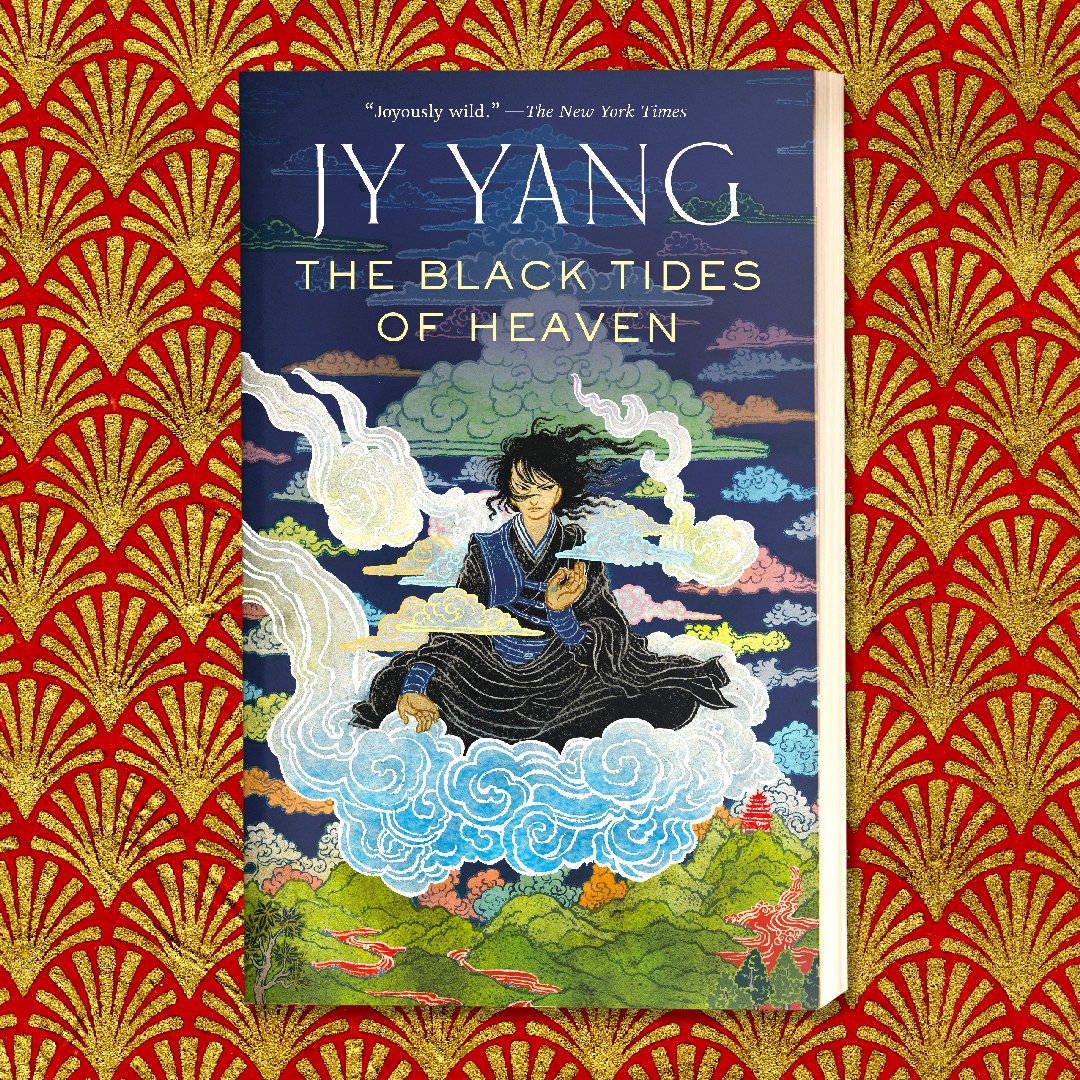
The author’s name has changed since initial publication, hence the different name on some hard copies and publicity images

The Black Tides of Heaven, by Neon Yang, left me feeling a little narratively unmoored.

I suspect that the biggest cause for that was my own fault: I put the book down about halfway through, and then took over a month to return to it and finish it. But that means that I’m writing this from an odd place. I’m not sure how much my perspective has been shaped by that prolonged delay, and I can only recommend that you take my review with a grain of salt or three. The book certainly seems to have worked better for other people than it did for me.

Part of my sense of being narratively adrift grew from the way in which the book is divided into sections, with each section separated from the last by a big temporal gap. Each section felt like an extended short story about that time period in our POV character’s life. But chaining those extended short stories together into one novel didn’t feel like it created the narrative cohesion I wanted.

In some ways, this is the opposite of the cool technique that Martha Wells used for her first four Murderbot novellas. Where Wells wrote a series of four stories that each gave a snapshot of emotional development and then kept them in separate novellas to let them stand on their own and build on each other, Yang has written those separate stories and put them all in one book. It didn’t work as well for me.

Writing is all about adding just enough to let your audience fill in the rest, without adding so much that they get tired of it. I think Yang went just a little too light for me. I could sketch out the narrative arc and tell you what the points of growth and resolution were, but it didn’t feel like there was quite as much connective tissue between the narrative dots as I would have liked.

Maybe, if I’d expected the book to consist of those discrete mini-stories beforehand, I’d have a different opinion of it now. Maybe, if I hadn’t put the book down halfway through, I’d feel like Yang cut out just the right amount of material. Instead, none of the smaller segments individually brought me the kind of narrative movement or growth that I wanted. And the individual segments didn’t quite gel together to make the larger whole feel quite right either.

But…

Maybe I’m still looking at this the wrong way. There are several other books out by Yang, all in the same series, at least one of which looks like it’s supposed to be semi-contemporaneous with or closely following this book. Perhaps those, in connection with this one, would give me the more complete perspective and narrative arc that I’m looking for. I’ll probably pick those up and read them just to find out. Maybe not right away.

Having said all that, I should add that The Black Tides of Heaven has solid child-parent struggles, a setting that feels refreshingly distinct from standard Western fantasy, and lots of good queer content. And it’s well-written! I feel bad complaining so much above when the fault may be my own. Whoops.

So, if any of those things sound interesting to you I suggest checking the book out. And I recommend reading it all in one go, or at least not stopping for over a month right in the middle. That was definitely a mistake on my part.

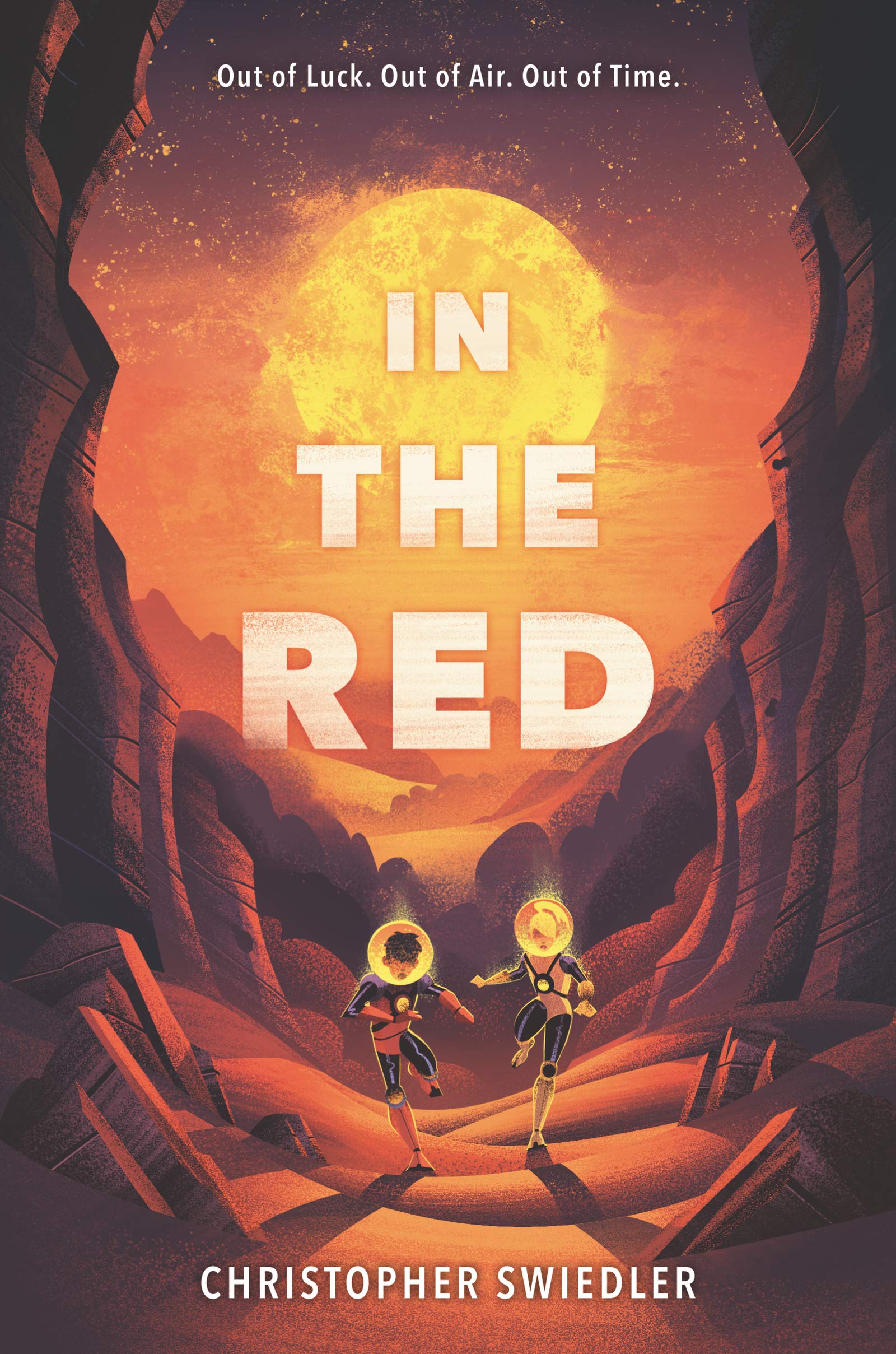
In The Red, by Christopher Swiedler… plus other thoughts

I write this while distracted. The Russian invasion of Ukraine is eating at my mental budget (hot take: the Russian invasion is bad). I’ve struggled, wondering whether I should put this book review aside and instead write about the war in Ukraine right now, or just sit down and write a review without mentioning what was happening. But two things leapt out at me while thinking about that.

One, if I’m going to write about Ukraine, I’m probably going to approach it from an analysis of the speeches of Zelensky and Putin over the past few days, and a discussion of the social and geopolitical concerns involved. Worse, giving the invasion the attention it deserves will take more time than I have for this today… and possibly more time than today, period.

Two, my struggle with writing this review and ignoring mention of the invasion of Ukraine is relevant to my discussion of this book.

Why?

Give me a moment, and I’ll tell you.

In The Red, by Christopher Swiedler, is a fun science fiction survival adventure written for middle grade readers. For nerdy middle grade readers, probably. Sold as Hatchet meets The Martian, it delivers on those ambitious comp titles.

I found it in the process of researching agents for my own middle grade science fiction adventure, Bury’em Deep, and I’m glad I did. First, I’m glad because I think the agent who repped it might like my manuscript—though as ever, queries are a shot in the dark and I sent my query to her before I’d read this book, due to library delays. Second, I’m glad because it’s fun. I enjoyed reading it.

To elaborate: I was a huge fan of Hatchet when I got my hands on it in third grade. In The Red has a lot of the same energy, and Young Henry would have loved this book. So if you like middle grade survival fiction, and if you like science fiction, you’ll probably like In The Red too.

But finally, I’m glad I found In The Red because I think it’s a decent comp title for Bury’em Deep. Mostly. I’ll explore how they diverge in a moment.

But first, In The Red is a good comp title for Bury’em Deep because the two books are so similar in genre and structure. The rhythm of narrative tension, and the way both books escalate tension and stakes, is parallel. In several cases that’s true almost down to the chapter and page. I go a little harder right at the start of Bury’em Deep, but otherwise the books’ slow build and intermittent spikes match each other’s feel quite neatly. Furthermore, both main characters share the fundamental desire to be safe and go home, and both have some ”questionable” risk assessments. And the similarities continue in their emotional experiences: both Michael (of ITR) and Barry (of BD) are anxious, though I think Michael’s experience of anxiety is closer to a classic clinical diagnosis.

But how do the books diverge?

And what the hell does all of this have to do with Russia’s invasion of Ukraine, or with my desire to write about that invasion instead of writing this book review?

In The Red is a good middle grade science fiction survival story. It replicates the feel of Hatchet, and it threads The Martian’s needle of being a mostly-hard sci-fi survival story on Mars that still feels engaging.

But it confines itself to those stakes.

Our narrator’s survival story isn’t impinged upon by any other social concerns, or any awareness of what’s happening—please imagine me waving my hands—“out there somewhere.” This means that I have no sense, when reading it, of what the rest of the setting is like or what else might be going on. I don’t know who’s at war with whom, I don’t know what Michael’s parents worry about late at night, I don’t know what social issues are present and plaguing the Mars colonies or erupting out in the Belt. For that matter, I don’t know what the hell is happening in Florida, where one of our characters is from. We’re never given a hint. Apparently Florida still exists, and the Florida Keys haven’t been entirely submerged by sea level rise. But beyond that, it’s anyone’s guess.

I don’t know how well I succeed, but I’ve tried to make Bury’em Deep feel different than that.

Returning to the start of this piece, the answer to my struggle was to write about this book and to mention the Russian invasion. And that “yes both” approach was my approach for making Bury’em Deep feel like a more realized setting. I want readers to trust that they’d know if something as momentous as the Russian invasion of Ukraine were going on in Barry’s setting. I want them to trust that they’d at least find out when Barry did. I want them to believe that Barry would have opinions about such a thing.

I’ll elaborate.

Barry, and thus the reader, doesn’t know everything that’s going on. His understanding of his world (well, solar system) is imperfect, and he’s not well-versed in all the relevant political and social conflicts that are going on. But he’s aware of some of it, and he can’t ignore how those conflicts impinge on his life. Moreover, his awareness of those conflicts and struggles only increases over the course of the story. And while his immediate struggles for survival are small in scope, they are tied to many other much larger struggles. 

Basically, Bury’em Deep is political. I try to give as deep a setting background as I can without ever breaking Barry’s train of thought. I want to enable my readers to draw their own conclusions about the status quo in Barry’s solar system, and I want them to question how reliable and astute a political observer this thirteen-year-old spacer kid might be. I’m not trying to pull one over on the audience with an unreliable narrator, I just want the readers to ask themselves questions. And I want deeper questions to be available for more advanced readers, without getting in the way of a less advanced reader’s enjoyment.

This difference, the distinction between something that feels “apolitical” (In The Red) and something that is absolutely jam packed with political observation and experience (Bury’em Deep), feels like a difference in era as well. The science fiction that In The Red feels like is older, and less interested in critiquing society. It isn’t as interested in examining, or even acknowledging, modern day moral and ethical questions. It’s willing to accept our social assumptions and go have fun doing something adventurous. It doesn’t encourage readers to imagine those possible moral arguments, or to wonder for themselves what might be right, just, or good.

And I’m fine with that. I don’t think every book has to be a deep dive into hegemony. I don’t think every book has to question our bedrock assumptions about society and personhood and what is moral or ethical.

But “apolitical” is a quiet lie: all art is political. Not poking at our social assumptions goes hand in hand with tacitly approving of them.

Thus, I fervently want some genre fiction out there that does question our social assumptions. I want some genre fiction that doesn’t put on its blinders and just focus on the fun adventure to be had. I want fun, yes, and adventure, but ideally I’d love those things with a dash of wondering about whether what someone has done was just or correct. I want young readers to enjoy a story, and I want to invite them to engage critically with that story’s world.

My hope with Bury’em Deep was that it would be gateway fiction. I wanted Bury’em Deep to steer young readers towards books by N.K. Jemisin. I wanted to introduce classic science fiction questions about the boundaries of humanity, popularized with Do Androids Dream of Electric Sheep / Blade Runner and the old versions of Ghost in the Shell. And I wanted to be honest about the struggles and conflicts in my characters’ lives, not keep troublesome and scary things hidden. That means mentioning the invasion of Ukraine, or allowing similar things to be a part of the setting.

In The Red focuses on being honest with readers about anxiety and panic attacks. My hope is that Bury’em Deep does that with the question of who we count as a person and where that boundary lies. So they’re not quite the same book after all.

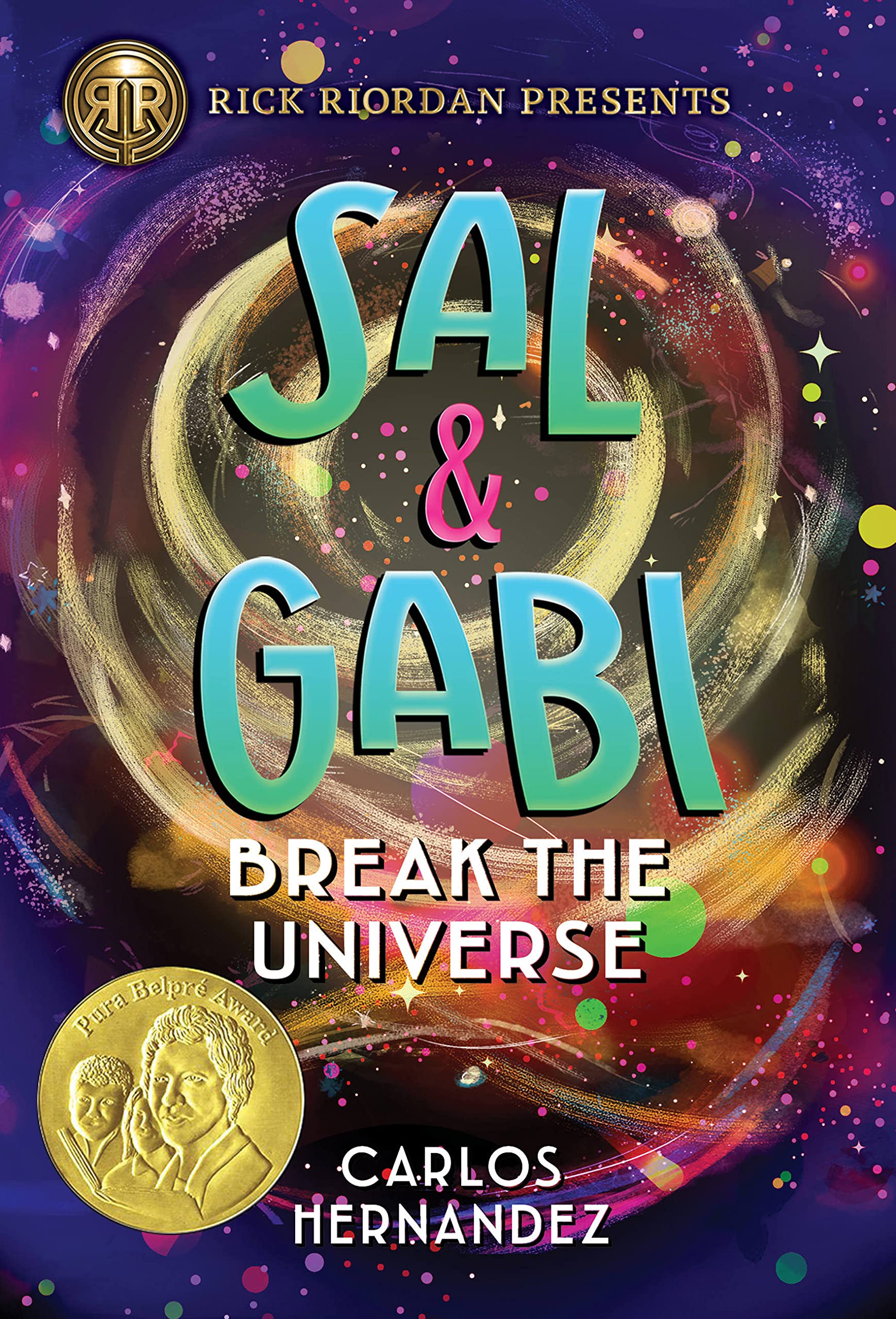
Sal and Gabi Break the Universe, by Carlos Hernandez

Sal and Gabi Break the Universe, by Carlos Hernandez, gave me warm fuzzies.

It walks the tightrope of middle grade fiction with flair, firmly accessible without condescending to the reader. It’s kind, it feels honest, it’s the kind of book that I’ll recommend to anyone (provided they don’t mind reading about kids in middle school). It’s a really solid book that deserves to be enjoyed by more people—and that more people deserve to enjoy.

There’s a couple things I think the story does really well, and I think I can cover them without spoilers.

I’m very aware that fiction is a facade. And I know that making it look and feel like something deeper, giving readers enough to cling to and build on to believe that the characters are full people, is a lot of work. Doing that for one or two characters is difficult enough. Sketching out the other nearby characters such that they also feel deep and don’t detract from the piece as a whole is beautiful.

Carlos Hernandez makes this story beautiful.

The kids who are our main characters all feel deep, human. And we see enough sides of them to believe that they are living, breathing, feeling people. This means the book never treats any of the kids in it as unknowable or other or villainous; even when characters don’t like each other, they’re still given the author’s empathy. It’s wonderful seeing a book put so much effort into humanizing its characters, and refusing to take the easy shortcut of using them like little cardboard cutouts.

And the adults nearby feel real too, in the slightly hazy seen-through-the-eyes-of-a-child way. They don’t get as much time as the kids (and that’s appropriate) but they round out the cast and give the impressionistic daubs of background color that evoke life without pulling the reader’s focus away from the main show. It’s a well written book. 

It’s also written differently than I would expect for MG science fiction. It’s far more slice-of-life than adventure, more about the smaller puzzles and dilemmas faced by the protagonists than about large scale adventures or quests. This isn’t bad, but it might surprise people who came looking for tense adventure. And it means that, if you don’t become emotionally attached, you might not feel compelled to see the emotional plots through.

That’s in part because the physical plot is several disparate chunks, woven together to create the overall emotional and personal arcs for our narrator Sal. This didn’t bother me (it’s a good book!) but I think it may have contributed to my distraction about halfway through, when I wandered away from the book for a few days. I wanted to continue the story, but I didn’t feel like it had grabbed me by the nose and was dragging me onwards.

When I describe it like that, I’m not sure why I like that experience in the first place. But I do like that in my adventure stories. And that’s not really what this story is about or what it feels like. Instead, Sal and Gabi Break the Universe is touching and sweet and well-crafted, and it does an excellent job of building personal investment to keep its audience hooked.

I think this works partly because Carlos Hernandez has done an incredible job of “frictionless writing,” making a story that just slides you along without any feeling of resistance or struggle. The story isn’t dragging you with it—you’re gliding, and it feels effortless. This might have been aided by my familiarity with Spanish, which shows up sans translation several times, but I also think Hernandez does an excellent job of working code-switching between languages into the book with a minimum of confusion. Oh, and despite obviously being the first of two books, this book ends in a way that feels good and self-contained.

Basically, it’s good. It’s well written. I recommend it. I have the sequel on hold at the library, and am looking forward to reading it as soon as I get my hands on it.

Update, 2/10/22

No review for the moment, just an update. I’ve got Sal & Gabi Break the Universe right now, and am looking forward to getting my hands on In The Red soon (which for some reason wasn’t available as an ebook through Libby). My recent book-sprint has slowed down again, just waiting for it to pick back up again. Might have something to do with watching more shows than I usually allow myself to, or giving myself permission to watch them less attentively than I usually try to.

Meanwhile, I’ve been reading Murderbot to my partner and they’ve been loving it. I love rereading it too, though I’d forgotten how difficult some of it is for reading aloud. It turns out that while I think Martha Wells was right to bury some conversations in paragraphs the way that she did, simply because that’s how they fit in Murderbot’s stream of consciousness, it’s a lot harder to read those buried lines aloud without breaking up my reading to clarify what Murderbot says versus what it thinks. This could be easier, if I had thought to come up with a distinct voice for Murderbot’s speech as opposed to its thoughts, but alas I did not.

Besides, that would be odd, right? It’s all Murderbot. It should sound more similar than different.

It’s not all bad though. I did luck into some hilariously good voices by accident, especially while reading ART’s lines.

I’m not sure what next week is going to look like, or whether I’ll be able to post much; I’ve been selected for jury duty, and might be otherwise occupied.

Oh, and on the video game front, following up the Hero’s Hour post from two weeks back… there’s another game that also obviously wants to follow the path of the old Heroes of Might and Magic games: Songs of Conquest. It’s not available yet, though early access is supposed to start in March. From the little I’ve seen so far, it looks like they’ve focused a larger team with more resources on making fewer factions in a game with more visual polish and greater similarity to HoMM’s old combat mechanics. Hopefully it is also more stable.