Dune by any other name: Twilight Imperium Rex

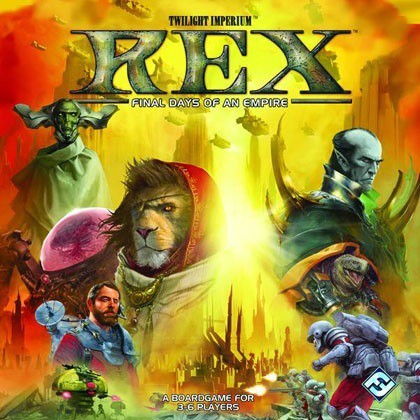
Twilight-Imperium-RexPretty cover art?  Check.

Fantasy Flight is good at making fun games, and their rehashing of the original Dune boardgame is no exception.  Though they were unable to nab the necessary IP, they’ve cleverly injected the mechanics and flavor of the original Dune into the universe created for Twilight Imperium.  But simply recreating an old game was not enough; they then streamlined and shaped it into something that you can pick up through one round of experimental play.  The end result is a highly entertaining game with excellent group dynamics, one that introduces just enough complexity to give you lots of material to work with without overwhelming you with its intricacies.

Continue reading

Chiptunes: Beauty in Simplicity

Zeeblee

I love chiptunes.  I have met few other people who love chiptunes as much as me.  Hell, I have met few other people who can even sit down and listen to chiptunes without getting annoyed.  It is arguable that my love for chiptunes comes from nostalgia.  It is true that some of my favorite games are old enough that their soundtracks are chiptunes (and I do listen to them recreationally).  But I would argue that my love of the genre is more than just a fond looking back at simpler times.

Continue reading

Emotional Attachment in Games

Zeeblee

This article comes a day late because… I’m not going to offer an excuse.  You’re just going to have to live with the mystery.

I assume that most of us who have played games have at one point (at least) come across a non-playable character that we became attached to.  But sometimes we don’t become attached to characters who the game makers want us to get attached to, and sometimes we get more attached than we are supposed to.  While quality narrative can do wonders for making a character appealing, I have found that players often base their connections on the mechanics of the character instead (and this sometimes causes problems).

Continue reading

A Brief Digest

Did you notice how I mentioned that I was reading Hide Me Among The Graves several weeks past, but haven’t yet posted any review of it?  Well, I can explain.  And I have a few other points of interest for you today, with tidbits on Agents of Shield and Dominions 3.

Continue reading

Game Analysis: Dragon Warrior Monsters

Zeeblee

Pokemon X/Y comes out tomorrow.  So today I am going to talk about my favorite monster collecting game.  No, it’s not Pokemon.  In fact, my favorite game in the “collect, raise, and battle” genre is a spinoff of the well-known series Dragon Warrior/Dragon Quest.  The game is Dragon Warrior Monsters (DWM), and while I have not played it through as many times as I have the original Pokemon, I have loved it a great deal more, and spent more energy on it.  It is rare for me to actually write stuff down in a notebook for a game, but for DWM I found myself recording my findings in a notebook for future use.  This is due to its unique take on how you collect and battle your little monster minions, even if you raise them just like most other RPGs (yay grinding!)

The story for the first game (yes!  There are more than one!) begins with your sister getting kidnapped by a strange monster.  Immediately after another monster shows up and offers to help you get your sister back.  He takes you to another world and introduces you to a king.  Apparently there is a tournament soon, and the prize for winning is a wish.  Before you can participate you must train up and qualify, and so begins your journey (which includes other stories as well).  I am honestly terrible at plot-synopses because I don’t like to give anything at all away (I believe part of the joy of a story is going into it completely blind).  So as per usual I am going to focus my reviews on mechanics.

Continue reading

Sword & Sworcery

firstlook

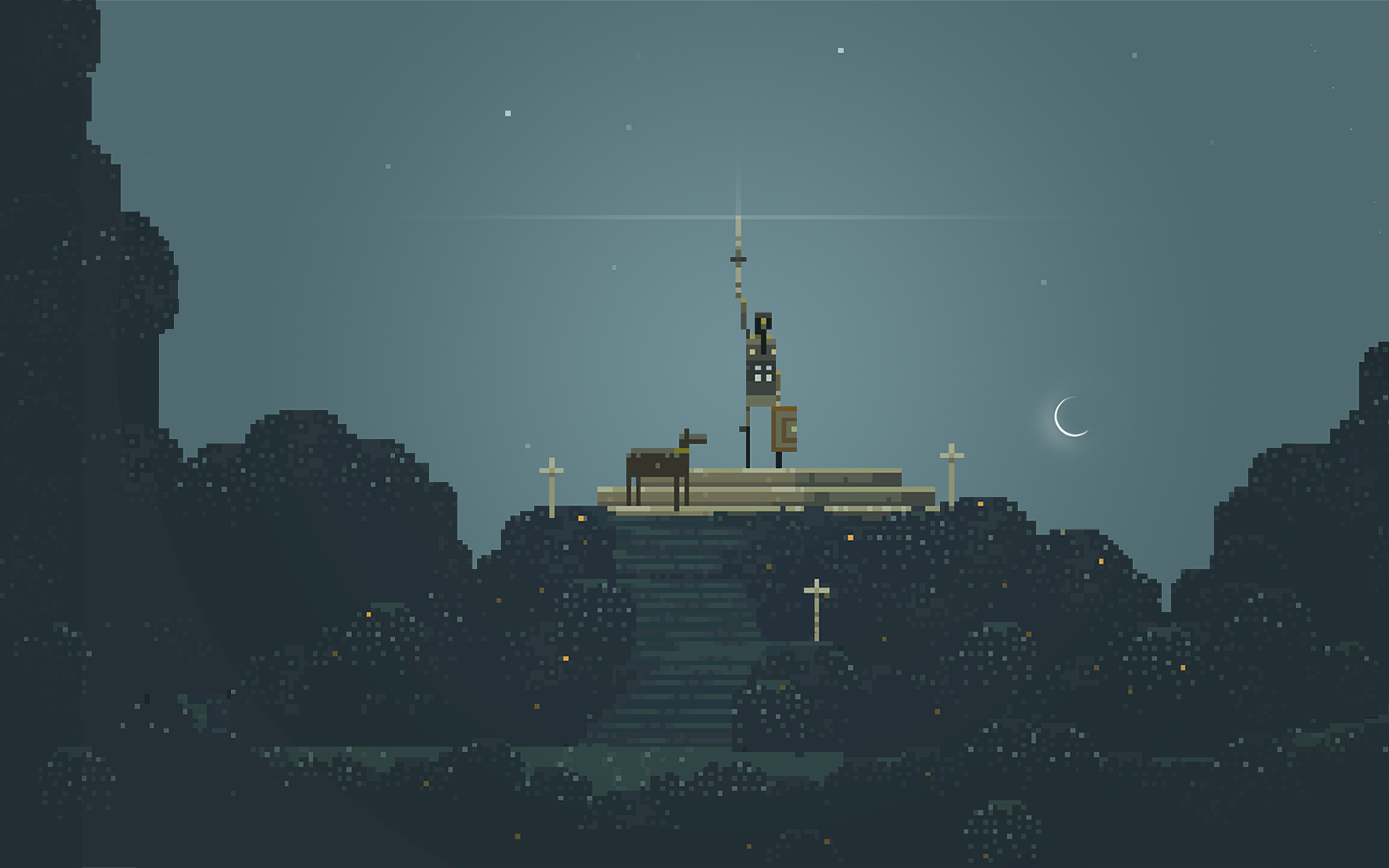
The Scythian.

I finally finished the magnificent Sword & Sworcery.  This game is a sumptuously designed experience.  Sword & Sworcery shattered my expectations by providing such a beautiful and completely enveloping story that I almost want to call it a story before I call it a game.  And don’t get me started about the sound design.  Or rather, do, because the music is simply a delight and the sound design creates a beautifully ethereal and dreamlike space that lends an air of enchantment to the entire piece.  I’m listening to the music right now, just because I can.

This game is wrapped up in a bizarre shell of self-awareness, with the other characters completely cognizant of the duality of the game and maybe even aware of how everything will end.  And yet it still has an emotional pull that I haven’t found in any other games I’ve played recently.  Stories I’ve read, movies I’ve watched, yes.  Games?  No.  Despite a one year hiatus part way through completing the game, I’m still exceedingly excited about it.  I want to play it again all in one sitting just to get the full and immediate impact.

This is a game worth discovering.  It is an adventure that is glorious and sad and perfectly appropriate, all in one.  Let me tell you more…

Continue reading

Impossible vs Improbable vs Hard

I don’t like to call anything impossible. Why? Because I don’t think it’s a meaningful word. People set up limits as to what they can and can’t do all the time with this word: that’s impossible! But most things aren’t impossible. Sure, some things are just a priori unattainable (you can’t be in two distant places at once, you can’t violate fundamental laws of physics, etc.), but many achievements we’ve labeled ‘impossible’ have later been made into playthings by scientists and innovators. Every time I get on a plane, I have to marvel at the fact that the combined weight of this giant metal tube — its cargo, passengers, and fuel included — is not quite a MILLION pounds. And it flies. If you ask me, that sounds like a load of impossible. I’m not saying flight is magic, I understand the physics behind it. But if you’ve never seen an airplane or any of the technology that goes into it, and I say ‘I can make a MILLION pounds fly’? You can bet that claim is met with skepticism. And maybe rightfully so. If it isn’t a part of your daily society, that’s impossible.

Continue reading

RPG Character Progression

Zeeblee

Reading the title you may be thinking that I am going to talk about how characters evolve in a narrative in roleplaying games, but if you remember last week’s article you may note the subtle queue in my use of RPG instead of “roleplaying game.”  That’s right; today I am going to talk about different styles of stat/ability progression in RPGs along with minor discussion on the role of progression in narrative.

Continue reading

“Roleplaying” Games and the Misused RPG Label

Zeeblee

I have written a few reviews for digital roleplaying games (RPGs), but in many cases I find the label is completely inappropriate.  When I think of a “roleplaying” game, I think of a game in which I take control and can make important narrative choices.  But most digital RPGs don’t let you make narrative choices at all.  For that reason I would say that the label of RPG has come to be associated with a mechanic which is common to most RPGs, but isn’t the attribute that makes them RPGs.  The mechanic in question is that of leveling up, and I hate it*.

Continue reading

Giving Players More: Strategies for Padding Your Game

Zeeblee

Today we are going to play pretend.  We will pretend to be in the process of developing a game with the goal of being worth a particular price tag.  Since we are ambitious, we want to be just like the AAAs and charge a hefty $60 for our game.  But we are also familiar with the hours-to-dollars assessment people use to judge if the game provided enough entertainment to be worth the pricetag.  If we use the price of a new DVD as a measuring stick we can guess that our players will want their entertainment on a 10:1 ratio ($20 = 2 hours of entertainment), so for our $60 price we’ll need to provide six hours of game time.  That can be a lofty task for a single player game, so today’s article will be delving into the wonderful world of design mechanics/strategies to extend game time (for better or for worse).

Continue reading