I don’t ever state this explicitly in Bury’em Deep, but food for spacers is more complicated than simple nutrients. In fact, Continue reading
Category Archives: Books
Setting Material for Bury’em Deep (and sequel), pt. 2
This one’s a close follow up to last week’s post. Again: rough draft material, only partial, subject to change. This time, I’m diving deeper into the Rhean intelligence apparatus, and what influence it’s had on Rhea and beyond! Continue reading
Setting Material for Bury’em Deep (and sequel)
While I’ve been working on writing a sequel to Bury’em Deep (yes, I changed the name), I started working my way through some background material that seemed important. This is all rough draft material, only partial, and subject to change… but I thought you might enjoy some of the details! Read on for tidbits of Rhea’s history and its place in the politics of Saturn-space. Continue reading
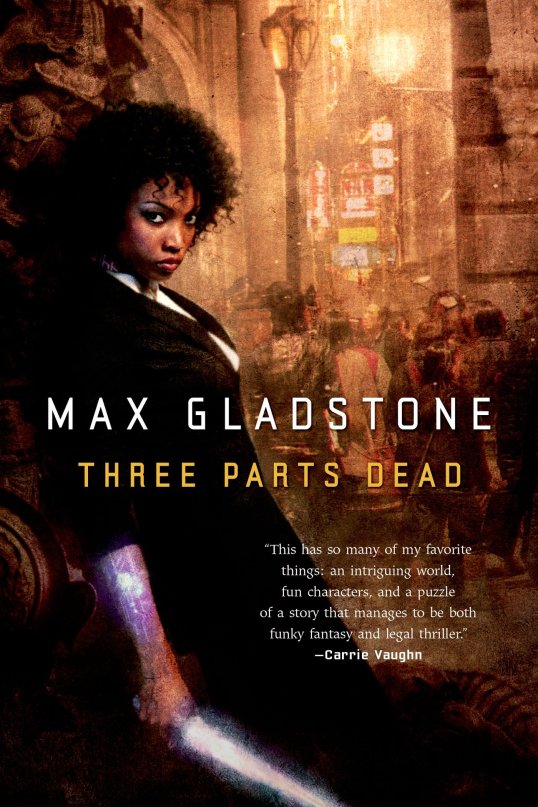
Three Parts Dead, by Max Gladstone

I’ve seen Max Gladstone in person several times now, at Pandemonium Games and at Arisia, and I’ve enjoyed hearing him speak… and now I’ve finally read one of his books (besides the wonderful stuff he has on Serial Box). I’m glad to say that Continue reading
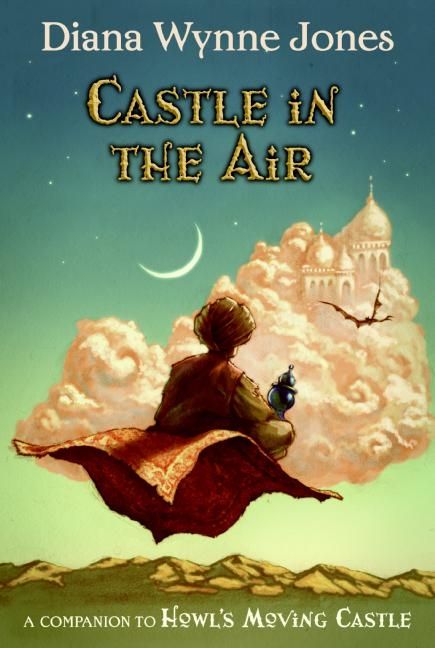
Castle in the Air, by Diana Wynne Jones

At least this cover doesn’t make me want to devote another 500 words to critiquing it.
You’d be forgiven for thinking that Diana Wynne Jones cribbed from Disney’s 1992 Aladdin, but Castle in the Air came out first (in 1990). Perhaps more strangely, I haven’t found anything about the making of Aladdin that confirms that they were inspired by Castle in the Air… but I wouldn’t be surprised if there was some cross pollination.
As with Howl’s Moving Castle, perhaps even more so, this is a book that I want Continue reading
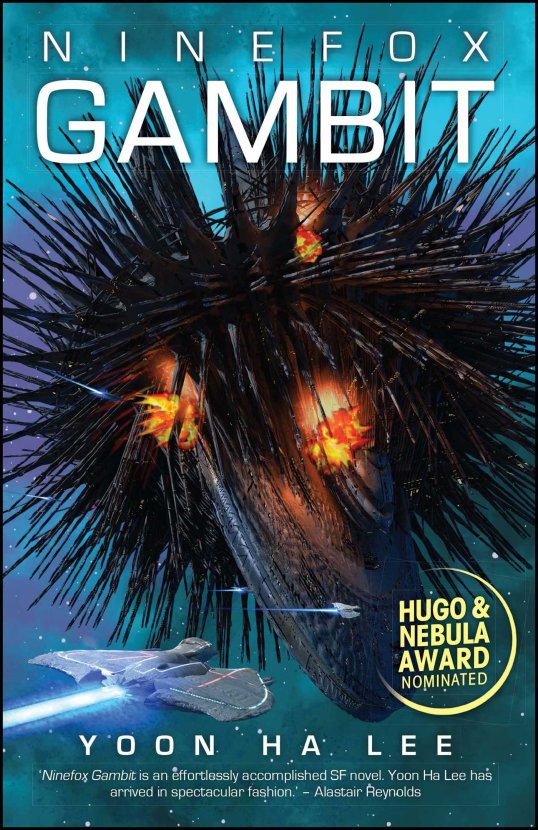
Ninefox Gambit, by Yoon Ha Lee

Layers. Layers on layers on layers, ploys on top of ploys, backstabbing all the way down. And somewhere, sandwiched between all those knives, a few people trying to make a tyrannical empire a better place despite itself.
Yoon Ha Lee’s Machineries of Empire series (of which I’ve read the first two books) feels like a reimagining of the fundamental critiques of Warhammer 40k—but instead of trapping his work beneath cynical satire and Poe’s Law, Yoon Ha Lee renders his critiques of empire transparently and with heart.
Ninefox Gambit is a new presentation of classic sci-fi military fiction, discarding the traditional fetish for the tools of war and replacing it with an exploration of the human cost of imposing and maintaining empire… and of resisting and rectifying it. It does this all with a setting in which the violent and malignant imposition of hegemony is part and parcel of the exotic technological base necessary for interstellar civilization, and in which heretical practice literally erodes the power and capabilities of the empire’s technologies; mathematical and spatial relations, punctuated by suffering and pain, form the bedrock of calendrical technology, and the embrace of this calendrical tech-base has trapped the Hexarchate in a never-ending cycle of violence and subjugation.
With the Hexarchate’s rulers a group of professionally inhumane paranoiacs, determined to retain their power and uphold the stability of their realm with no care for the cost in lives, it takes a very special kind of heretic to oppose them.
If you like science fiction, or military fiction, or anti-imperial explorations in uncomfortably familiar alien settings, this book is for you. If you want your books to explain everything to you and never leave you piecing together elements of a setting or story… I might suggest something else.
Also, if you’ve traditionally avoided sci-fi mil-fic because it’s one long paean to unquestioning support of cis-het male hegemony, don’t worry. This series radically normalizes queered gender and sexuality. I really appreciated that.
In case you couldn’t guess, I think this book (and series) is great. I don’t want to say more, because I want you to experience it for yourself. I strongly recommend Ninefox Gambit.
If you like this book, I’d also recommend Seth Dickinson’s The Traitor Baru Cormorant.
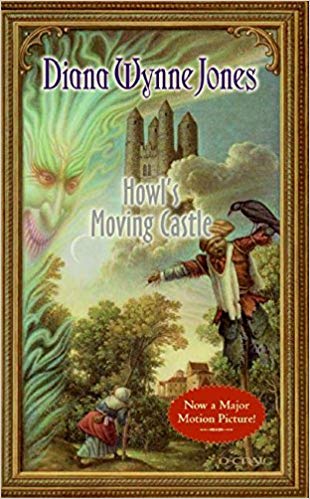
Howl’s Moving Castle, by Diana Wynne Jones

Howl’s Moving Castle is an excellent book. I’m indebted to my friend for recommending it to me; I knew the book existed, and I already loved the Miyazaki film, but it was her mention of it that finally pushed me over the edge.
Now that I’ve read it, I have to say that Diana Wynne Jones Continue reading
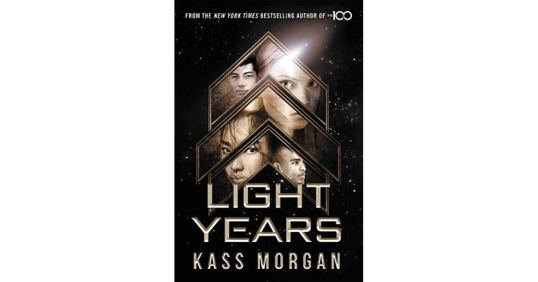
Light Years, by Kass Morgan

Light Years is a fine book, nestled deep in the readily-identifiable heart of its genre. It never Continue reading
The Beast Player, by Nahoko Uehashi

To someone well-versed in American (and more generally, Western) narrative expectations, The Beast Player is a bit of an odd duck. It is, however, a good duck.
Some of this oddness can be chalked up to the fact that Continue reading
The Girl Who Drank The Moon, by Kelly Barnhill

My reading log entry for this book has notes scribbled in the upper left corner: “read this again, read more Barnhill.”
Sometimes I have the pleasure of finding something that feels like it has wafted in through my window, a strangely whole remnant of a dream. It tantalizes, and though it obviously operates on a logic I only comprehend on that precipice between slumber and wakefulness, it holds together. Kelly Barnhill’s The Girl Who Drank The Moon is one of those books.
This is not to say that The Girl Who Drank The Moon is confusing or inaccessible. Rather the opposite. It is seductive, and it pulled me in as one might fall into reverie: never losing consciousness, but slowly melding from one reality into another without any clear boundaries between the two.
I admire this book.
I love the dreaminess of its fantasy, I love the elegance of its language and the way it presents its stories within stories. I marvel at how well Barnhill has tied conflicting accounts together, like strands of rope twisted against each other until they bind and form a stronger whole. Perhaps most of all, I love the ways in which this story eludes the expectations of a fairy tale while still being a fairy tale through and through.
I did feel that—at the very end—this story lost a little of the breath-taking elegance it had carried so effortlessly throughout. But that cannot detract from the story as a whole for me. It remains too good, and I know for a fact that any semblance of effortlessness is a beautiful lie made of hard work and considerable skill.
That’s why I’ve set this one aside to read again. That’s why I want to read more of Barnhill’s work. That skill, that sense of story, is something I admire and covet. I want to let it soak into my skin, let it become part of me as well.
I strongly recommend this book, especially if you’re looking for middle grade fantasy or fairy tales. I think you could probably delight younger children by reading it aloud. I know that it delighted me.