Clockwork Boys, by T. Kingfisher

It seems that I’m on an Ursula Vernon kick. I knew I wanted more stuff in the same setting, and I knew that this book (this series, actually) had also been recommended to me, so…

Look, Clockwork Boys is more of the same. It’s very reliably the same.

Not the same characters, not all the same dynamics or storylines or what-have-you, but genre-wise it’s still the same. Clockwork Boys is still fantasy, and romance, and adventure. Plus it has some other genre tidbits that are atypical for most romance stories but which fit well with a fantasy adventure RPG—murder, subterfuge, demons, the usual. It has the same drawbacks I’ve already mentioned in my pieces on Paladin’s Grace and Paladin’s Strength (still no queer romance here, it came before the others), but the book is solid.

And I like it. I knew what I was getting; I liked the flavor before, I like the flavor now. Vernon is good at what she does, and if you think you might enjoy a fantasy adventure story with some romance and a dash of subterfuge and demons, she’s the person to follow.

For extra context: I’m amused but not at all surprised that Vernon decided to write these books (and presumably the Saint of Steel books) out of frustration with the writing for male romantic leads in several CRPGs. She says as much in her Acknowledgements section. And while this book isn’t a novelization of a CRPG, you can taste the similarities and parallels. I’d say Vernon accomplished her goal: these characters (and their relationships) feel more compelling and plausible than the source material.

Oh, also, this book ends abruptly. Like, extremely abruptly. It’s very clearly the first half of a larger book, and it’s very clearly split here because this is close enough to half way and there’s a little narrative closure immediately before the cut. This is another thing Vernon mentions in her Acknowledgements, and it surprised me even less than the CRPG source material.

I don’t think the sudden end is bad; the sequel is already out, and if I’d known about the cut ahead of time I would have placed a hold on the second book. So this is my warning to you. If you like the book when you pick it up, get your hands on the sequel too. Don’t be like me. I didn’t plan far enough ahead, and now I have to wait.

Another side note, I suppose… if you’re here for the romance specifically, you might be a little disappointed. Some vague *SPOILERS* follow. The romance plot here is clearly being developed and teased. You can tell (if you’re not entirely unfamiliar with romance plots) almost immediately. But the meat of the romance plot doesn’t happen in this book. This one’s just build up, and pushes the external plot along. Honestly, I’d be a little surprised if the next book doesn’t feel like it’s strapped to a rocket, given how much has been established here already. *END SPOILERS*

So. If some mixture of these genres is your jam, or if you like fantasy CRPGs and were always a little disappointed by the writing of their romance plots, this book is probably for you. And while I haven’t read the sequel yet, you should probably get your hands on it along with the first book so you don’t have to wait like I do.

Paladin’s Strength, by T. Kingfisher

I enjoyed Paladin’s Strength. I knew what I was getting into this time. It’s still fantasy and romance with a few other genre bits tossed in. It’s still good, I still like all the genres in play here—or at least don’t dislike any of them enough to turn me off enjoying the rest of them.

Specifically, romance is kind of hit or miss for me. It’s not my popcorn genre. I don’t feel sucked into it or compelled or fed by it in the same way that I do with other genres, I don’t delight in it the same way. But when it’s well done, and especially when it doesn’t exist on its own, I’m down.

And it turns out that Ursula Vernon (pen name: T. Kingfisher) is good at her job. She’s good at writing characters that I enjoy. She knows the beats for a romance, and she’s happy to improvise around them with other interesting genre material. I don’t think I want to read more of her romances right now—I could use a palate cleanser, a break—but I like the world she’s established enough to want more of that, and if that requires reading romance I guess I’m down.

I just wish the romance were more queer.

Queer romance isn’t a necessity for me, but it does feel like a big boon. I’m not sure precisely what about it appeals most to me. Maybe it’s just the way in which queer romance seems more likely to diverge from classic gendered expectations of romantic relationships and interactions? Maybe I’d be down with het romance if it hewed less closely to conventional gender roles for its development.

Unfortunately, that queerness is not very present in this story. For all that Vernon does an excellent job making her characters feel like people, the central romance still feels fairly conventional to me (though I should note that Vernon continues to do fun things with healthier and more interesting relationships than I usually see in romances). There are certainly queer folks around, and there are queer characters baked into the background of the world in such a way that they are both unignorable and totally normal. That’s good. A big plus. But I’ve been hoping that this series would diverge further from conventions, and it hasn’t yet.

Apparently, from the blurb I’ve read, the next book in the series will have queer romantic leads. It should come out next year, Paladin’s Hope, and I’m looking forward to it. It’s about two characters I’ve liked in smaller roles in these first two books, so I’m very ready for it. Hopefully that romance feels less conventional too.

Despite my complaints, I think I’m learning. I’m certainly getting a better handle on how a genre + romance combo works. The romance is broadcast early on, usually through a meet-cute or some sufficiently distinctive interaction to anchor the pair’s dynamic for the reader, and then there’s a tremendous pile of will-they-won’t-they and yearning lustful thoughts before some kind of more satisfying release (ahem) close to the denouement, often just before the climax (AHEM) comes to a head (god, everything is sexual, this is like high school).

Obviously, there’s some room for variation, and for stylings around the edges. Novik and Vernon (and Bujold) don’t structure their romances exactly the same way… but they’re close enough to each other, for the most part.

I don’t plan on writing much in the romance genre per se, but it’s nice to know the structure and conventions to be able to play around with it on the sides of other stories.

Anyway, yes, much like with the previous book, Paladin’s Grace, if you like romance and don’t mind fantasy, mystery, and intrigue—or if you like fantasy, mystery, and intrigue and don’t mind romance—you’ll probably enjoy this book. This book might not be for you if any of those things is unpalatable for you. But if you’re not sure, or you’ve only read bad examples of those genres previously, give these books a try. Vernon is good at her craft.

Three Ordinary Girls, by Tim Brady

Reading Three Ordinary Girls was an odd experience for me. I both enjoyed and actively disliked this book. Complaints first.

When a nonfiction book cites Wikipedia, I cringe. It conjures memories of my teachers telling me that Wikipedia wasn’t an acceptable source for my papers (despite being better on average than most encyclopedias, which my teachers did accept as source material). Maybe I’m stuck in the past’s paper-writing habits, but surely Tim Brady can hunt down whatever sources the Wiki editor used, and reference those instead? I think what bothered me most was that nearly all of the referenced sources in this book boil down to just a few pieces, referenced over and over again. I couldn’t help but wonder whether I should have read those books instead. I would have liked more depth and breadth of source material.

Now, that may be empty quibbling: those few referenced pieces are the extant primary and secondary sources, in most cases sourced directly from the people involved. They include interview material from the “ordinary girls” in question. But… I would expect someone writing a nonfiction book to at least cite original sources for the material cribbed from Wikipedia. Maybe I’d feel differently if the book read less like someone had simply punched up a previously existing secondary source and slathered it with in-the-moment details cribbed from a primary. Or maybe this is just Tim Brady’s style (I haven’t read any of his other books). Either way, I don’t like it. Maybe you won’t mind.

All that said…

Three Ordinary Girls is gripping. The lives of these young Dutch women during the Nazi occupation of the Netherlands, and the actions they take as members of the resistance, are exciting and frightening. Their story is painful and dramatic and evocative. It’s bloody. It’s scary. It’s a potent reminder of the banality of human cruelty, and of the messy and complicated ways in which people act when their world is tossed upside down. It’s another example of how occupation, revolution, collaboration, and resistance are overlapping and confusing and violent, with few places of certainty or security. And it’s a testament to the bravery and convictions of the three young women whose stories this book tells.

To its credit, Three Ordinary Girls doesn’t try to reassure the reader with a sanitized, polished, or clear cut glamorous war story. That may be what I admire most about it. There are many admirable stories about how people stood up and did the right thing to oppose the Nazis. But those often ignore the painful truths of how that resistance was hard, and confusing, and traumatizing, and sometimes resulted in bloody mistakes, internal conflict, and power struggles. I appreciate the way in which this book captures all of that.

For those reasons, I’d probably recommend this even if it were less well written and researched. Well, maybe not less well researched… I do prefer my historical nonfiction to remain nonfiction. But yeah, it’s good as long as you’re ready, willing, and able to stomach the awfulness.

But… there’s a lot of awfulness. Be ready to be distressed. The Nazi occupation of the Netherlands was violent, cruel, and bad in just about every way you can imagine the Nazis being. The only redeeming quality to it was that they (the Nazis) didn’t engage in quite as much wholesale murder as they did in Eastern Europe. Scant comfort.

If you don’t already know enough about teenagers in the Dutch resistance during World War Two, and want to know more, check this out. If you aren’t up for reading about brutality and murder in uncertain times, you should probably look for something else.

Paladin’s Grace, by T. Kingfisher

Paladin’s Grace went by quickly. I was hooked early, and pulled right on through. The many good things I’d heard about Ursula Vernon’s work feel like they apply here too.

Side note: T. Kingfisher and Ursula Vernon are the same person, T. Kingfisher is the pen name used for a whole suite of Ursula Vernon’s projects. I’ve meant to read Ursula Vernon’s work, especially Digger, for a while now. When I learned about her pen name, I signed up for these books right away. Easier to get them as ebooks from the library than to find a good, physical omnibus of the comic.

I was a little surprised, however. I hadn’t realized this would be romance. I think I might have enjoyed Paladin’s Grace more if I’d known beforehand that it was. But I did enjoy it, and it’s my own fault for not reading any of the book’s theming data—besides which, the fact that the story is romance is pretty abundantly obvious when, soon after the cishet meet-awkward, the narration is overtaken by constant thoughts about the other party.

My genre-revelation wasn’t a problem. I already knew that I enjoyed some fantasy romance (thanks Naomi Novik & Lois McMaster Bujold). If you actively dislike romance (in this case, lots of wistful thoughts and mostly-unfulfilled lusting), you may not like this book. If you can tolerate romance, this book has a bunch of other good stuff in it too, things that usually don’t end up in romance stories. After all, as Ursula Vernon acknowledges in her author’s note, most romance doesn’t accompany grisly fantasy murder mystery, dead gods, and legal drama. The perfume and frequent discussion of scents is perhaps the most normal detail. The fact that one of the leads is a perfumer may be a little less normal, as are her frequent attempts to mentally reconstruct nearly every smell she comes across, no matter how foul.

Anyway.

I absolutely recommend this book if you want solid fantasy fun. If you hate romance, that’s more complicated. If, like some of my friends, you only find romance palatable when it’s queer… I’m sorry, this book will not satisfy you.

But if you’re as intrigued as I was by a story about a paladin whose god has died, have at it. I had a good time.

The Butchering Art, by Lindsey Fitzharris

This reminded me strongly of The Poisoner’s Handbook, another semi-biographical history of medical science (forensic medical science, in that case). Much like with The Poisoner’s Handbook, I can’t recommend this book if you’re not comfortable with reading about gore. If you don’t know what gangrene looks like, maybe you’ll feel better reading about it than I did (don’t look that up casually).

That said, I finished the book in the course of slightly more than a day. Clearly reading about evocatively gruesome and painful medical history does not deter me.

But a huge part of what makes this book so excellent, in my mind, is the way in which it clearly conveys the total transformation in the technology and technique of surgery over the course of the 1800s. That the book does so while also giving us a window into the personal life of the man who worked so hard to transform medicine is a lovely added bonus.

The Butchering Art opens with the grim realities of surgery in the early nineteenth century, in which each operation—usually an amputation—was sudden, painful, and likely to result in post-operative infection. Speed was vital in part because patients were not anesthetized, and they often struggled under the blades and saws of their surgeons. Even if a surgeon operated successfully, patients often died of post-operative infection afterwards due to the frequent foulness of surgeons’ hands, instruments, and operating conditions. These infections were so common and expected, and so frequent in hospitals, that the collection of diseases and infections were simply called “hospitalism.”

Yet by the close of the book, we’ve seen the development and spread of modern antiseptic (and eventually aseptic) technique, the spread of anesthesia, and the complete transformation of the butchering art (excellent title choice).

It’s really quite wonderful seeing the way in which Dr. Lister (the main focus for most of the book) finally comes to his realizations about post-operative infections. His fight to convince others of his discoveries is both encouraging and disheartening at turns, but not surprising. I’m not sure to what degree my appreciation comes from my love of nerdery, and to what degree it comes from Fitzharris doing a good job of walking us through Lister’s explorations, realizations, and struggles. Either way, it works well.

I should also note: I’m not an expert in the relevant historical period, and I found checking Fitzharris’ sourcing difficult in the ebook version I read. But she makes frequent use of primary sources, including a plethora of personal letters and Dr. Lister’s case notes, and manages to do so in a way that feels far more convincingly researched (and more widely sourced) than some other historical non-fiction I’ve read recently.

If you’re looking for historical non-fiction and you’re intrigued by the growth of modern medical science, I absolutely recommend this book.

Enjoy.

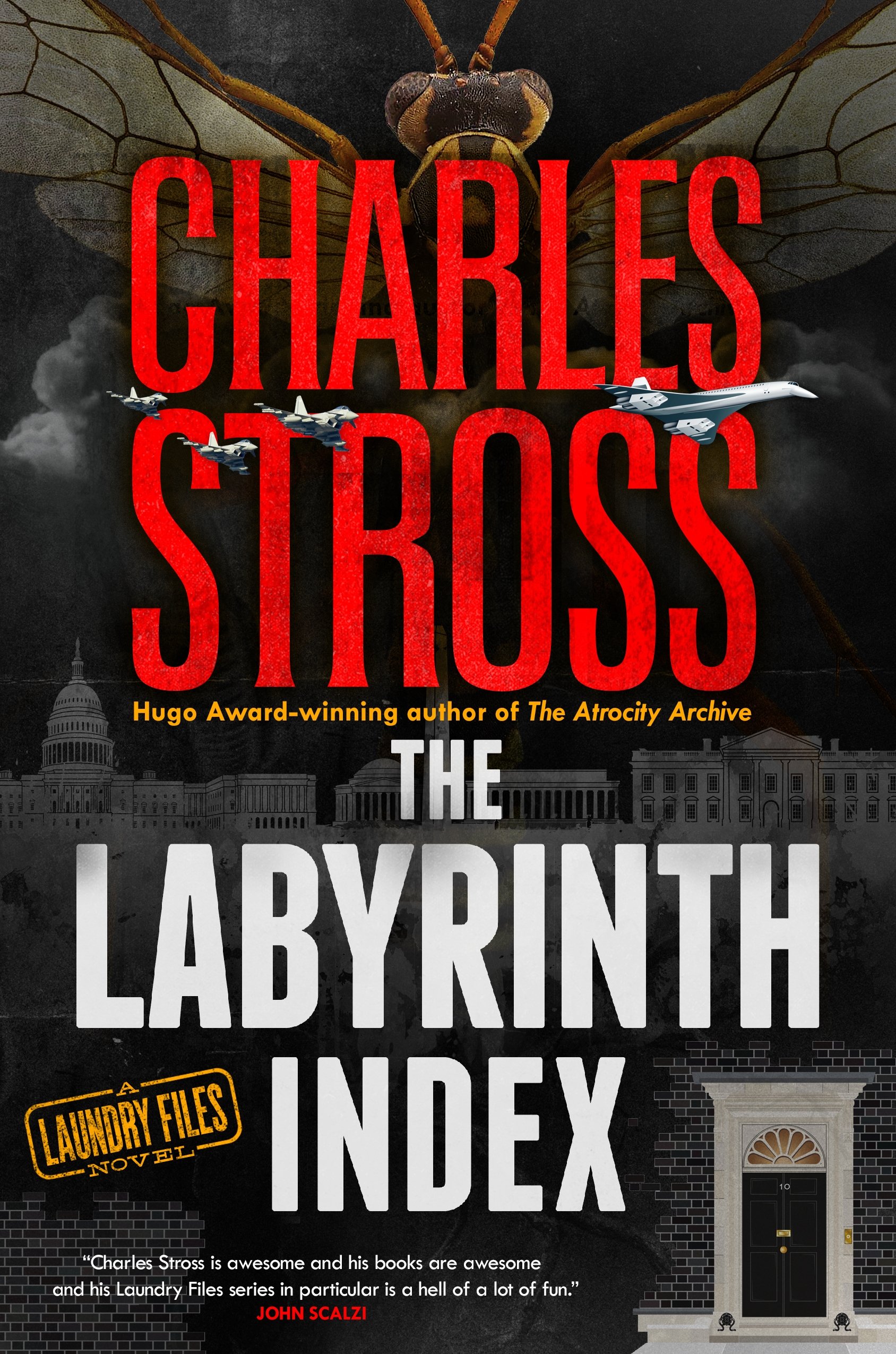
The Labyrinth Index, by Charles Stross

It’s been a hot minute since I last read Stross. At least several years.

Perhaps unsurprisingly, I feel like I’ve changed significantly since then. Both as a person and (more narrowly) as a reader. It seems that Stross has changed somewhat as a writer as well (between this book and The Delirium Brief) but… in most ways the work is still the same. And given that what I really wanted was another Laundry Files book, that’s okay.

Also, I know I’m writing here about a book published three years ago (and therefore written even longer ago) and comparing it with a book published four years ago (thus written even further into the past). Writers are cursed to be judged on the merits of their old selves, forever. I try to be generous.

It’s weird knowing that I’m now at least five years ahead of where Stross was when he wrote the book, because my subconscious still thinks of this book as “current.” A lot has happened in the past five years. C’est la vie.

Anyway.

Did I enjoy The Labyrinth Index? Yes.

But this isn’t the place to start this series. If you pick up this book without having read a good deal of the preceding series, you’ll be lost. Some of you will no doubt pick up on things fast enough to enjoy it, but you’ll probably have a bit of cognitive whiplash. If, on the other hand, you’ve read and enjoyed the other books in the series… you know what you’re getting yourself into and you’ll probably like this one too.

This series is cosmic horror / grim bureaucratic office comedy / political thriller / spy shenanigans, and it’s the only series I know of which hits all those notes. It’s not as introspective or emotionally investigative as other books I’ve read recently. It doesn’t try to be. I’m not saying it’s merely a cold, unfeeling genre fiction monster ready to crush you beneath its plot, but it’s certainly more about intrigue and external plot than it is about interpersonal (or internal) emotional plot.

If you want something that will scratch those genre-itches, and you need to scratch all of them at once, this is the only back scratcher that I know will do the trick. If you haven’t read anything from the series yet, check out The Atrocity Archives and see whether the genre combination is to your taste. Some things in Stross’ writing will change, others will stay the same.

Relatedly… I can’t tell how much Stross’ writing of (or about) female characters has changed. I’ve been weirded out by it in the past, but that weird-factor is just connected enough to the genres Stross switches between, and just intermittent enough, that I have trouble pinning down exactly what is going on. I think he’s improved, but I haven’t compared his earlier work and his current work side by side. Just be aware that there may be odd or uncomfortable stuff there waiting for you.

Also, I sometimes feel a little weirded out by how Stross wrote the future-past—or past-future, or whatever—and wonder what strange scrying he does for his prognostications. But that quasi-prescience is also part of Stross’ appeal for me, and it’s part of what makes reading his “near-future” based work a few years later so fascinating (even if The Laundry Files aren’t the best example of this). It does tend to date his work more thoroughly.

Oh, and: if you don’t mind spoilers, there’s some good thinking on all of the above from Stross himself, right here.

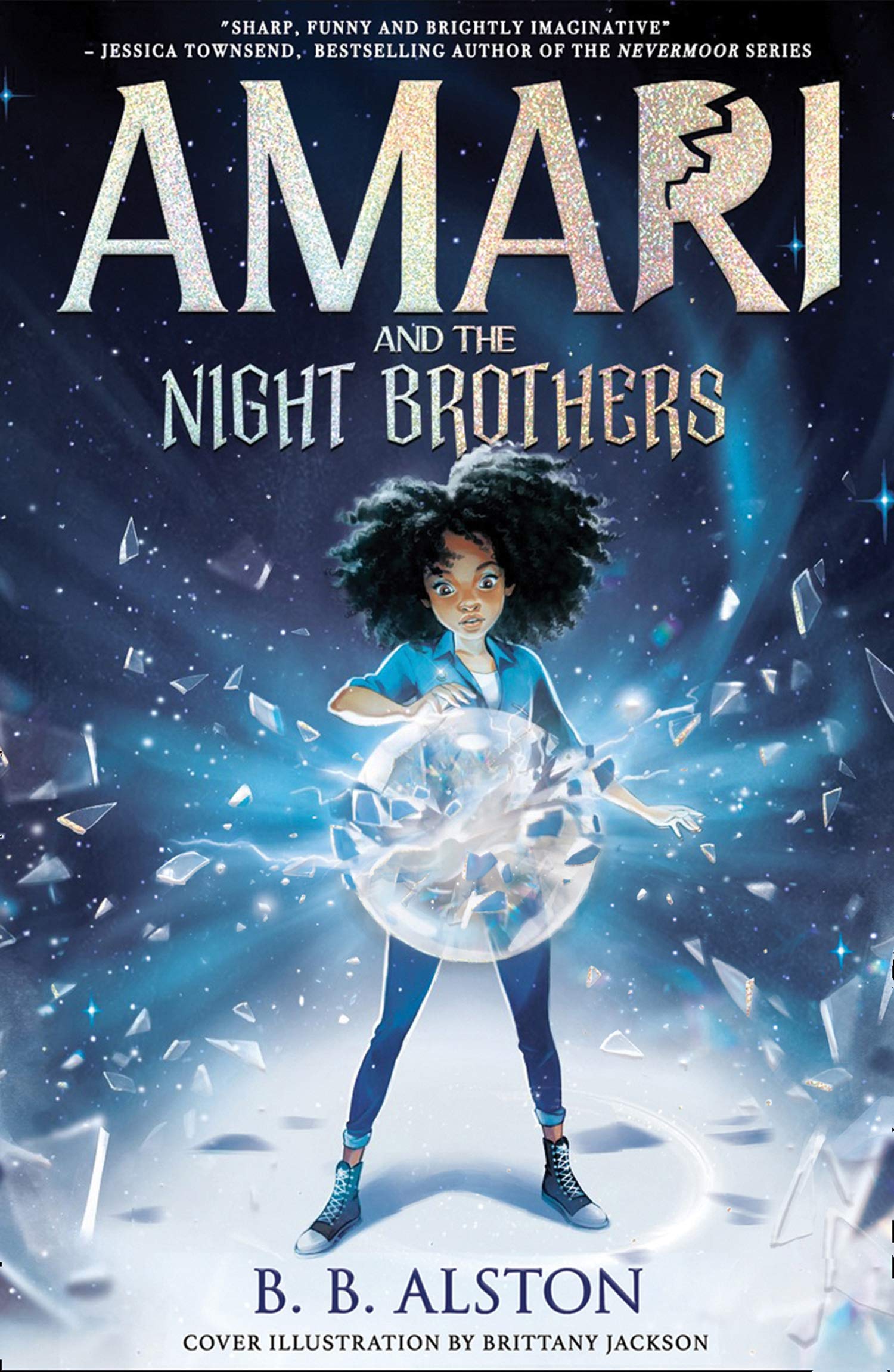
Amari and the Night Brothers, by B. B. Alston

Some books reshape their genre. Others expand it to include a wider range of voices. Some do both. I often like books that do the first. I believe we as a society and community need books that do the second. For examples of books that reshape their genres, I’d offer up The Ballad Of Black Tom and The Fifth Season. For books that expand their genre, those two still work… but I can also add A Dead Djinn In Cairo, and now B. B. Alston’s Amari and the Night Brothers.

Amari and the Night Brothers feels like another step in the same chain as A Dead Djinn In Cairo. It doesn’t, in my eyes, revolutionize the underlying components of the genre (yet), but it’s solid and has a refreshingly different perspective from the usual run of Middle Grade supernatural school protagonists. Amari—the main character—is black (as is B. B. Alston) and in a genre so dominated by white writers and white characters that’s pretty dramatic. It feels sad to say that’s enough, but I think it’s true.

As I said, this book didn’t fundamentally change or subvert anything I expected from the genre. I was able to plot out the tropes and most of the twists pretty well beforehand. But it’s good. Those tropes I saw coming felt right, and their resolutions felt rewarding. This story does everything I’d want a solid book in the MG supernatural school genre to do (with allowance for a little bit of deus ex machina), and it does it with heart and with a different set of assumptions about the world than so many other stories I’ve seen and read. That’s what I love and admire about it, why I’d recommend it.

And unlike A Dead Djinn In Cairo, I’ve seen enough of B. B. Alston’s work here to believe that there are other interesting things coming down the pipe, ways in which this story is going to grow, and tell its story differently. Amari and the Night Brothers already had my interest standing on its own. And I look forward to seeing what new paths B. B. Alston adds to this well-trodden genre.

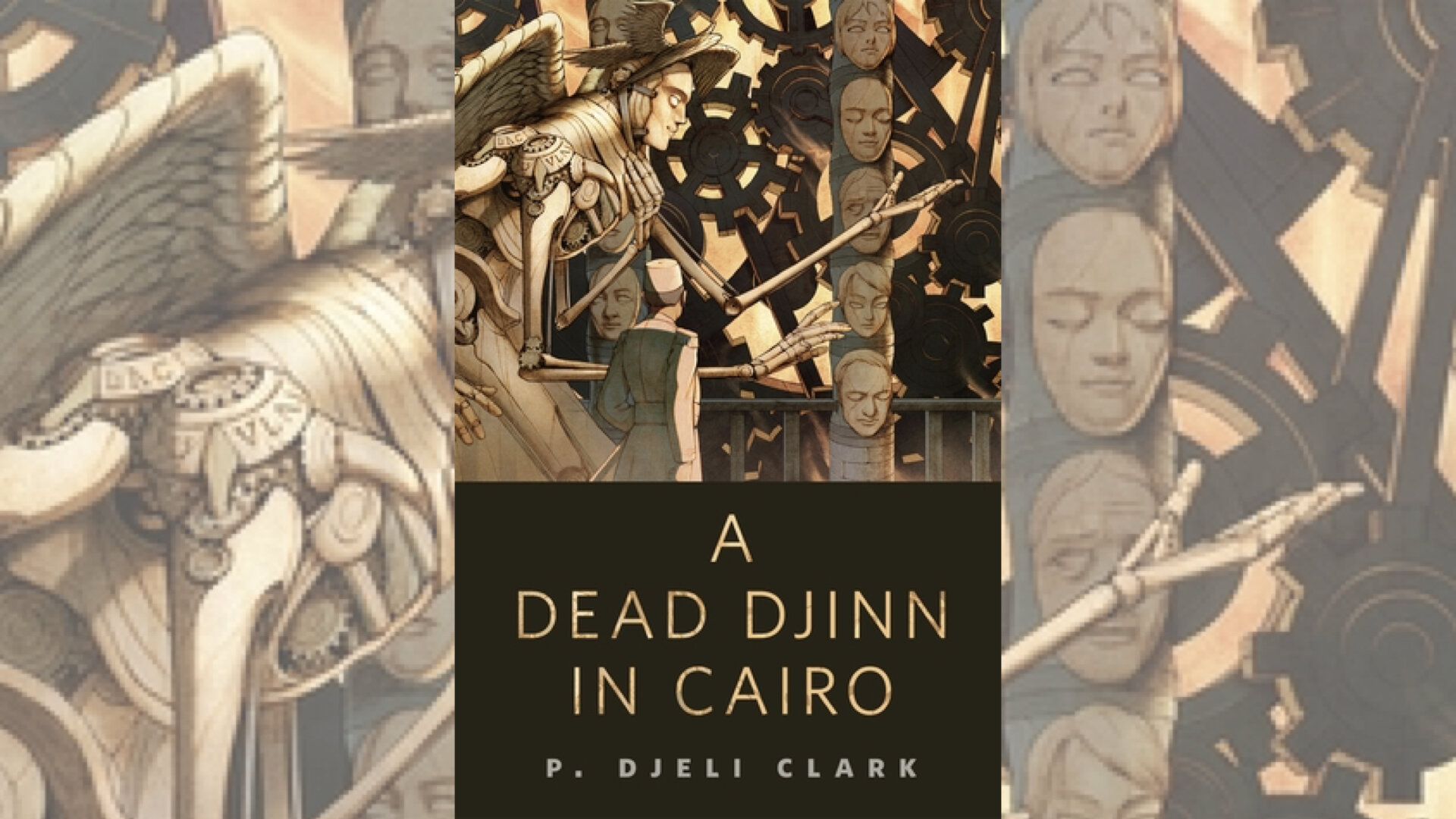
A Dead Djinn In Cairo, by P. Djèlí Clark

Short, fast, fun. A Dead Djinn In Cairo is a good read, with a marvelous setting. It’s also my first time reading any of P. Djèlí Clark’s work.

As a veteran fan of investigative mystery horror, adventure, and Mythos stories, the tropes here feel familiar. That seems intentional. These character and plot tropes are called on to lend the story its structure and familiarity, and they make the story quick and tight when it might otherwise require more explanation and exposition. This works well; it’s an expert’s use of the existing genre shorthand to sketch in structure and conventions, and it lets Clark explore ideas and settings that rarely make it into these genres. It’s skillfully done, and worth admiration.

That exploration is part of why I don’t mind P. Djèlí Clark’s reliance on tropes for narrative stability. He lavishes his attention on novelty elsewhere, with quick splashes of set dressing that seep slowly out of the scenery. The combination of elements is delicious (a turn-of-the-1900s ascendant Egypt, women’s increasing independence, religious turmoil, fantastical creatures and beings in our world following the removal of some of reality’s barriers…). It’s all very good. I love the world he’s created here and will happily read more of it.

But that reliance means I don’t yet have a sense of whether I’ll like P. Djèlí Clark’s other narratives. At some point I’ll want more than my enthusiasm for this cool setting; I’d love for the narrative and its tropes to feel exciting without feeling like they hew so closely to the genre’s conventions, and I’d love for Clark to take the standard tropes and twist them a little more firmly into his own setting’s image. That said, I’d certainly recommend this story over any number of other genre stories. He delivers the expected tropes at least as well as any of the older examples I have to hand, and the trappings of P. Djèlí Clark’s story are more appealing to me. Based on this, I hope he’ll find other ways to exceed those stories as well.

A Desolation Called Peace, by Arkady Martine

Arkady Martine has written another excellent book. A Desolation Called Peace branches out from the space covered in A Memory Called Empire, and while I know there’s more that could be squeezed from the first book’s subject matter I think this evolution serves the story (and the reader) well. And don’t worry, Martine doesn’t abandon anything she built before. Instead, she calls forward elements which had been waiting in the wings; it’s more of a shift of focus than a dismissal of the old.

Specifically, where the first book asked “what does it mean to be human, or a person? Who draws the line, and where?” as a running background theme, this book puts that front and center. And I love that. Those questions are important at any time, but they’re integral elements of a totalizing imperial worldview, and as such they’re critical to this story and setting. Honestly, those questions are part of what I love about science fiction in general, and they’re a big part of what I love about this series in particular.

Now, this book felt a little slower to me, more gradual or less heart-in-throat until nearer to the end. But it’s no less fraught. In many ways, the excruciatingly complicated fusion of the personal and political feels more poignant here, even as the book and that fusion explore new themes. And yes, Martine is still good at digging into the ways hegemony wraps itself around everything, strangling like a ligature until conformity (or death) is achieved.

Now, about this book feeling slower… I wasn’t sucked in head first the same way that I was for the first book, not until further into the book than last time. I’ve had a hard time telling how much of that comes from different reading circumstances, like changes in the time I set aside for reading, versus how much comes from differences between the two books. Either way, I’m pretty sure it took me much longer to read A Desolation Called Peace than it took me to read A Memory Called Empire

But the magic that Martine conjures in the first book is still present. A Desolation Called Peace is still full of heartfelt complicatedness, and confusing wants and desires and struggles, and its *really good*. The conflicts brought to the surface here are wonderful. I like seeing them on the page. I haven’t seen them in other books any time recently, and it feels really good to see Martine explore the ways in which hegemony and empire worm their fingers into everything, no matter how intimate or pedestrian.

Unlike with some other series (e.g. Becky Chambers’ books), order matters here; you should absolutely read A Memory Called Empire before you read this one. If the first book wasn’t to your liking, I’m afraid this one probably won’t be either. But if you’re not a light reader, and if you want good intrigue, ethical dilemmas, questions of humanity, interestingly alien aliens, and the baggage of empire… this is your deal.

Facing grief and trauma in genre fiction

I’m a fan of adventure stories and genre fiction. Genre fiction covers a lot of ground, but you can probably guess what I’m talking about: fantasy adventures, intrigue, sci-fi thrillers, that sort of thing. Not, generally, the stories that literary critics make happy noises about and call “art” or “good literature.”

I don’t think genre writers should mould themselves to the expectations of literary critics. The personal tastes of many of those critics don’t match mine very well. They have too little appreciation for plot, for things happening, to really fit my tastes. But there are a few places where I think the general approach of genre fiction feels… emotionally dishonest, stunted, or like it (sometimes) does us as readers a disservice.

This puts me at risk of agreeing with those literary critics on a few points, which makes me (as a long-time ardent genre fiction fan) a little nervous. 

As you might guess from the title, my quibble revolves around characters’ experiences of grief and trauma in genre fiction. The pattern I see is that genre fiction doesn’t deal deeply or honestly with the impact of the traumatic experiences it puts its characters through. It prioritizes the excitement, the adrenaline rush, the problem solving… and leaves healing from one’s wounds—or picking up the pieces of one’s emotional and social life, or facing one’s lasting pain—entirely out of the picture. Facing trauma and grief, to put too-small a name to it.

A general caveat: I think the patterns I’m discussing here have changed somewhat since I was a kid. It is easier now to find exceptions to the pattern I talk about here, and the pattern may be shifting. But the pattern is still visible, and will probably be recognizable to anyone who’s read certain sub-genres (mil-fic is an easy example).

Where this kind of genre fiction does deal with that trauma and grief, it frequently responds with the blaring one-note horn of limited (toxic) masculinity: anger, revenge, and action, with no time set aside for reflection or any other emotional experience (generally regardless of the gender of the characters involved). I’m not surprised, really: I see in this the parallel discomfort modern American society has had with any discussion of emotional experience, or any need for psychological aid, spiritual counseling, meditative practice, or anything else meant to soothe and heal (maybe excepting the use of drugs or sex as an escape).

I don’t want all of my adventure stories to fixate on the main characters’ desperate need for therapy. That’s not the solution I’m looking for. But it would be nice for more of our genre fiction to, as I’ve seen more examples of recently, deal honestly with the impact of going through all of these exciting, interesting times. How is it that our heroes learn to cope? How are they breaking under the pressure of being heroic? Who’s supporting them, and how? Where are the quiet little moments of Frodo leaning on Sam in the face of terrible odds and endless danger?

I want to read stories where the heroes’ struggles in the face of unyielding badness are more palpably human, less opaquely stoic. And if our heroes are stoic, I want to see the work they put into maintaining that stoicism, holding that balance, despite the exceptional lives they live. It’s the failure to show this side of our heroes that feels like a disservice to us as readers.

That’s especially true in anything that isn’t epic or mythological. What I mean by that is, the further from the banalities of life the focus of the story falls, the more leeway I give it—if you’re writing about characters who are more-than-human or even forces of nature, I don’t have beef. But I’ll add that exploring the emotional depth of those characters (even off-handedly, I don’t need whole chapters about someone’s anguish unless that’s what the book is about) nearly always builds more connection for me and gives me a better sense of the character as a person. And I like that. The more I know what characters care about, and the more ways I have of exploring that, the better as far as I’m concerned. Especially if it’s done with a deft hand and subtly incorporated.

I hope that this old pattern will change. I can see ways that it already has, in the books I’ve enjoyed most recently. You can probably see me writing about those books, those stories, elsewhere on here. Let’s see more of that change.