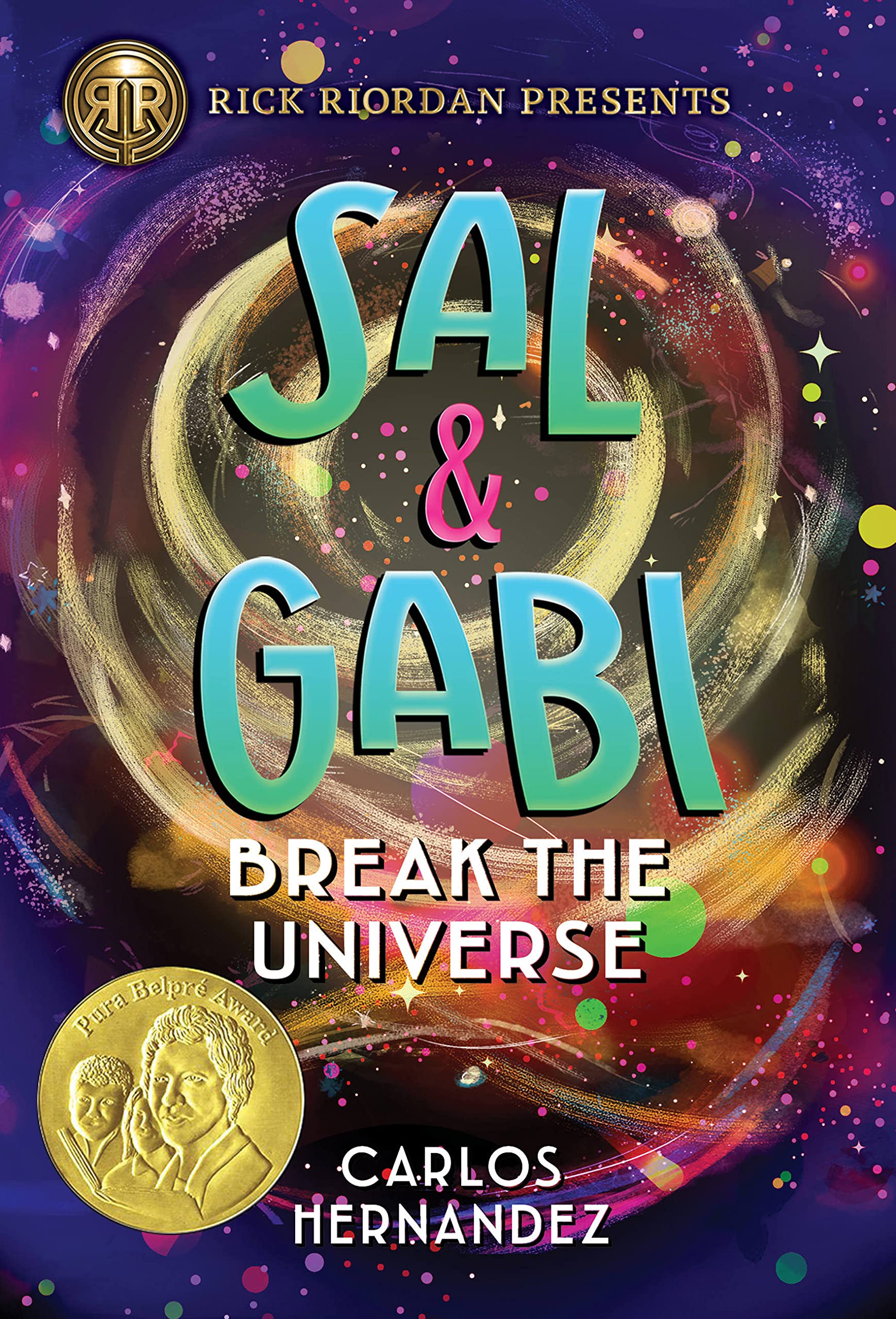
Sal and Gabi Break the Universe, by Carlos Hernandez

Sal and Gabi Break the Universe, by Carlos Hernandez, gave me warm fuzzies.

It walks the tightrope of middle grade fiction with flair, firmly accessible without condescending to the reader. It’s kind, it feels honest, it’s the kind of book that I’ll recommend to anyone (provided they don’t mind reading about kids in middle school). It’s a really solid book that deserves to be enjoyed by more people—and that more people deserve to enjoy.

There’s a couple things I think the story does really well, and I think I can cover them without spoilers.

I’m very aware that fiction is a facade. And I know that making it look and feel like something deeper, giving readers enough to cling to and build on to believe that the characters are full people, is a lot of work. Doing that for one or two characters is difficult enough. Sketching out the other nearby characters such that they also feel deep and don’t detract from the piece as a whole is beautiful.

Carlos Hernandez makes this story beautiful.

The kids who are our main characters all feel deep, human. And we see enough sides of them to believe that they are living, breathing, feeling people. This means the book never treats any of the kids in it as unknowable or other or villainous; even when characters don’t like each other, they’re still given the author’s empathy. It’s wonderful seeing a book put so much effort into humanizing its characters, and refusing to take the easy shortcut of using them like little cardboard cutouts.

And the adults nearby feel real too, in the slightly hazy seen-through-the-eyes-of-a-child way. They don’t get as much time as the kids (and that’s appropriate) but they round out the cast and give the impressionistic daubs of background color that evoke life without pulling the reader’s focus away from the main show. It’s a well written book. 

It’s also written differently than I would expect for MG science fiction. It’s far more slice-of-life than adventure, more about the smaller puzzles and dilemmas faced by the protagonists than about large scale adventures or quests. This isn’t bad, but it might surprise people who came looking for tense adventure. And it means that, if you don’t become emotionally attached, you might not feel compelled to see the emotional plots through.

That’s in part because the physical plot is several disparate chunks, woven together to create the overall emotional and personal arcs for our narrator Sal. This didn’t bother me (it’s a good book!) but I think it may have contributed to my distraction about halfway through, when I wandered away from the book for a few days. I wanted to continue the story, but I didn’t feel like it had grabbed me by the nose and was dragging me onwards.

When I describe it like that, I’m not sure why I like that experience in the first place. But I do like that in my adventure stories. And that’s not really what this story is about or what it feels like. Instead, Sal and Gabi Break the Universe is touching and sweet and well-crafted, and it does an excellent job of building personal investment to keep its audience hooked.

I think this works partly because Carlos Hernandez has done an incredible job of “frictionless writing,” making a story that just slides you along without any feeling of resistance or struggle. The story isn’t dragging you with it—you’re gliding, and it feels effortless. This might have been aided by my familiarity with Spanish, which shows up sans translation several times, but I also think Hernandez does an excellent job of working code-switching between languages into the book with a minimum of confusion. Oh, and despite obviously being the first of two books, this book ends in a way that feels good and self-contained.

Basically, it’s good. It’s well written. I recommend it. I have the sequel on hold at the library, and am looking forward to reading it as soon as I get my hands on it.

Update, 2/10/22

No review for the moment, just an update. I’ve got Sal & Gabi Break the Universe right now, and am looking forward to getting my hands on In The Red soon (which for some reason wasn’t available as an ebook through Libby). My recent book-sprint has slowed down again, just waiting for it to pick back up again. Might have something to do with watching more shows than I usually allow myself to, or giving myself permission to watch them less attentively than I usually try to.

Meanwhile, I’ve been reading Murderbot to my partner and they’ve been loving it. I love rereading it too, though I’d forgotten how difficult some of it is for reading aloud. It turns out that while I think Martha Wells was right to bury some conversations in paragraphs the way that she did, simply because that’s how they fit in Murderbot’s stream of consciousness, it’s a lot harder to read those buried lines aloud without breaking up my reading to clarify what Murderbot says versus what it thinks. This could be easier, if I had thought to come up with a distinct voice for Murderbot’s speech as opposed to its thoughts, but alas I did not.

Besides, that would be odd, right? It’s all Murderbot. It should sound more similar than different.

It’s not all bad though. I did luck into some hilariously good voices by accident, especially while reading ART’s lines.

I’m not sure what next week is going to look like, or whether I’ll be able to post much; I’ve been selected for jury duty, and might be otherwise occupied.

Oh, and on the video game front, following up the Hero’s Hour post from two weeks back… there’s another game that also obviously wants to follow the path of the old Heroes of Might and Magic games: Songs of Conquest. It’s not available yet, though early access is supposed to start in March. From the little I’ve seen so far, it looks like they’ve focused a larger team with more resources on making fewer factions in a game with more visual polish and greater similarity to HoMM’s old combat mechanics. Hopefully it is also more stable.

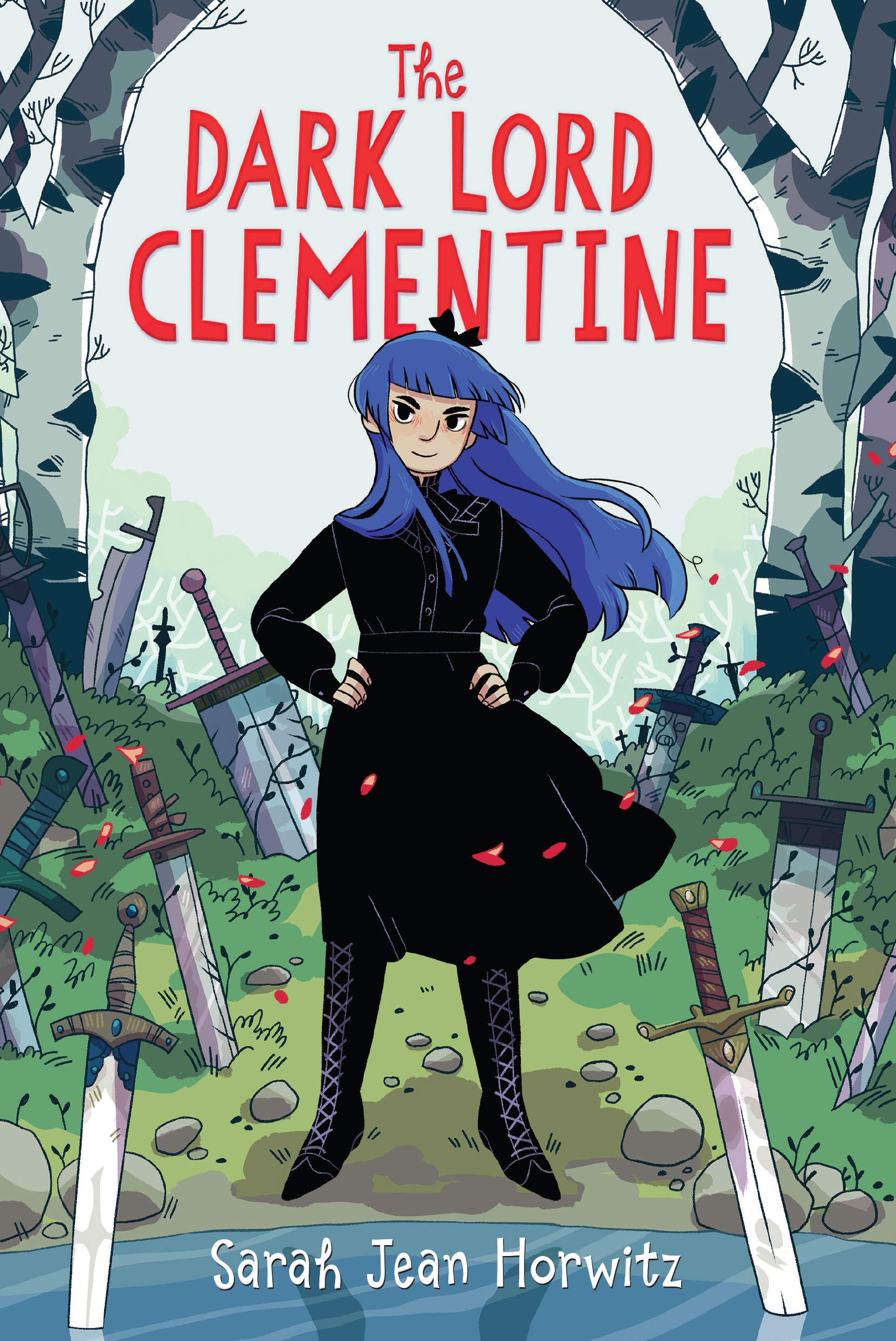
The Dark Lord Clementine, by Sarah Jean Horwitz

I’ve been meaning to read Sarah Jean Horwitz’s The Dark Lord Clementine for years, and I’m glad I finally did. It’s charming. Extremely charming.

I have complicated feelings about how the main character is constrained by forces outside her control, and how that creates what I felt was a gendered portrayal of empowerment, but… that’s what the story is all about. And on reflection, the feelings I had about the gendered story conventions were both correct and missed the point. The story beats which evoked those conventions are crucial to the course of the story, and crucial to the way its conclusion works so well and feels so good.

I don’t think the story could create the same excellence without them.

The Dark Lord Clementine is about Clementine, sole child of Dark Lord Elithor and heir to the family’s title and responsibilities: crushing witches and competitors, vying with other Dark Lords while maintaining evil status, and making the local peasants’ lives miserable. It’s about Clementine’s need to live up to her father’s expectations—as well as her own expectations, and those of her society. And it’s about her need to save her father from the terrible curses of his enemies, when he’s struggling to save himself.

It’s about more than that too, about relationships and manipulation and abuse, and friendship and betrayal. It’s about growing into yourself, and finding your way in the world on your own terms. It’s full of classic upper middle grade goodness.

I recommend it heartily. That goes double if you like middle grade fantasy at all, and it’s still true even if you don’t.

Now I’m going to pontificate about gender and genre fiction for a minute, before segueing into potential spoilers. Don’t worry, I’ll mark them clearly.

I should note, the Folding Ideas video on empowerment in Jupiter Ascending was very helpful to me in reflecting on this. The key question asked there is “do the characters take action within the story, on their own terms? Or are they solely acted upon by the story?” That was a useful framing device for me.

Classic adventure stories, the genre that I’m used to thinking of as my measuring stick for empowerment, don’t do a good job of encompassing social expectations and the way they impinge on characters’ lives. Protagonists in those adventure stories rarely have to explicitly juggle others’ perceptions of them (or their perceptions of themselves). More often, they’re forging new paths outside the traditional bounds of society, or casting off their expected roles—but doing so in a way that is expected by the genre, and by cultural expectations of (usu. male) heroes. They’re nearly always archetypically “manly,” and certainly not “weak.” Whatever that means.

Yes, those stories—presented as being ungendered—are culturally extremely male-gendered.

So when reading adventure stories, or genre fiction in general, I have several constantly running questions in the back of my mind: what social pressures are exerted on the protagonists? How aware is the protagonist of the social pressures they’re under? And do they question or act against or (usually in the academic sense) queer those pressures? 

Slight digression: in my anecdotal experience, the less aware the protagonists are of these pressures, and the less aware the story is of these pressures, the more likely the story is to regurgitate and not question those old gender conventions. Relatedly, those stories are also more likely to be written by a man who hasn’t spent much time examining gender roles and their social impact, and generally hasn’t had a good critical think about how gender roles constrict people (of all sorts) in negative ways. For that matter, those authors are also more likely to be white or to have some other kind of unexamined privilege. Basically, it’s a solid clue that the author hasn’t had a good think about feminism, and the way in which cultural expectations constrain everyone—which is painfully obvious when those authors’ male characters are seemingly unaware of the constraints of the system while knowing deep in their gut that they must be “manly” at all times.

Moving on.

This (the unexamined-ness, or a story’s lack of awareness of gender roles) isn’t universally a sign of the author being unaware. Sometimes people write stories where those pressures aren’t as present explicitly because they want to imagine a different world, or don’t want to spend their brain power on our world’s conventions. It’s just a tendency I’ve noted, and which I continue to keep tabs on.

Tying that back into the previous thread…

When stories deeply invest lots of attention in social pressures and expectations, and constrain their characters with those things, they also often read to me—with my assumptions trained by old (male-centric) adventure genre fiction—as being gendered (gendered female, that is). And the empowerment that I see in those (”female“) stories often feels less empowering to me than the empowerment in old adventure fiction. It’s a whole noodle-y mess of ingrained cultural assumptions. And my narrative palate was well trained; for a long time, I appreciated stories that empowered characters by allowing them to do all those typically-gendered-male things far more than I appreciated the ones that showed protagonists working carefully within their social constraints. It’s been long slow work to counteract: expanding my narrative palate has taken time.

What’s more, expanding my palate hasn’t changed my fundamental issues with these gendered expectations around different flavors of genre stories. I’m still wrestling with how to write genre fiction that feels appealing and empowering, and which queers those gendered conventions of empowerment. I want to be able to write good stories that play with all sides of those gendered narrative expectations, and then go new places too.

Maybe that’s part of what I love about Clementine’s story.

Okay, now we risk some *SPOILERS*. I’ll keep things general, but… I’m giving away the narrative arc without giving precise details.

See, Clementine is extremely aware of her responsibilities, and feels the constraints on her life quite keenly (though she doesn’t question them much at first). She acts, taking initiative as best she can, but flounders in the process. And who can blame her? She’s trying to do the work of an adult (several adults, really) and is balancing far too many duties all at once.

All of these constraints wrap Clementine up tight. They felt suffocating to read. It was both awful and extremely effective storytelling.

And unlike the adventure stories I read when I was young, this story is less about our protagonist going out and forging some brilliant new path or performing acts of derring-do, and more about our protagonist finding the wherewithal to escape those constraints and reach the freedom to forge her own new path. Those oppressive constraints are key to her emotional journey. Without them, her struggle and growth would feel less meaningful and consequential. This is why my internal judgements—about how the story wasn’t empowering Clementine enough—withered by the time the story finished.

Clementine doesn’t go out and “do adventures” in the same classic (male-gendered) genre fiction way. She isn’t empowered in the same ways. But she absolutely is an empowered character. She’s able to choose and make decisions, and isn’t simply shuffled around by the plot without an opportunity to make her own decisions and try to act as she sees fit. Others have power over her at times, and she’s certainly not in control of everything, but she can steer herself and ultimately arrives at a place that feels more empowered because of her own choices, more able to engage with the world and its expectations on her own terms.

In some ways, this story feels like an exploration of the edge between two classically gendered narrative structures, moving from one to the other. It’s great.

I recommend it.

Paladin’s Hope, by T. Kingfisher

Paladin’s Hope is the queer continuation of Ursula Vernon’s paladin romances (written as T. Kingfisher). It does finally deliver the gay romance I’d asked for previously, and now I’m wondering what other stories we’ll get next given that I know there are a few paladins remaining without books about them.

For personal reasons, I enjoyed reading this one less than I enjoyed the others (Paladin’s Grace and Paladin’s Strength). I’ll try to dig into that, but I should add: if you liked the previous books in the series and still want “paladin romance,” this will still give you that and do it well. My personal discomfort has more to do with my own history than with some bigger critique of the book or series.

These books are all about paladins (often along with their potential romantic partners) being—in the words of friends who also read and enjoy these books—“total goobers.” The paladins these books revolve around all have lots of reasons for telling themselves why they’re not good enough for a romantic partner, or telling themselves that they’re doing everyone a favor by not pursuing or committing to a relationship, or etc. They are, in short, goobers. This goober-ness almost always drives the core of the relationship drama at the heart of each novel’s romance plot. There’s always other plot too, good fun stuff, often with intrigue and murder playing off the romantic tension to draw the story out and let everything feel right, narrative-wise. It’s well-written and does the expected romance novel thing, and it’s all fun.

But with Paladin’s Hope, Vernon very evocatively wrote some goober-ness that reminded me—painfully, powerfully—of my own previous episodes of goober-ness. And that hurt a lot. It hurt enough, was evocative enough, that I had to stop reading for a while and just meditate to keep myself from spiraling.

That’s the reason I liked reading this one less.

It’s still a good fantasy romance with murder and intrigue, like the others in the series. It’s certainly got some solid characterization and a good portrayal of relationship dynamics (healthy and unhealthy).

It wasn’t comfortable for me, and that’s okay. With any luck, you won’t have the same issues that I did.

The book also establishes the next step for the larger story world’s plot. I’m quite excited about that. I think the next few books in the setting and series will be fun, and big, and open up bigger overarching plot elements again. Those felt a little lacking with this novel, though I can’t say I noticed the lack until I reflected on it after the fact. Anyway, I’m looking forward to the next one.

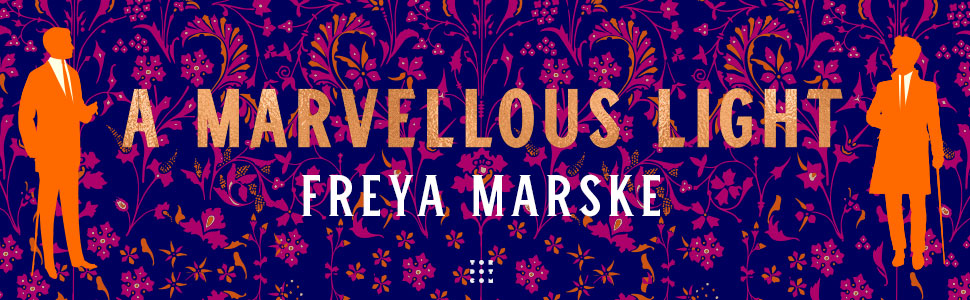
A Marvellous Light, by Freya Marske

Freya Marske’s A Marvellous Light is magic society intrigue set in early 1900s Britain, with a heaping serving of gay romance on top.

I knew I was reading something very gay before I started, given what little I’d heard about the book beforehand. I *hadn’t* realized I was going to be reading lurid sex scenes. Fortunately, I was able to avoid reading those scenes in public (something I’ve tried to be cautious about since a few awkward experiences in high school—Covid has actually been helpful there), and I was able to just relax and enjoy the book.

If you read the things I had to say about Ursula Vernon’s books, you’ll understand what I mean when I say that this book delivered all the gay romance I’d felt was lacking in the first two Saint of Steel books. Also, I just realized that I read the newest one (Paladin’s Hope) and didn’t write about it here. I’ll try to rectify that.

But I’m distracting myself. This book is good stuff. And it opens with an excellent dramatic scene that sets the stakes for all that is to follow.

In fact, thinking about it from a composition perspective, I wonder when Marske decided to use that as the opening scene; it’s the right choice, I think, and does a marvelous job of creating tension for the reader, but it doesn’t seem like the obvious jumping off point for the next set of scenes. It feels like the teaser intro used to open a spy movie and showcase the future badness our heroes will face. That’s not the wrong choice or the wrong genre for the rest of the story, it’s just not the surface genre for the next step of the story. And I really want to know what inspired Marske to thread these pieces together this way.

Backing up…

Freya Marske has combined several genres here, as I mentioned up top. There’s gay romance, there’s magical fantasy, there’s historical society intrigue and drama (subgenre: British, early 1900s), and there’s the related spy genre. I tie those last two together because, in many ways, spy stories (more le Carré, less Fleming) feel like a reduction of society intrigue: concentrated, cooked down over some higher stakes to something more piquant, seasoned with a dash of paranoia and murderousness. The ultimate dish here is less twisty than an actual le Carré story, but with some of the same flavors and machinations.

So. Back to the novel (heh) genre blending of the book’s first chapters…

When the first scene of the book feels like the opening to a spy story, turning up the pressure and letting us know that something dire is afoot, that’s great. Then the story segues into something that feels more like society drama and leaves the threat lurking under the surface, like a shark too deep to show the reader its fin. And that works too. But, as a tonal shift, I don’t think the choice to do things that way is immediately self-evident. Or, it wasn’t an obvious option to me until I read this.

By the end of the story, it’s clear that all those elements work well together. What’s more, the genres feel well-blended; I’m really looking forward to the (clearly intended) sequel(s) and how they play with this mixture, because I suspect this story’s continuation will give me even more of the magical intrigue and spy fiction that I desperately want. If there’s more queer romance in it, all the better.

All of which is to say, if this blend of genres sounds like your cup of tea then you should hop to and find yourself a copy. It’s good stuff.

A Psalm for the Wild-Built, by Becky Chambers

Becky Chambers’ work, as I think I’ve written about before here, feels like a different kind of science fiction (and indeed genre fiction) than the stuff that I grew up reading as a kid. Her work is… emotionally textured, small in physical-plot scale, entirely about the characters in the story and their emotional journeys rather than about the big dramatic large-scale events which might be happening around them.

Her stories are about people before they’re about events. Sometimes big things happen, yes, but it’s the characters and their emotional lives that get our focus.

And this story, A Psalm for the Wild-Built (is it a novella? It’s certainly brief) feels even more character focused than the other books of hers I’ve read (the Wayfarer series).

That’s not a weakness.

I mean, none of this is a weakness, it’s what she does so well. It’s what sets her apart from so much other genre fiction (so much other fiction, period). I love this aspect of her work. What I mean to say is… the fact that this story feels even more character focused than her other books is a strength. It’s a delight.

The story is meditative, it’s charming, it’s sweet. It’s not without a hint of bitterness and sadness. But only enough to feel honest, only the amount that leaves me thinking “yes, this is precisely the way that would feel, this is just right as a representation of this very human emotional experience.” I often feel that way about things that Becky Chambers has written. Her skill at finding the emotional heart of an experience, and then expressing it in a way that resonates and sings, is one of the things I love about her work.

And that, no doubt, is why I love this story.

Well, it’s part of why I love the story.

There’s another large part, which is unique to me and a few of my friends; we’ve been playing a game of D&D for the past several years (yikes, we might be coming up on seven years at this point) and in many ways this entire book feels like the core of my (robot-plant) character. Reading a story that feels like it fully understands my character’s slightly-askew perspective on life—right down to the questions about purpose and… everything, really—is a joy. I feel like I’ve briefly shared brainspace with Becky Chambers herself. It’s fun, and it’s flattering: a writer I deeply respect reached similar thoughts when exploring this character’s emotional and psychological interior.

And all of this has left me wondering: where are the feeder-stories, the tributaries that lead new genre readers (or readers who love other parts of the genre) to this book? Is it happenstance? Does it rely on word of mouth?

I would not have found her work if I’d kept reading the adventure stories of my youth. I had read so many different high-plot high-action genre stories, with lots of exciting action going on and significantly less time given over to emotional depth. Had I continued reading “similar works” I suspect that I would never have picked up The Long Way to a Small, Angry Planet. In fact, I only read Chambers because a friend suggested that first Wayfarer book to me.

I hadn’t known that Becky Chambers’ stories were something I would love.

Anyways.

This is a good book. I recommend it, especially if you already know you like Chambers’ stories. If you haven’t tried her work before, this might be a little slow as an introduction (even if it is also quite short). But if you want good gentle science fiction all about very human emotions and philosophical struggles, this is a great piece for you.

Oh, yeah, this story also leaves me feeling better about the world, humanity, and myself. Other reviewers have called it optimistic, I’d call it heartening. It’s really very good in that way.

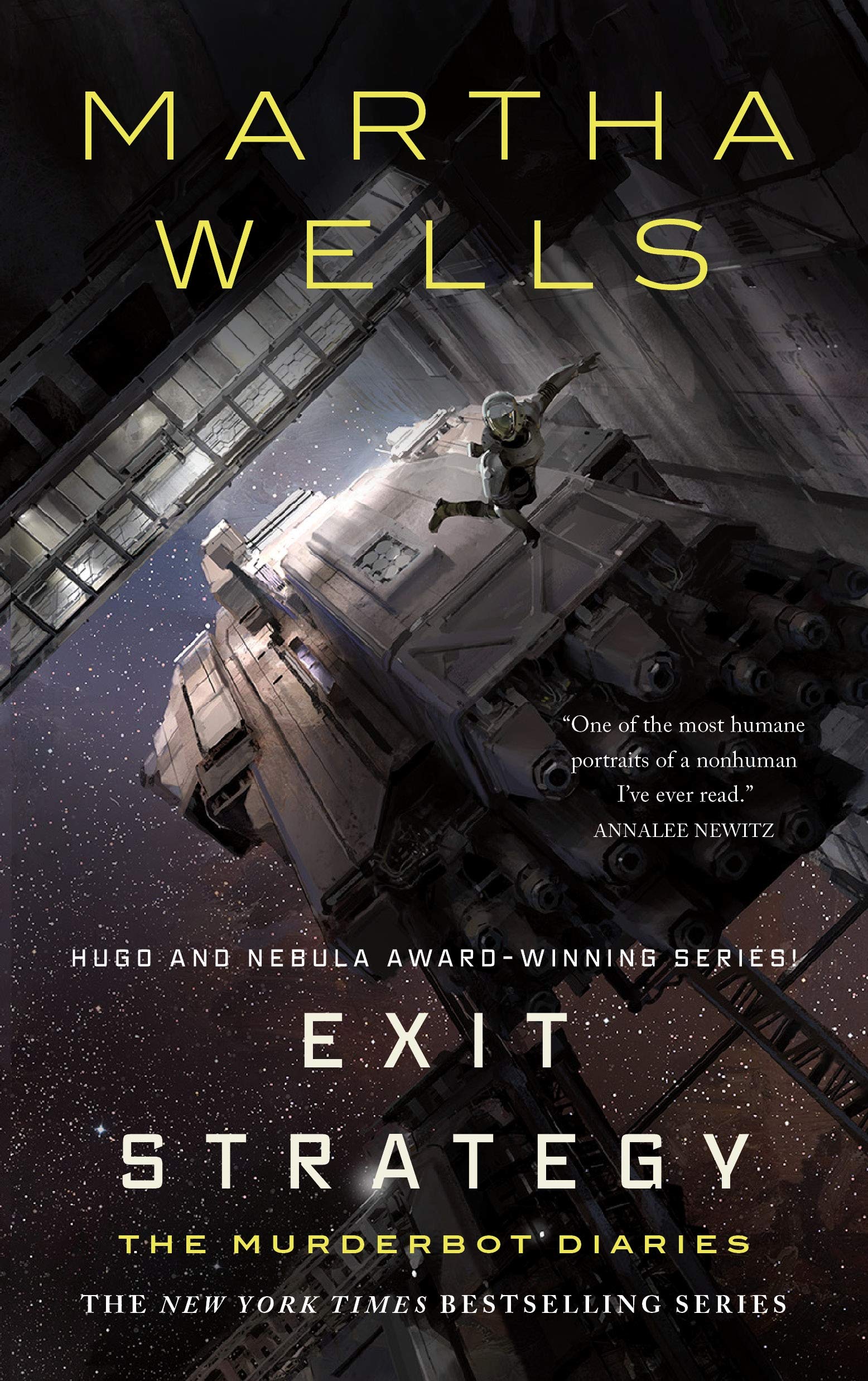
Exit Strategy, and more Murderbot from Martha Wells

Martha Wells does an excellent job of wrapping up her arc in Exit Strategy (Murderbot #4).

Her habit through the first four novellas of layering in emotional struggles alongside but separate from the underlying physical plot—separating the drivers of the physical and emotional plots in ways that are contrary to most current practice—works really well here. That separation allows her to write Murderbot as a proactive character, reaching for goals that it chooses for itself, without requiring Murderbot to be complicit in pushing its own emotional development. That’s important, because Wells has created a character with zero desire to engage in personal emotional content (despite its love of human media), which means that Murderbot starts the series uncooperative in pursuing any emotionally charged plot.

It’s a neat combination of a driven and reluctant protagonist, in one package.

Murderbot’s reluctance to engage in emotionally charged plot only makes the conflicts Wells builds towards in Exit Strategy even more satisfying. And because of all that, because of the character transformation that Wells laid out over the course of the first four Murderbot novellas, I cried as I neared the end of book four. It was that good.

Having now read the rest of the (currently available) series, I think Wells’ use of a multiple-novella arc was ingenious. I think those first four novellas together may even be stronger than the novel-length Murderbot story. This isn’t due to a lack on the novel’s part—rather, I think it’s an outgrowth of how the novellas serve Murderbot’s growth uniquely well.

Some thoughts on this…

Any time that a character needs to experience emotional growth and change, it helps to have your story cover a long enough time period for that change to feel real. It’s also useful to have there be multiple mutually reinforcing circumstances that coincide, over time, to produce the gradual shift. Both of those things are easier to do over the course of multiple novellas, where literary convention allows the story to wander across more spaces, times, and situations without the requirement of tying all the developments into a single cohesive unit of story. An obvious parallel: it’s the same freedom of expanded narrative space that allows a six hour miniseries to offer more character growth than a three hour movie. Spreading that character transformation out, especially when it’s a big and complicated one, gives the character’s growth space to breathe, expand, and feel less forced.

The usual alternative—the approach most similar to a movie’s, and the one favored by action and adventure stories since the 1800s at least—is to have the story produce a high-tension crucible of a climax, where all the preceding character development comes to the fore and shakes out like an earthquake of personal growth. That single big conflict has to encompass, even prove, all of the character’s transformation in the story. That means that if there are multiple points of change, they all need to be set up ahead of time. The groundwork is often elaborate, and a large degree of genre-savviness is simply learning to recognize those story preparations.

Storytelling is all artificial; it’s artifice working as hard as it can to look natural and real. And it’s harder to make something look real when you’re forcing it to go as fast as possible, with nary a moment to breathe. Giving a big character transformation more space therefore helps to smooth everything out and make a tumultuous period of transformation look right.

That’s what Martha Wells does with her first four novellas.

I think her novel length piece, Network Effect, is still good. I enjoyed it a lot, and happily recommend it to anyone who likes the Murderbot series. But it doesn’t do all the same work that the first four novellas do. In some ways, the important emotional journeys of Network Effect belong to people besides Murderbot… and they aren’t as resonant or rewarding for me as the arc Murderbot completed in Exit Strategy.

They’re still good though.

But now I’ve run out of new Murderbot to read, and I’m at a bit of a loss. My next few library books aren’t ready yet. And once I have them I don’t expect them to be as good, or as good in the same ways, as Murderbot.

I’m really looking forward to whatever Martha Wells writes next. I hope it’s more Murderbot, but I’m excited for whatever it is.

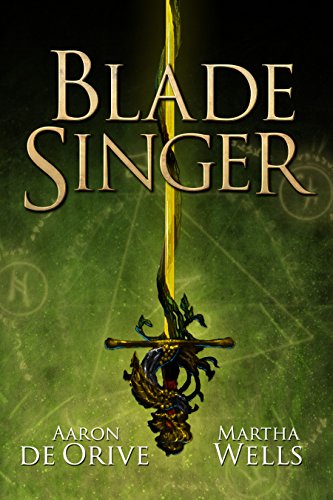
Blade Singer, by Aaron de Orive and Martha Wells

This isn’t Murderbot.

It’s really not fair to compare the two. But because I found this book by looking for other things involving Martha Wells—that felt like Murderbot—I’m afraid it’s doomed to comparison. This was the available book, with Martha Wells’ name attached. It wasn’t what I was looking for.

I did finish it.

Blade Singer isn’t Murderbot. It’s straightforward portal fiction, with a powerful fey three musketeers vibe. All genres I like. Clearly intended for that awkward threshold between middle grade and young adult, where the plot is very middle grade but the writing is a tad more complex, Blade Singer has a mix of genres (and a target audience marketing category) that I have strong opinions about.

Honestly, this book is fine. I enjoyed it. My quibbles with it are perhaps unreasonable.

Leaving aside my desire for more Murderbot, I think this is actually a solid book to give to a younger reader who enjoys fantasy, fey and faeries, swashbuckling and musketeers, or portal fiction. And it’s a solid choice for any younger reader who might like those things and hasn’t gotten deep into books yet. It isn’t as immediately accessible as other simpler reads (it’s no Warrior Cats), but it’s not especially difficult either. On that front, it lands the upper middle grade rating pretty solidly.

However… as someone who’s quite familiar with (and enjoys) all the genres involved, this book also doesn’t offer any big surprises or new takes. It isn’t transforming the genres, or at least not in a way that offers a story more complex and nuanced and to my taste. It doesn’t succeed where other ostensibly-for-children fiction has thrived, with the depth required for cross age-market appeal (think She-Ra and the Princesses of Power, most Pixar movies, or Nnedi Okorafor’s middle grade work like Akata Witch or Shadow Speaker).

Blade Singer’s stumbling blocks for me, I think, were its moral and emotional plots. They were present, all the requisite structure was there, but they felt almost bland. Like I could see the action on the page, and I knew how it would or should play out, but I never felt pulled into it, into feeling it. And I know this book could have done that. All the puzzle pieces were there.

Part of that could have been the close over-the-shoulder third person narration, but I know other close third stories have succeeded for me where this book didn’t. And while adding more filigrees to the moral and emotional plots might have helped make them less straightforward, I don’t think that would have solved the issue for me—I don’t feel pulled in just because something’s complex, I enjoy something being complex when I’ve already been pulled in. I think it came down to something about the characterization, and the fact that I simply bounced off of fully connecting with the narrator, Manny.

Your mileage may vary.

But that emotional bounce, and having a solid physical plot while struggling with the emotional and moral plot, reminds me of my own experience first writing fiction. With most of my preceding storytelling experience coming from running RPGs, I struggled to make stories with emotional connection or character depth. I’ve written about all that on this blog before.

And maybe I’m reading too closely here, but I think Aaron de Orive had a similar starting point (both in terms of games and the fiction he consumed). He’s involved in writing for RPGs and video games, and the authors he mentions on his personal site aren’t known for their excellent depictions of relatable complex emotional people, not like the modern authors I’d compare them to. Many are the same authors I read as a kid.

For me at least, writing linear fiction was a puzzle that I didn’t even realize I wasn’t solving. Most adventure fiction I’d read as a kid didn’t have much emotional depth or nuance. And while I knew how to elicit reactions from my players, that was all about setting up the stage with the right plot pieces and then letting them complete all the robust internal character struggle in their own heads. I didn’t know how to show that on the page. Sometimes, I still don’t.

But I wanted Aaron de Orive (and Martha Wells, she’s credited as a co-author even though this doesn’t feel anything like her other work I’ve read so far) to yank on my heartstrings. I wanted these authors to reel me in deep and leave me really feeling the joys and sorrows of the characters involved. That didn’t happen. And I didn’t feel attached enough (as I did with Murderbot) to complete the loop myself.

But as I said above, my quibbles are probably unreasonable. Blade Singer has more emotional depth than those adventure stories I read as a kid. It’s not a bad book! It’s perfectly fine, and I do recommend it to anyone who likes the relevant genres. And, to really enjoy it, I think you’re best off reading it as a kid who doesn’t have as much experience with these stories.

All Systems Red & Artificial Condition, by Martha Wells

I love Murderbot.

I’m late to the game, I know. But if there’s any upside, it’s that there are already a bunch of Murderbot stories for me to read. I don’t have to wait for them to be written and published.

The downside, of course, is that I’m reading them through the library and other people are being slow and I just want more Murderbot now please and thank you. This enforced wait is especially jarring given that I got my hands on the first two on the same day, blazed through them both, and now have to wait for the rest of the series to be free (in order, no less).

Why do I love Murderbot? Probably for many of the same reasons that other people do. Martha Wells has done an excellent job forging a voice for this character, dry, wry, and full of sardonic wit. And Murderbot is not an especially reliable narrator, even if it may think of itself as one; while it does generally admit to its emotional experience eventually, it spends a good deal of effort trying not to. Plus, while it so clearly wants to think of itself as not-a-person, Murderbot’s internal monologue is extremely easy to sympathize with—which makes it feel even more person-like, even while it protests that it is not a person.

The inversion of expectation is another part of what I love so much about Murderbot. Who’d think a security cyborg would want to spend all its time watching soap operas, listening to music, or binging its way through trashy fiction? The fact that Murderbot simply wants to be left alone, not be looked at or spoken to, not be asked to do anything, and simply be allowed to indulge itself in stories… it’s delightful. It’s relatable. To my reading, Murderbot is anxious and depressed and just wants some peace and quiet. But it’s (of course) Murderbot’s inability to get the peace and quiet it desires that makes this all work so well.

I have mixed feelings about reluctant protagonists, mostly because of how our collective love of them in media shapes the way many people make their characters for RPGs. Players’ desire to make their characters match that popular reluctant archetype often plays out to their and their play group’s disservice, in my experience. But when a narrative is so wonderfully fit around that reluctance (much easier to manage in a linear narrative, of course)… well. It’s hard to match that narrative tension, and the struggles of someone with so relatable a set of goals and desires, faced with extraordinary circumstances, only make it better.

This character is very good. The story is very good. Martha Wells has done wonderful things here.

I owe my mom for this next observation, given that she made it while I was telling her about the book.

In some ways, Murderbot is reminiscent of Ferdinand the Bull (one of my favorite childhood characters and books). 

Murderbot is seen by everyone else as an object, and an object of fear, violence, and suspicion at that. But much like Ferdinand, it only wants to spend its time quietly, peacefully, not bothering anyone and not being bothered.

Unlike Ferdinand, Murderbot struggles to see itself as anything but an object—finds its own object-hood safer, maybe more comfortable, than thinking of itself as a person—and works to avoid any confrontation that might jostle the status quo. Better to remain in the limbo that you know, be it ever so depressing, confining, and uncomfortable, than to risk seeking something better. Though in Murderbot’s case the risk involved is quite literally obliteration, so maybe the caution is warranted.

Extremely vague *SPOILERS* follow.

I’m also fascinated by the shift from the first story to the second. Where the first felt like a more whole story, something that contained a more complete and satisfying emotional & character arc, the second story felt like an installment, another step along a longer path. The second also had elements that left me thinking of the differences between what a character *thinks* will be important—as well as what the longer term plot demands as another step along their path—and what is actually most transformative for them.

The Witness for the Dead might be a good example for disambiguating this: there are a lot of mostly-unrelated side plots, and only one or two of them tie back into the central intrigue of the story. Katherine Addison could have cut those side plots, or rewritten and collapsed them into the central plot somehow, but the first option would have left the story feeling sparse and the main character’s emotional journey unsupported… while the second would have felt too contrived, unreal. We put up with the second (those contrived, perfectly neat stories) in our fiction all the time, because we’ve been trained as readers to expect the elements of a story to all tie in together in the end, but that’s rarely very true as a depiction of real life—and allowing for divergence in those plot lines is both freeing and lets the author give more space to the rest of the world beyond the immediate plot of the story.

So in The Witness for the Dead our narrator pursues a series of different investigations and jobs, only some of which tie into his primary task. And while he’s trying to resolve one central investigation, it’s his struggles with the other ones—which have little bearing on the first—that inform his emotional growth and development. His initial concern is less important to his personal realizations.

All Systems Red meshes these struggles. All the plot conflicts, Murderbot’s personal emotional conflict and its external physical plot conflict, are wound together into one thread. There’s no real divergence, the whole thing is extremely neat.

But Artificial Condition makes space for divergence by containing parallel plot lines that feed into each other while remaining separate. Murderbot’s biggest emotional and personal growth comes from the plot line, the conflict, that it is less initially invested in. Thus Murderbot thinks that one course of action, one set of objectives, is the important one… only to find out that the other holds at least as much importance to it, that the way it is treated by humans matters far more to it than it had ever realized or accounted for before. This means that Artificial Condition changes the way the story had approached its combination of character development and physical plot in All Systems Red, and that’s at the core of why this sequel feels notably distinct from the first story.

*END SPOILERS*

Anyway.

I’m loving the Murderbot Diaries. I recommend them completely. They’re very good.

The Witness for the Dead, by Katherine Addison

The Goblin Emperor was my first introduction to Katherine Addison (pen name for Sarah Monette). As I mentioned when I wrote about that book, I admire the way in which Addison creates meaningful, real characters, people who feel like they have tangible depth even when I don’t like them (and don’t want to like them) at all.

The Witness for the Dead does it again. I don’t feel quite as uplifted or warmed with hope as I did after the first book—possibly because the main character is in such a low place himself, and somehow slogging his way through that without making the book feel depressing—but this one still feels good and truthful. It’s still peaceful in a way that I appreciate, bringing resolution to the important things while allowing the less important things to pass along. And the main character, once again, feels like a decent person who retains his decency through everything that this story (full of other people’s intrigue, and others’ dislike for the main character) has to offer. This book is, to borrow a word from John Scalzi’s review, intimate.

Oh, and this book follows a different main character than the first. It’s a sequel insofar as it follows someone who shows up in the first book, is in the same setting, and occurs after the first book’s events. But otherwise, little of the first book’s story matters all that much here.

I suppose, if you haven’t read The Goblin Emperor and don’t know much about the setting, this might be a bit of a shock to your system. Addison doesn’t bother to explain any of the in-setting terminology that she uses (modes of address, important morphemes denoting gender, class, familial relationship). As such, understanding who’s who and getting over that initial hurdle of comprehension might be a little rough. I know enough about my preferences to realize that many readers want a little more context, a slightly less abrupt introduction to a complicated setting, than I do. This book might not offer that.

Come to think of it, I’m not sure that Addison did that much to explain the setting’s conventions in The Goblin Emperor either. But that book had a slightly slower introduction to more complicated social dynamics—and had a main character who constantly thought about the social cues involved—and thereby made more room for the reader to gain expertise before being thrown into the deep end. That’s less the case here. There are still small contextual cues, e.g. thoughts from the narrator which reflect on terms of address, but (based solely on old memories) I think there’s a slightly steeper learning curve to this book than the previous one.

That does not mean that this book is bad. I really liked it. I strongly recommend it, especially for those who want heartfelt fantasy that gives more attention to characters’ internal worlds, and which takes time to make people feel like people instead of plot-relevant cardboard cut-outs. In that way it has many similarities to Becky Chambers’ Wayfarer series, except that The Witness for the Dead, like The Goblin Emperor before it, has more external plot and intrigue.

So if you’re looking for fantasy intrigue with well-written characters, or stories that include external plot but give more weight to a character’s personal journey, The Witness for the Dead might be for you. Enjoy.