In Response to Romero’s Musings on Tidiness Theory

Zeeblee

John Romero recently posted an article in which he discussed the strength of Tidiness Theory in game design, the human desire to build, and the potential ramifications these behaviors in games have for evolution.  While I think his closing paragraph is rather misinformed (evolution just don’t work that way), the rest of his article paints a good outline of how Tidiness Theory rears its head across multiple genres.  I find I both agree and disagree with Romero’s assessment that Tidiness Theory is why players continue to play certain games.

Continue reading

Computer Game Gossip! Blackbird’s new game will be in the Homeworld universe

image-3922921

SPAAAAAAAAAACE

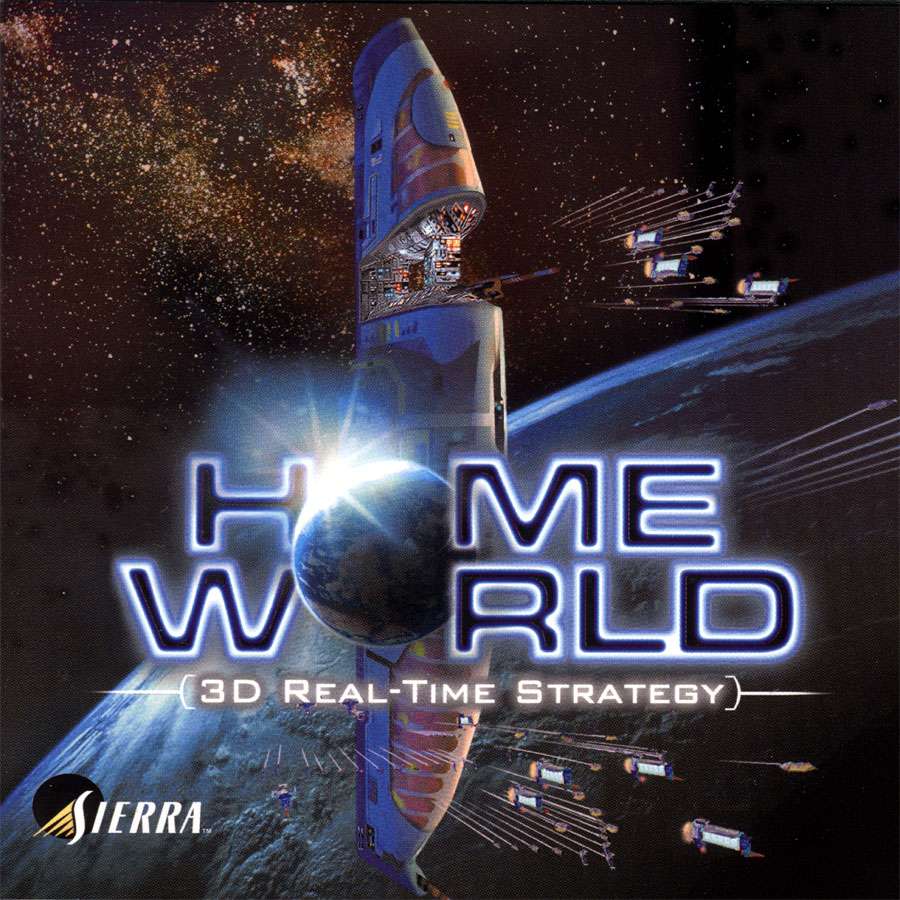
So, this is not what I usually write about.  But I was given some really great news and I thought I should share it with the rest of you.  You know how Gearbox acquired the rights to that totally sweet game Homeworld?  I know, I know, it came out in 1999 which is practically forever ago, but it was still pretty incredible… rather than review it right now, I’ll just say that I loved playing that game, loved watching that game, and loved listening to that game.  Anyway, Gearbox just signed a deal to allow Blackbird, a company founded in part by people involved in making the original Homeworld, to publish their new game Hardware: Shipbreakers as a part of the Homeworld universe.

I also haven’t mentioned how excited I am by how Hardware looks, so I forgive you if you are confused.  Check it out:

Continue reading

Sir, You Are Being Alpha’d

9b14d97b5daf6e966c440a05bdf73e6f_large

Your merciless foes

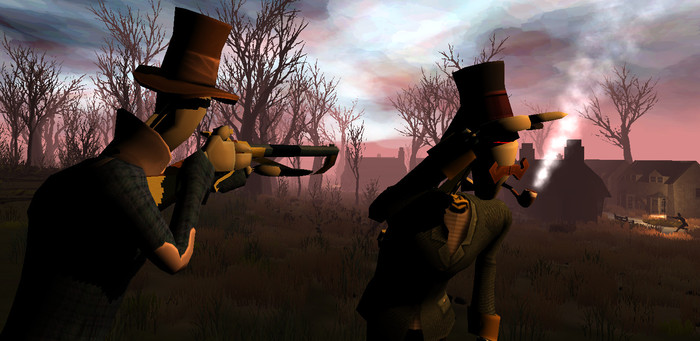
Jim Rossignol of Rock Paper Shotgun also runs a game company, called Big Robot.  For one month last year, Big Robot ran a kickstarter project to fund their game Sir, You Are Being Hunted (now available both directly from Big Robot and through Steam).  I backed that project.  This summer, just a few days ago in fact, Big Robot released an alpha of their game to their backers.  Can you see where I’m going with this?  Good.

What follows is a collection of my first impressions of Sir, You Are Being Hunted, a game about traipsing across faux-British countryside in search of important MacGuffins while being mercilessly pursued by a very large number of robots with guns.

Continue reading

Types of Competition In-Game

Games are a broad category, something immediately apparent from any attempt to define them. When I was younger, I used to criticize sports like golf and running for ‘not being real sports’. My critique? You were competing against somebody only inasmuch as you were being compared to them. To use mild jargon, there is no way to interfere with your opponents. Now, of course, I know better, but it leads me to the thought of the number of different types of competition you can have in a game, and how that sets the tone.

Continue reading

Define Your Terms! Talking about RPGs

Let’s start with the title.  When I say RPG, I (usually) don’t mean rocket-propelled grenade.  Usually.

No, this post is meant to unpack the terminology surrounding role-playing games, and to be used as a future point of reference.  I’m also going to refer back to Mattias’ excellent post about role-playing, because he did such a damn fine job of describing what role-playing is.

All three of us have written about role-playing games (check out the GMing category, and look at the older articles).  Yet for the most part our posts have assumed a certain level of familiarity with RPGs and their terminology.  I’ve certainly presumed that other people know what I’m talking about; but what the heck does it mean when I call a system “sparsely elegant“?

In an effort to minimize confusion, here’s a quick primer that will begin to bring you up to speed.  I’ll do my best not to cover things that were done better elsewhere (see Mattias’ article, really), but there may be a little bit of overlap.

The terminology and topics that I plan to cover…

Continue reading

Monsterhearts: taking a peek under the ribcage

title-postcard

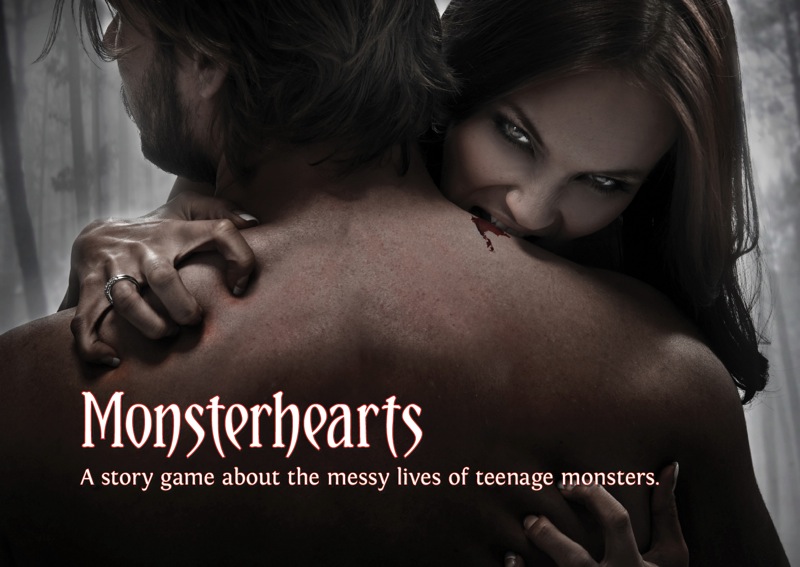
Monsterhearts sells itself as “the messy lives of teenage monsters.”  But the truth is that the monstrous nature of the PCs in any game of Monsterhearts really just serves as a reminder of the alienation, discomfort, and feeling of mislabeled or misunderstood powerlessness that gnawed at so many of us when we were teenagers.  And maybe as adults as well.  Furthermore, themes which have filled classic literature for ages rear their heads again and again in this game; you don’t have to have ever experienced any of them yourself in order to be fascinated by and indulge yourself in them.

A quick background: this is an RPG which has grown out of the Apocalypse World system created by Vincent Baker.  It takes the sparse elegance of Baker’s ruleset and applies it to a very different type of life.  Read on to find out what makes Monsterhearts different from Apocalypse World, and learn some of what makes it so dynamic and so much fun to play.

Continue reading

League of Legends

I figured I should get around to reviewing this game at some point, because, well, it’s sort of where I made my writing debut. What is League of Legends and why do I think it’s so great as to spend a ton of time on it? It’s an entirely different type of game than everything I’m used to commenting on, so this post will have a much different tone. League of Legends (or LoL) is what we call a MOBA, or Multiplayer Online Battle Arena. Essentially, it pits teams of 5 players, represented by their champions (heroes in the League of Legends universe) in a battle against each other. I think League of Legends (or LoL) is one of the best run and designed games I’ve ever played because the company that produces it (Riot) pays so much attention to its upkeep, and today, I want to talk about a few areas where League of Legends is revolutionizing gaming and eSports.

Continue reading

Deus Ex: Human Revolution

GENTLEMAN-GUSTAF-FUCK-YEAH

Choice is the name of the game when it comes to Action-RPGs. Old RPGs (especially Japanese-style RPGs) didn’t have much choice, and they play a lot more like interactive movies than games. Your ‘choice’ came down basically to your character (and not ever his crucial character elements, but simply how you geared him. I say this not to impugn that style (the Final Fantasy series is one of my favorites), but only to point out how the Western RPG market diverged. If you look at earlier RPGs like Neverwinter Nights and Baldur’s Gate, not only do they flesh out character creation (instead of having a set character you can outfit, you build your character from scratch), but you get increasingly more options, via sidequests and choices of which factions to ally with. But I argue that these choices are hardly real. Why? Because they do not meaningfully impact the game. Sure, you can ally with the thieves’ guild against the mage’s guild or vice versa, but honestly:

  1. what difference does it make?
  2. Isn’t it basically determined by the class you play?

This can be most exemplified by more sandbox RPGs, where the extra ‘freedom’ you have is to explor ethe continent doing sidequests. But ultimately, the gameplay doesn’t change all that much.

Continue reading

The Real SC: Star Control

star_control_kohr_ah_ur_quan_by_dczanik-d2z6mty

“You Will Soon Die. Make Whatever Rituals Are Necessary For Your Species.”

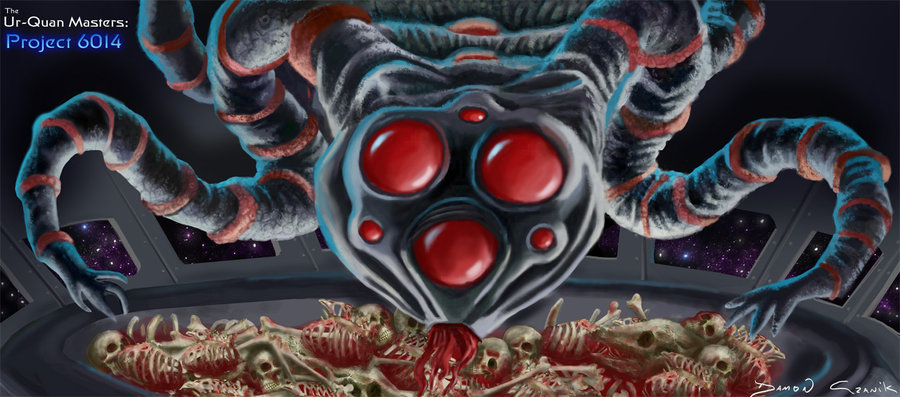
Some of you will recognize the above picture of a predatory space squid caterpillar.  I was reminded of these most wonderful villains a few days ago by a short little news item; it surfaced here in the daily torrent of Rock Paper Shotgun articles, and I found this informative tidbit through Ars Technica.

Star Control may yet ride again.

Continue reading

DEFCON: How about a nice game of chess?

DEFCON

Just kidding.  We all know you just want to play Global Thermonuclear War.  Poor Theaterwide Biotoxic and Chemical Warfare never gets any love.  DEFCON, developed by Introversion Software, offers all the Global Thermonuclear War you could ever want.  Its spartan and elegant graphics looks just as appropriate today as they did on release in 2006, with clean glowing lines showing up beautifully on the dark background of the world; Introversion took the design aesthetics of the global tactical displays from various Cold War nuclear war thrillers, and created a game that perfectly delivers their inhuman reductionism.  It is a cold, hard, unfeeling game that leaves you feeling challenged, rewarded, and maybe a little bit broken inside as you watch the megadeaths pile up and desperately hope that you can kill a few more people than you lose.

Continue reading