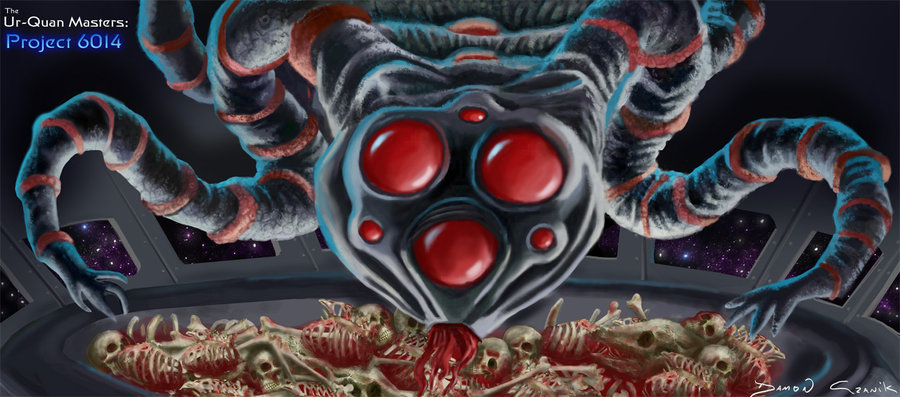
I’m piggybacking off of Mattias’ article because in our discussions before he published it, certain parts of his character caught my fancy, and it inspired me to try my hand at my own iteration. The core of the idea at the time in our discussions was: Demon hunter who uses magic. After more discussion Mattias mentioned how he was playing around with the idea of multiple personalities and the He Who Fights Monsters trope. My thought: What if this were literal?
Category Archives: Games
Held at Gunpoint
There’s a lovely new game that came out very recently. It’s called Gunpoint. Perhaps you may have heard of it…
Character of the Week: Jackmerius
Mostly, I’m a GM; so when friends of mine said that he was setting up a group of campaigns and needed manpower, I thought he meant he needed extra GMs. But lo and behold, he needed a player! I was excited and awaited the details for the setting, which turned out to be little more than ‘basically D&D’, so I didn’t have too much setting to ground my character in. For many people, this is a boon! They have character ideas galore and settings only restrict them. After all, they want to play a character who does magic based on rituals, or based on some anime, or whatever, and the campaign just doesn’t fit that.
But for me, it’s the opposite. Given a lack of prompting, I feel unjustified with any details. I don’t have a character idea that I then fit into a campaign; I build an idea FROM the setting. Without a setting, I feel like I have no non-generic ideas.
And so when I started character creation, I was scared. And then I realized something. My fear made no sense. I was applying a standard from my old-school GMing (what if my characters don’t fit the setting) that didn’t even fit my new-school GMing style. I wanted to let players drive games, and yet here I was, a player, afraid to drive a game! I’d like to say that I overcame this fear right away and dove into character creation. But really, I didn’t until that fateful moment when the GM turned to me and said ‘so tell me about your character’. Until that moment, my character had just been a series of numbers, and character creation had been IMPOSSIBLE. But let’s back up a moment…
Choose Your Own Adventure!
Edit: Part 2a has been written, and can be found here. Part 2b has been written as well, and can be found here.
I made this short choose-your-own-adventure story a while back, and only just realized that I could try to put it together in a functioning format on this site. I haven’t managed to separate the sections as much as I’d like, so if you want the full experience try to avoid reading more than one segment at a time. The uppermost section is the one to keep your eyes on. Have fun!
You come to your senses after a long night of studying in the library and find yourself standing on a narrow dirt path running through the woods. You don’t know how you got here, and it doesn’t look like any place that you’ve ever been before. After wandering along for a brief while, you hear hoofbeats behind you. Do you:
a) Hide behind a nearby tree. Paranoia is the best survival trait after all.
b) Stand on the side of the road. Horses move quickly and you don’t want to be in their way.
Sexism in Gaming: How to Begin to Address Harassment
I want to talk about designing a setting with your players, but I’ve been pretty preoccupied with a piece I wrote elsewhere on sexism in gaming (specifically League of Legends), so instead I’ll show that off. Check it out here!
Game Analysis: Diablo 3
Since I took a look at a spiritual successor to Diablo 2 I figured I might as well take a look at the actual successor. Unlike Path of Exile however, I really can’t think of too much that draws me to Diablo 3. This makes me especially sad since I waited in great anticipation for its release, playing Diablo 2 over and over again in the meantime. I paid full price for it. I paid for a copy for a friend to play with me! That is how much I wanted to continue my Diablo 2 fun in Diablo 3, but I ended up losing interest and dropping the game extremely quickly. You can maybe discount my analysis because I haven’t gotten much actual game time in, but I would argue that it isn’t my job to persist at playing a game until it is fun, it is instead the game’s job to keep me interested in playing.
Fleshing out the Details
So now that we have a setting, let’s add in some details! One thing that can derail a campaign most are details. Why? Well, because details are at once meaningful and arbitrary. That is, details have to be consistent with your universe, and they shouldn’t establish any themes which your universe/story isn’t tackling, but they also aren’t always important. I once had to name a tavern at random. So I decided on a color and an animal/cooking object. After all, Black Bull, and the White Swan, or the Red Ladle, are all perfectly good tavern names. And this is how I ended up with the Red Bull Tavern, something Henry was so nice as to tease me about it here, and I’ll probably never hear the end of how I named the Mayor ‘Hamer’, which was intended to be pronounced “ha-Mare”, but ended up being called “Mayor ha-Mayor”. So it is important to make sure to make sure that your random details are unobstructive. But how do you craft important details that are meaningful?
Gamer Typology a la Robin Laws
We’ve been talking a lot about improvisation and working with your players, but we haven’t given you nearly enough background for the topic. There’s a book that I found years ago called Robin’s Laws of Good Game Mastering, and I lend or recommend it to every one of my friends who asks me for tips on how to be a good storyteller. I like it so much that when I started looking through my old copy again while I was starting this article, I had to stop myself from simply quoting the book word for word. It’s more than just a good place to start; the book has an impressively down-to-earth approach that will give you a basis for campaign and adventure design, for preparing easy improvisation, and for reading and managing your gaming group’s social (and problem solving) dynamics. It also offers a very simple gamer typology that should allow you to identify what drives you and your players and what rewards them most in the realm of RPGs. If you’re interested in gaming or in group dynamics, I couldn’t recommend a better read.
Zompocalypses: A New Look
Zombies are one of the common narratives to arise in the modern era. People say this is for a lot of reasons. I can talk on and on about how zombies represent the mindlessness of the modern era, from driving to work to a day-to-day cubicle life to consumerism to the seeming emptiness of modern day choices, whether it be brands of soda or the similarity of politicians. But ultimately, this is unimportant: zombies have captured hearts and minds in the modern era.
We can trace the start of the zombie movie epidemic to three major sources. First, the idea of mindless human beings can be traced to Haitian Vodou. Second, George Romero’s Night of the Living Dead can really be called the ancestor to zombie apocalypses. Finally, at some point, the idea of zombies as an infection of some sort has arisen over time, and while I cannot think of a specific source which serves as its origin, the Resident Evil movies will serve as a good exemplar.
So why am I talking about zombies? Because the first setting I’ll be writing about is a zombie setting. And as I said, a good setting plays to tropes, but denies them in some way. A setting that is nothing but tropes will seem campy. On the other hand, a setting that fully defies tropes isn’t really a continuation of the theme, but a new thing entirely. After all, George Romero never even referred to the shambling cannibals in his movie as ‘zombies’, that terminology came later. He wasn’t bringing new light to Vodun Zombies, he was starting a new genre that happened to end up connected to an old genre.
So first, I’ll have to outline what the tropes of zombie apocalypses are, and then which ones I’ll be breaking, and why. Finally, I’ll discuss the effects this has on the universe.
Not a Gun Show; Total War: Shogun 2
With Rome 2 looming on the horizon, it’s time to look back at where the last game left us. Shogun 2 represented a fairly impressive step forward from the previous games (Empire, Medieval 2), offering a slick new heir to the already prestigious line of Total War games. All of the buzz about Rome 2 suggests that Creative Assembly is ready to do it again. But how does Shogun 2 really stand up to the previous Total War games? What should CA look to keep, and what should be revised or removed?