The Social Skills of Storytelling

I write a lot on this blog about the social skills involved in being a storyteller, because I think many of our RPG books ignore the topic. What’s more, many RPG-related blogs and YouTube channels that I admire share advice about the mechanics and structure of RPG systems… but don’t cover the social dynamics. It seems like a collective blindspot. We assume that people will know what they’re doing, or that they’ll muddle along well enough.

Some of this has changed since I started running TTRPGs about 30 years ago. Many RPG books now include the basics of safety mechanics like lines and veils, the X-card, etc. But there isn’t much on how to find consensus or foster buy-in amongst your players. You have to learn the tricky art of building agreement and engagement in your own gaming group with few pointers and little advice.

On the one hand, I get it. I think the arguments run something like the following:

There’s so much variation in social expectations between gaming groups that no system could truly be one-size-fits-all. Those interpersonal connections are outside the scope of a roleplaying game. People should figure out what works for them, and do that.

But on the other hand, those arguments are an avoidant pile of crap.

Continue reading
Worldbuilding: Theft, Inspiration, & Homage

Culturally, we put a lot of emphasis and value on originality. An undue emphasis, as far as I can tell. I believe art (and yes, worldbuilding is art) is founded more on sharing and mixing and reinventing than it is on truly novel ideas. I think we should embrace that.

For context: this follows directly from last week’s post on worldbuilding. Last week I mentioned stealing inspiration and using pieces of other stories, but I focused on embracing inconsistency. I should have also referenced my old post about leaving blank spaces. This week we’ll focus on the stealing, sampling, and paying homage side of things.

Continue reading

World Building: Starting Skills

I was talking with a friend of mine recently about worldbuilding and how to teach the skill, and I realized that I’m not sure where to start.

I think my perspective is warped. I’ve been making up worlds for stories and games for so long, the whole process has become second nature. I haven’t consciously examined the process of worldbuilding in a long time.

Given that I’m planning to run a class for people who want to be DMs (or GMs, or storytellers, or whatever the hell you want to call the person running your roleplaying game), I think I need a clearer approach. I do have some ideas.

Continue reading

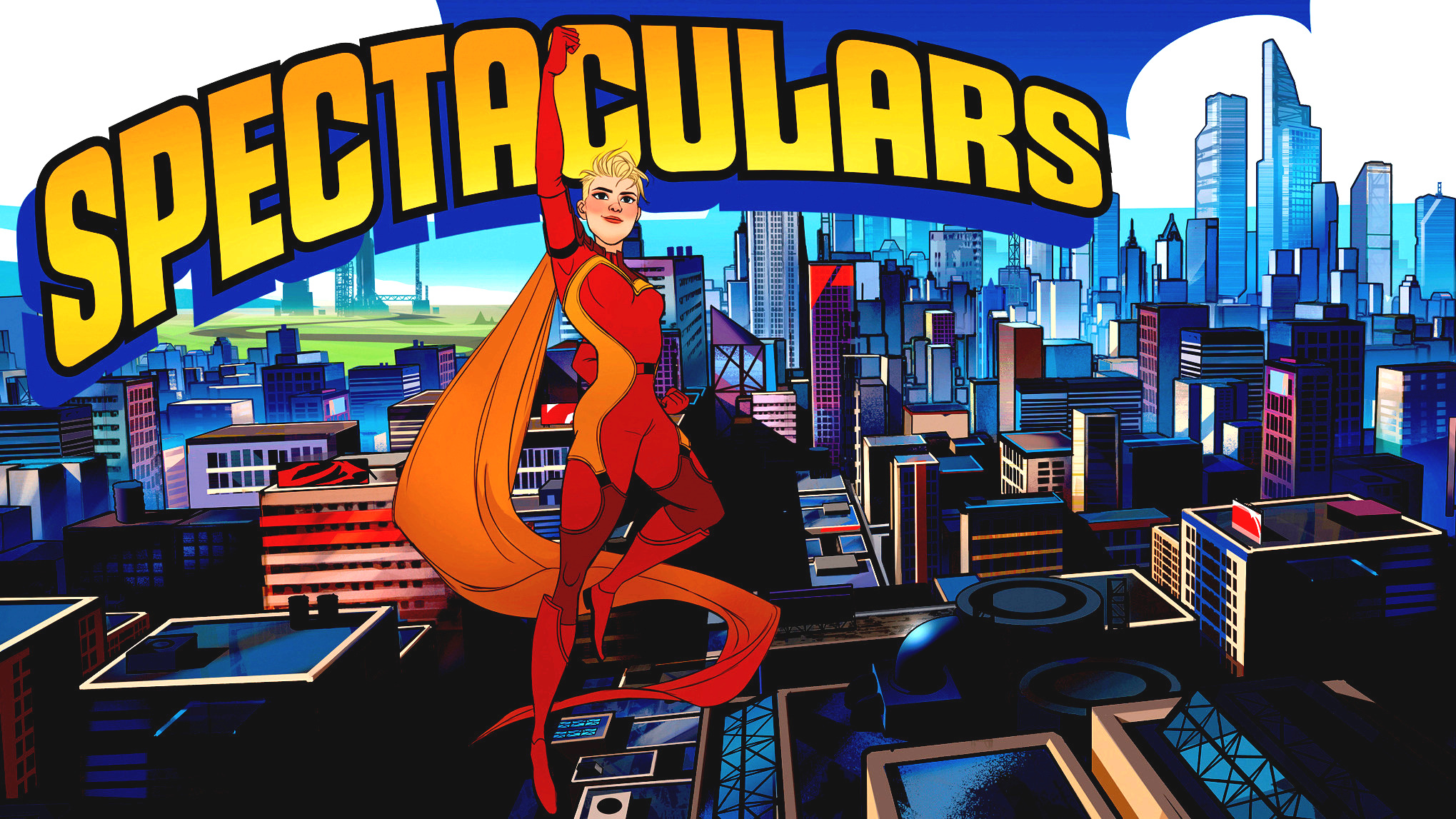
Spectaculars, lightweight superhero fun

Spectaculars is a superhero RPG with a simple roll-under percentile die system. There are no cumbersome lists of modifiers, and the math required at the table should be accessible to precocious eight or nine year-olds. The game is clearly a love-letter to superhero comics, right down to players’ ability to invent backstory and create connections at the drop of a hat by spending “Continuity Tokens” to make up past issues with a relevant story detail. The game could also easily mimic the feel of superhero cartoons like Batman: The Animated Series, or any other episodic story where inventing background is expected or would be useful. Whatever your inspirations are, Spectaculars shines brightest when you’re playing episodic adventures in the context of a larger narrative arc. This is especially true if you’re more excited about your game’s larger story than you are about the gritty details of how a specific power works, or quantifying whose ”Mega Power Blast” is bigger.

Continue reading

D&D 5e’s alignment trap

The 5e alignment system is a useful shorthand and a misleading trap. The Outer Planes as presented in the 2014 Player’s Handbook and Dungeon Master’s Guide only make the alignment system’s problems worse. The perfect overlap between alignments and planes—and the total lack of alternative Outer Planes—reinforces the alignment system’s worst inclinations: easy stereotyping, reductionist thinking, and a restriction of creative possibilities.

So what the heck are you supposed to do?

Continue reading

No more bland-aids: make your Clerics interesting

Hot take: clerics in D&D 5e feel like the blandest superheroes. Without a clear relationship with a greater power or a faith, it’s easy for them to float in the narrative void like a cornucopia of bandaids. The solution lies in placing more expectations on them, constraining them, and giving them a deeper connection with the story’s world and whatever they serve.

Continue reading

Game system flavor & optional rules

This is pulled from a conversation I had recently about optional rules.

Rules combine to make systems, and systems create flavor by shaping the permissible and supported space of a game. Any skillful or willful group of players (the storyteller is a player too) can play outside the rules of the game system they’re using—that’s normal!—but that play isn’t supported by the system, and it isn’t part of the flavor the system creates.

Optional rules are opportunities…

Continue reading

Make Games Your Own

Always make your games your own.

I was trying to convince my sibling to play Blades in the Dark with me, and kept running into a wall. They just didn’t want to—more than that, they said it felt icky. I, like a good little sibling, kept poking at them until truth poured out.

Continue reading

Dogs in the Vineyard, moral conundrums, quick thoughts

Somehow, despite a decade of posts on this blog, I’ve never gone in-depth into Dogs in the Vineyard or what I love so much about it. There’s more to Dogs than I could easily cover in a single post: cooperative story-telling and turn-taking, cinematic descriptive and narrative tools, a conflict mechanic that encourages brinksmanship and escalation, a well-articulated method for understanding what’s at stake… all those elements are a delight.

But there’s another piece that Dogs explicitly encourages groups to home in on. That’s the experience of wrestling with moral conundrums, something many modern CRPGs both want—and struggle—to deliver. That’s what I’m focused on today.

Continue reading

Flexibility in RPGs’ platforms

One of the biggest things I’ve gained through years (decades) of playing roleplaying games is the flexibility to play them in a variety of contexts, via a variety of means. If I had only just started playing RPGs recently, and were I stuck playing them entirely online without the experience of playing them in-person, I am not sure I’d be nearly as committed to them. Nor would I feel capable in them, like I had any reason to believe in my own ability to play and enjoy roleplaying games across the internet.

The biggest impact on my comfort playing RPGs online came from a truly goofy game I played over AIM and some other IM clients, using a home-brewed system to play a dino-loving sorcerer in an alternate history Rome. Yes, I made the “dinosaurcerer” pun repeatedly. It was an incredibly fun game, despite being a clunky system with no verbal interaction and lots and lots of typing.

I loved that game. And it taught me that—with the right group of friends and some good turn-taking dynamics—I could make wonderful fun happen in truly bizarre contexts. We played at a time when video calls were just new, demanding, and unusual enough that we didn’t bother trying to make a multi-person call work. We were absolutely better off for it. We were patient with one another (or at least that’s how I remember it), and we worked together.

If I hadn’t played that game then, I wouldn’t be so comfortable running games for kids over Discord now.

So here’s to practice, and expanding our comfort zones, and finding new ways to explore the things we love together.