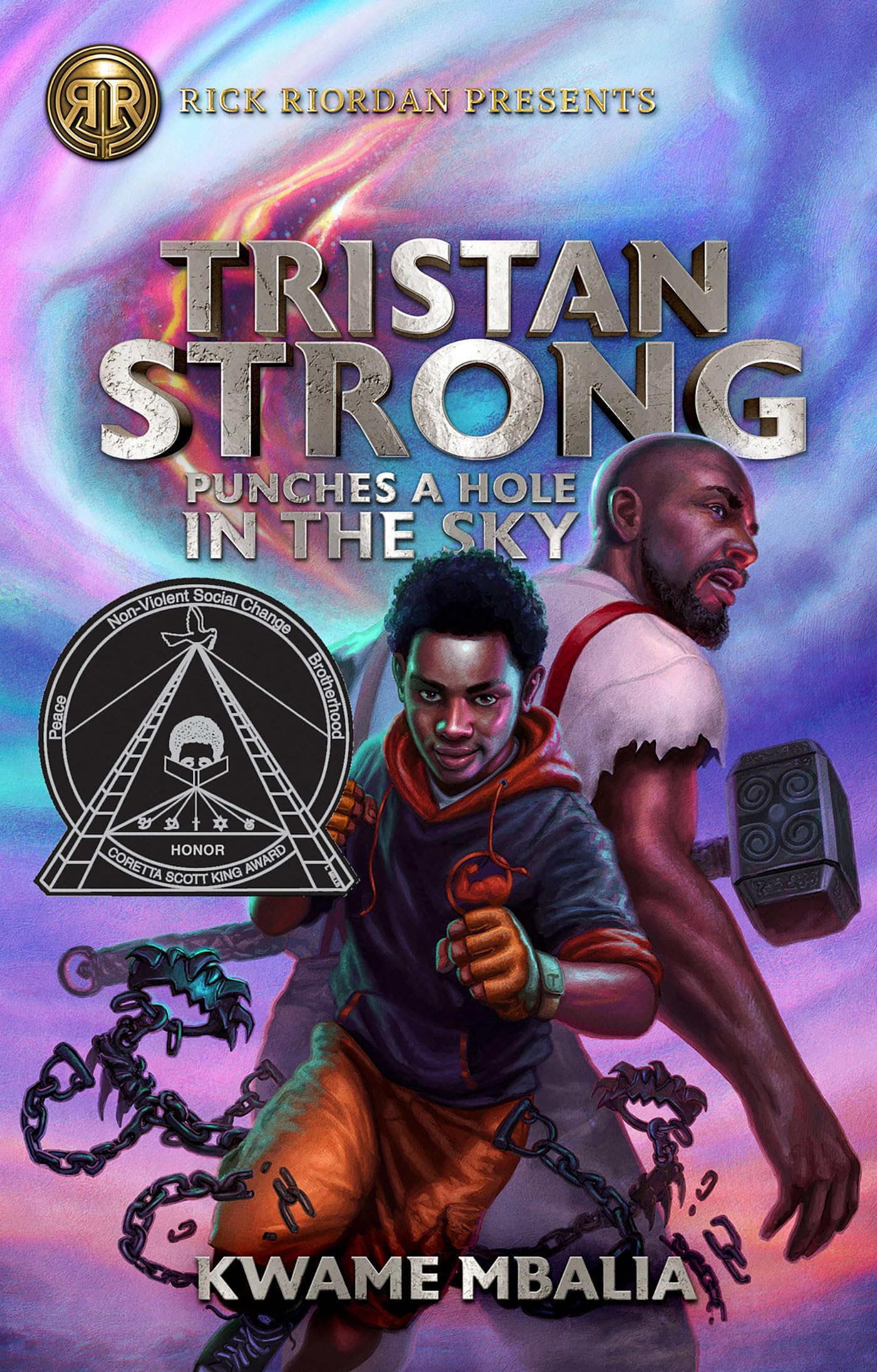
Tristan Strong Punches A Hole In The Sky, by Kwame Mbalia

I love a good middle grade adventure story. That’s precisely what this is. As you might expect from something published under Rick Riordan’s imprint, it’s full of mythology and folk tales and legends. Tristan Strong Punches a Hole in the Sky, by Kwame Mbalia, is all about one young boy’s discovery that the stories he’s grown up with (African-American stories with American folk heroes like John Henry, African trickster figures like Anansi, and those who blur the lines like Brer Rabbit) are all far more real than he ever could have believed. It’s fun, it’s pretty fast, it’s (heh) punchy. This is a good book.

I admit, my appreciation for this book is influenced by my desire for more high quality middle grade adventure stories aimed at boys. There’s a lot more to unpack there, some of which can be better understood by reading Of Boys And Men by Richard V Reeves. Read on for some of those details, as well as my few quibbles with Tristan Strong.

Continue reading

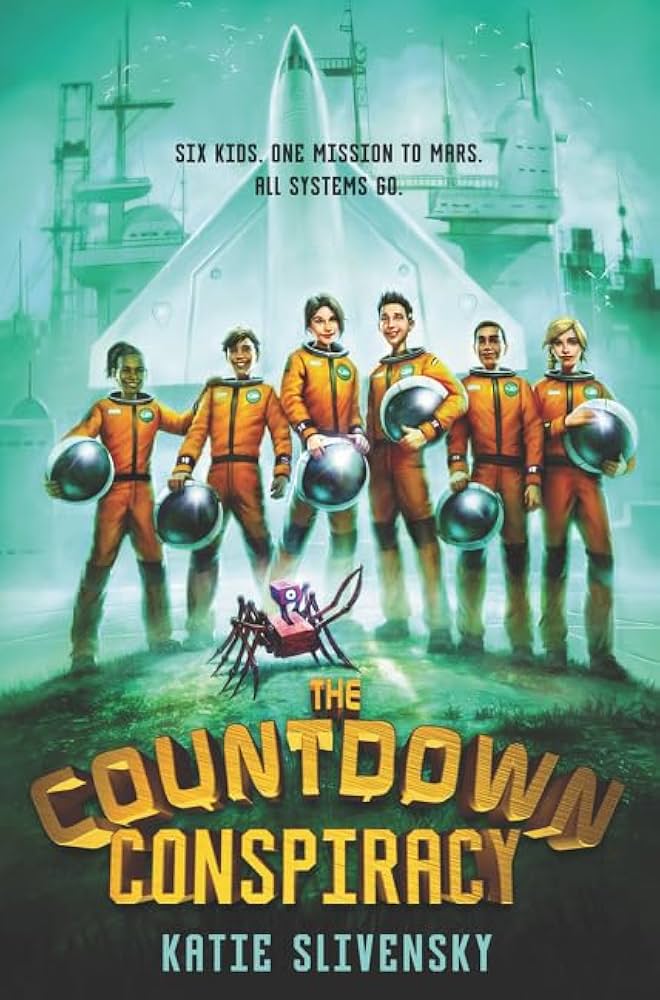
The Countdown Conspiracy, by Katie Slivensky (2017)

Katie Slivensky’s The Countdown Conspiracy is an upper middle grade adventure story all about six young astronaut candidates preparing for an international mission to Mars. Set on a near-future Earth still recovering from a global war fought over asteroid-mining rights, the story begins with a captivating slow burn and piles of intrigue. The Countdown Conspiracy builds from there to high stakes thrills and a satisfying, ever-escalating race towards the conclusion. I really liked it. A lot.

I’ve fallen off the querying-wagon again, but this book has revived my excitement and renewed my hope. Surely if people enjoy this they’d enjoy Bury’em Deep.

Why do I like this book so much?

Continue reading

Dandadan (2024)

Dandadan is a lot. Episode one made me nervous. It also caught my attention. I stuck with the show, and now episode seven has made me cry big, heartfelt tears.

This show is not what I expected. It frequently has an extremely middle school-ish feel, yet it has also sent me on an emotional rollercoaster. It’s goofy and weird, with an upbeat and sometimes jarring energy. While it is written about (and presumably for) young teens, it feels less siloed in its gender appeal than many other shows I’ve seen aimed at a similar age range.

This show is definitely not for everyone, but… I really like it. Let me tell you why.

Continue reading

The Joy of Recommending Books

There’s something magical about recommending books to people.

I think the same magic can be found with recommending TV shows or movies or what have you, but there’s something weirdly distinct about books. Reading books requires us to be active. Unlike with a TV show or movie, and unlike with a comic book, books expect us to provide the vistas ourselves. We have to conjure up our own vision of the story and setting, and every reader will engage just a little (or very) differently with the text. Everyone creates their own version of the book, even more so than with a more visual medium.

Those differences each reader creates for themselves, and the similarities that remain, are where the magic lies.

Continue reading

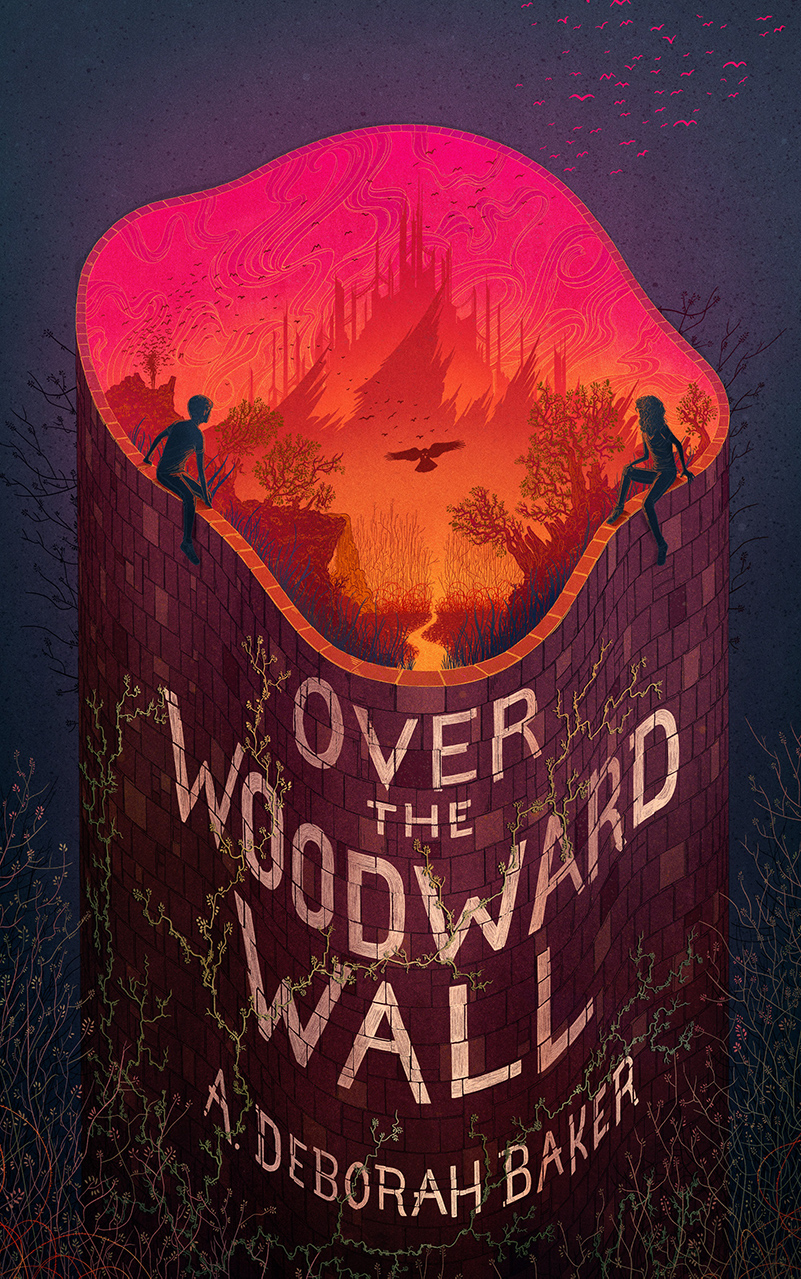
Over the Woodward Wall, by A. Deborah Baker

Over the Woodward Wall (written by Seanan McGuire under her pen name A. Deborah Baker) is the first in a series of middle grade adventure stories in a mixed up sometimes-lovely sometimes-scary fairytale land. In many ways, it evokes Alice’s Adventures in Wonderland. The setting’s surreality contrasts perfectly with the very real-feeling children who are this story’s stars, and the book does an excellent job of conveying earnestly true human experiences and life lessons while taking us on a dreamy-and-nightmarish impossible (sorry, I mean improbable) journey.

This should be a guaranteed home run for me. However, my fondness for this book ebbs and flows, a cycle driven by my mixed opinions about the narrator. It is my fondness that shifts though—I like it, I just like it by varying amounts depending on my mood. So what do I simultaneously admire and want to complain about?

Continue reading

Butterfly in the Sky (2022)

I have started (but not yet finished) Butterfly in the Sky, the documentary about the creation of Reading Rainbow. I stopped when I did because I knew that if I kept watching I’d watch all the way through, and I had work to do. The documentary hooked me and delighted me—much as the show did when I was little.

I grew up on Reading Rainbow (and Star Trek: The Next Generation, which created some confusion for young me). Young me didn’t understand why Geordi La Forge didn’t need his visor when he was telling me about books…

Continue reading

Fog & Fireflies, by T.H. Lehnen

I want to see this animated.

In so many ways this made me think of something from Hayao Miyazaki. There’s a certain blend of wonder and fright within a gradually accelerating story that feels so distinctively Miyazaki-esque to me. This story captures that.

It has the meditative pacing. It has the gentleness over slowly growing undertones of threat that I associate with Studio Ghibli’s work. And it has Ogma, a classic Miyazaki-heroine; as the pressure mounts and Ogma’s world slips out from under her feet, her understanding of the world is transformed while her stubborn and hopeful nature remains.

Like I said, Fog & Fireflies feels extremely Miyazaki. I think it would thrive as a Studio Ghibli creation.

This doesn’t surprise me, as I’ve known T.H. Lehnen for years. We’ve been friends since we were in college and have played many hours of roleplaying games together, particularly Call of Cthulhu. I can see some of the horror that I know T.H. Lehnen enjoys creeping around inside this story. It’s that horror which I think completes the Miyazaki comparison.

Continue reading

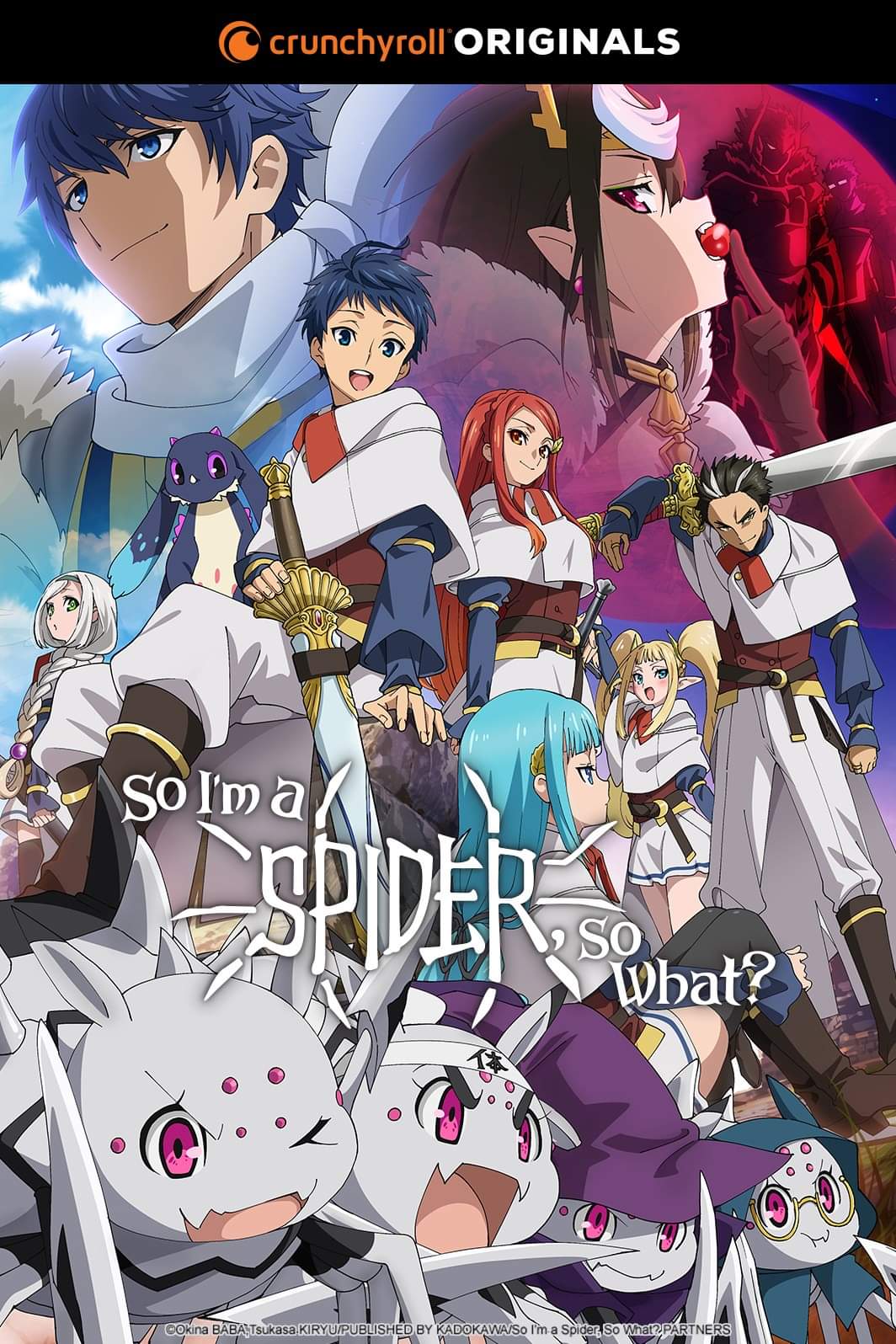
So I’m A Spider, So What? pulls out neat tricks

I just wrote about portal fiction and isekai anime, stories about people from one world (usually ours) transposed into a second world. All the stuff I said about loving this genre is still true. And, having just inhaled So I’m A Spider, So What? (an isekai anime about a schoolgirl reincarnated as a spider in a fantasy world), I’ve got some more thoughts for you about the show.

I inhaled the show, and…

Continue reading

Progress for Deep in Trouble

It’s been a while since I last wrote about Deep in Trouble, Cesi’s sequel to Bury’em Deep. A friend of mine inhaled Bury’em Deep recently, and her enthusiasm has reinvigorated mine. It’s also prompted me to revisit the setting and my ideas for how Deep in Trouble would work, and I’ve started making progress again!

Continue reading

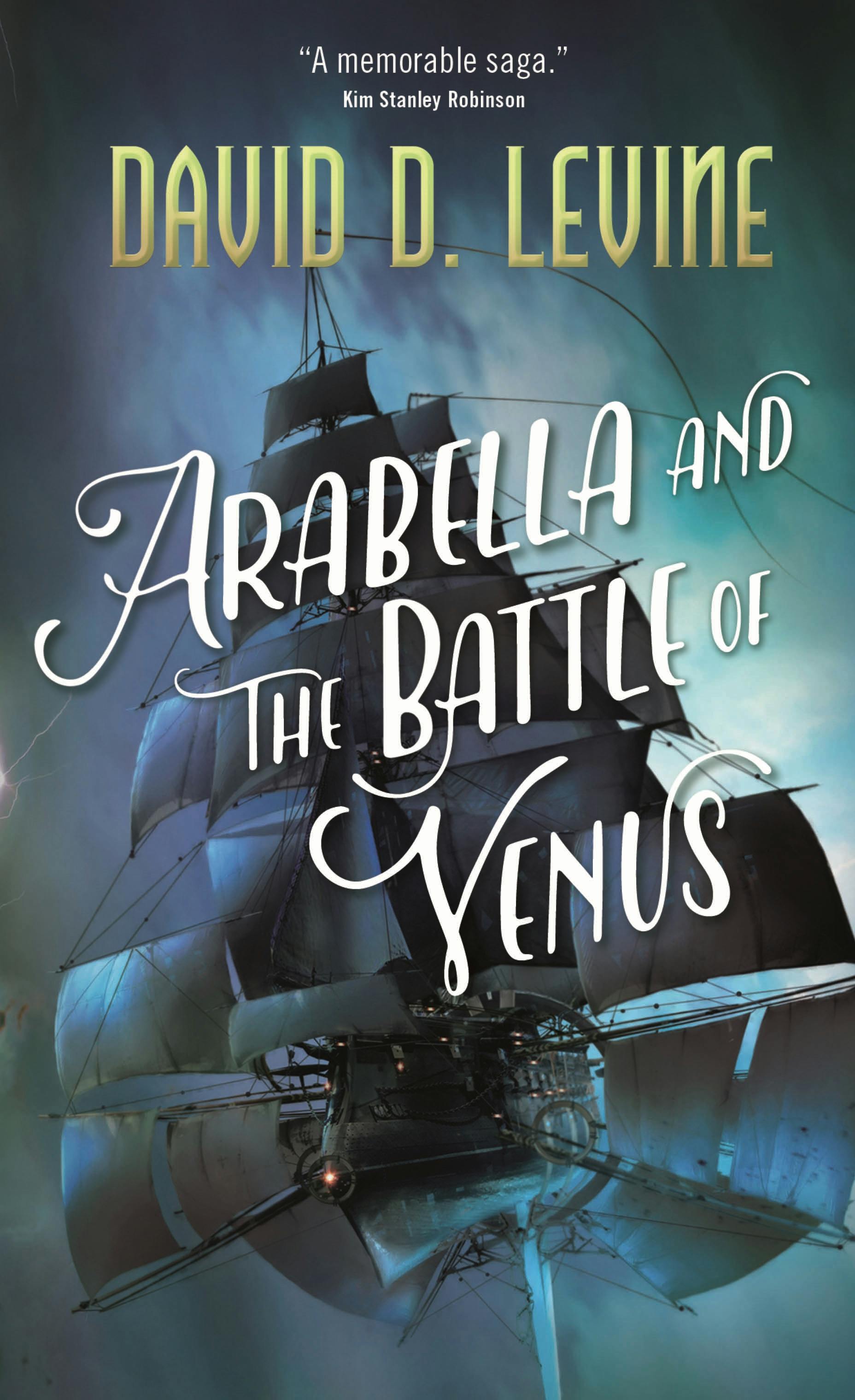
Arabella and the Battle of Venus, by David D. Levine

I really enjoyed the first book in this series, Arabella of Mars, and I’m glad to say that Arabella and the Battle of Venus lived up to all my expectations and then some. David D. Levine has crafted another excellent adventure story in his science fiction alternate history setting. If you like Regency-era drama, Age of Sail adventure, and historical science fiction, these books will (heh, it’s funny if you’ve read the books) float your boat.

If you took my advice and read and enjoyed the first book (yes, I advise you to enjoy the book), I think you’ve got a safe bet with this one. Arabella and the Battle for Venus is a solid sequel. Reading it was a delight, though I did squirm a little bit (more on that in a moment). It offers another excellent adventure while cleaving to the genres of the first book, and reminds me of the enjoyment I found reading Hornblower books in sixth grade but with altogether more depth… and the promise of additional depth to come.

Now, mild thematic and book jacket-level spoilers.

There is a little more weight lent to the romantic subplot this time around, as one might expect from a story about a young woman racing across a war zone to free her fiancé from a POW camp. I hadn’t expected there to be any other romantic complications, though I should have, and those stressed me out a bit! They’re what made me squirm, maybe for the same reasons rom coms do. I’m still not sure I fully understand that part of myself. But—despite my squirming—I think the book and characters are probably better off for those complications. They help to grow Arabella emotionally from where she started in the first book, and I appreciate that.

I’m going to take a tangent here, weaving back through the first book. I’ll eventually return to this book, and my tangent will have some vague thematic spoilers without hitting any concrete plot points.

My biggest concern with the first book was that it wasn’t clear to me whether Arabella—the character or the books in general—would more clearly confront the colonialism and racism of the setting over the course of the series. The first book had some confrontations with these ”isms,” in fairly constrained contexts, but our point of view character Arabella did not seem fully aware of their pervasiveness or their larger ramifications. Nor did she seem cognizant of the implications of her own life on Mars as an Englishwoman living among Martians.

In short, the Arabella of the first book was convincingly blind to problems that her privilege didn’t require her to face. Honestly, that felt very real. I think it was an understandable writing choice, and a solid one.

Crucially, this is not to say that Arabella was willfully blind or actively in denial. She set herself on the right side of those conflicts when they arose, opposing and loudly disagreeing with racist arguments. But it wasn’t clear whether the later books would also dig into the inherent colonialism of the setting.

So. I hoped, and I read into the titles of the two following books and the jacket blurb of this book (Battle of Venus), and I made some assumptions from my sense of the author. All of that, plus the tonal hints of the first book, encouraged me.

Having finished book two, it looks like I was right to be encouraged. I’m glad to say that Levine does continue to bring these issues to the fore. Problems and disagreements slowly and seamlessly bubble up into Arabella’s awareness through her immediate context. The positions Arabella takes and the solutions she finds all suggest that Levine is continuing this thread of growing Arabella’s awareness of the injustices around her, and that these things will all come to a head soon.

Now, Arabella doesn’t feel especially radical from a modern perspective. Arabella’s positions and opinions—as they’ve developed so far—don’t feel revolutionary. Except… they kind of are.

Context matters!

Arabella has a keenly felt sense of justice. She has a disregard for her society’s gender norms that is heartening to a modern reader and would probably place her at the forefront of the women’s suffrage movement in her time, which was (contextually) a pretty damn radical place to be. Her opposition to racism and racist arguments is similarly steadfast, and admirably radical for the time. And that opposition extends to the casual anti-Martian & anti-Venusian racism she encounters, which I think is present to set up for her bigger and more overt confrontation with colonialism in the third book—though that’s merely genre-savvy speculation, since I haven’t read book three yet.

Basically, it looks like Levine has planned all this from the outset, just as I’d hoped. He pulled apart Arabella’s various stages of personal growth and burgeoning awareness into three books, allowing her emotional and political arc to develop across multiple perfectly solid adventure stories. If he’d tried to write this personal arc all in one go, the book would have felt congested and emotionally tumultuous—Arabella’s growth would have felt implausibly rushed and unreal. Instead, because Levine paid attention to spacing this arc out across narrative time and separate books we’re able to enjoy Arabella’s personal growth without ever choking on it.

This is another good example of the dynamic I mentioned in my reflections on Murderbot.

Given all that, I suspect that Levine will stick the landing in book three. I’ll let you know once I’ve finished it.

Okay, that’s enough for now. Like I said at the start, I’m really enjoying these books. Unless those genres I mentioned above sound like torture to you, I suspect you’ll enjoy these books too. Try them out!

Wait, one last thing. Based on his Author’s Note, David Levine finished this book while losing his wife to cancer. Finishing a book is hard enough in good times. I can only imagine that doing so (and doing it well) while experiencing that loss must be tremendously painful and difficult. David, if you read this, thank you for this story. And thank you for persevering to share it with us. May Kate Yule’s memory be a blessing and a comfort for you.