The Golden Enclaves, by Naomi Novik

I’ve deeply enjoyed reading Naomi Novik’s Scholomance series. I’ve recommended it to many people. And now, having finished it, I’m going to recommend it to you again.

This is how I started my review for the first book in the series:

“[W]hat if Harry Potter, but the school is *literally* a death trap full of monsters and there aren’t any adults around to ‘help?’” Add some socioeconomic inequality, teen drama, a pinch of prophecy, and an antisocial and justifiably angry teen girl for a narrator, and you’ll have a pretty good idea of what Naomi Novik’s A Deadly Education is like.

The Golden Enclaves delivers a solid close to that story. It is the third and final book in the series and—while the book ends with room available for more sequels if Novik changes her mind—the story is definitely concluded here in ways that will satisfy most readers. “Most,” because I know some folks will just want the story to keep going with these characters forever, which I believe is all according to plan for Novik (or at least a feature rather than a bug).

This book does what I wanted it to do. It resolves many hanging plot threads, it answers a series of questions I’d had since the first book, and—maybe most importantly—it dreams up a future in which people are able to make the world a better place, by hook or by crook. It has hope.

*That’s* the bit I’m most impressed by. That hope.

This book is full of a lot of struggle. It’s full of lots of traumatized kids. People die, or are hurt in awful ways.

But it’s hopeful. And it’s not hopeful in the Harry Potter “let’s go back to the world as it was, and pretend that without resolving any of the issues we’ve discovered everything will be fine” kind of way. It’s hopeful in the “let’s do our damndest to make the world a better place, without destroying it in the meantime” kind of way. The whole series has been hopeful like that, but this book really sticks the landing. And I love it for that.

So many YA and YA-adjacent stories are dystopian, and the resolutions to their dystopian problems rarely feel hopeful or real to me. Either the dystopian world remains awful, or the attempted fix doesn’t work, or the fix works but reeks of deus ex machina and only works because the author says it does.

Novik set up a whole bevy of problems in the first two books and made it clear that the world was an unfair and often awful place. She offered (difficult, dangerous) ways for her characters to work around those problems.And this book, like its series as a whole, manages to follow that thread through to the end without either disappointing me with a total lack of plausibility or falling into hopelessness.

Annnnnnd I hadn’t realized until now that I never reviewed The Last Graduate, the second book in this trilogy. That was an oversight. I’m not going to rectify it before I finish this post though, so here goes.

A warning: if you didn’t like El’s voice as the narrator in the first two books, this series might not be for you. Novik was extremely successful with her creation of her narrator’s voice. She does a good job of keeping everything inside El’s head, and of maintaining El’s voice as a consistent thing. Novik also manages to weave her story and world through El’s unreliability as a narrator without leaving us, her readers, totally bereft of clues that El might not be the most objective and reliable observer. I really admire that. It’s one of the things I love about these books. If that bothers you… you’re out of luck. Try a different series.

A separate warning: one of my friends mentioned El knowing or narrating a few things in this book that seemed outside of her scope of knowledge. I didn’t notice those as I was reading—I was quite caught up in the story and may have missed them. You might stub your toe on them though.

I’m not planning to dive deep into the plot of this book, but I will say that reading more will probably spoil you for the previous books with implications if nothing else. I’ll also casually drop in a few spoilers after this paragraph without further warning. If you care about that, I suggest giving the first book a go. I loved all three, I recommend them, and Novik has done a good job of starting this series as she meant to continue it. The series isn’t bereft of twists, but it’s very thematically consistent—if you like the first book you’ll probably like the rest, and vice versa.

The Golden Enclaves picks up precisely where The Last Graduate leaves off. Very precisely. And the rest of the story doesn’t honestly take all that much time as the setting reckons it. There’s a little slow period near the beginning as El tries to recover from her time in the Scholomance (more or less a machine for traumatizing children until they’ve survived hell). But after that, things move a bit faster. And they snowball wildly out of control, as El finds out what’s been going on outside the Scholomance while she and all the other kids were locked in hell.

Despite this—or actually because of it—there’s still plenty of time for Novik to ladle in several more hefty servings of revolution and commentary on inequality, until they become a driving factor of the story. That’s perfect, because it’s part of what I’m here for. She also adds more queerness, as she did in The Last Graduate, but where it felt unforced in The Last Graduate here it feels more like a surprise.

Don’t get me wrong, I’m still here for it. I’m glad that Novik added more queerness, I’m glad to see it in this story. And next time I would love to see her do more of that earlier in a series. Having El find out that she’s surprise-bi in book three, however, felt a bit like a curveball given how carefully Novik sets up almost every other story element, like Novik improvised that element where she’d planned all the rest. Or maybe I was too oblivious, because one of my friends was shipping El and Chloe really hard at the end of book one.

Anyways. My words and thoughts are wandering.

If you want to read about wizard revolutions, or about magically obstinate people warping the world around them into a less destructive and more just place, this is for you.

I love this book. I love this series. I recommend them both. I hope that you enjoy them too.

p.s. my partner pointed out that I gushed more about this book in person than I did here, and I’ve made a couple edits following that. Don’t hold my gray brain weather’s bland tone against this series, I really did delight in these books, and in sharing them by reading them aloud to my partner.

Review of A Restless Truth on Geekly Inc

I’ve got another review on GeeklyInc for you, here. This one’s about A Restless Truth, sequel to A Marvellous Light, both of which I enjoyed a great deal. Spy fiction, high society drama, romance, magical intrigue… it all fits well together. I may give you more of my thoughts on the book here in the future, but for now I suggest heading over to Geekly Inc to see my words!

The tl;dr: Freya Marske does an excellent job blending sapphic romance, murder, magical society drama, and sexy times. I continue to be delighted by her blending of spy fiction and society drama, and I’m looking forward to book three!

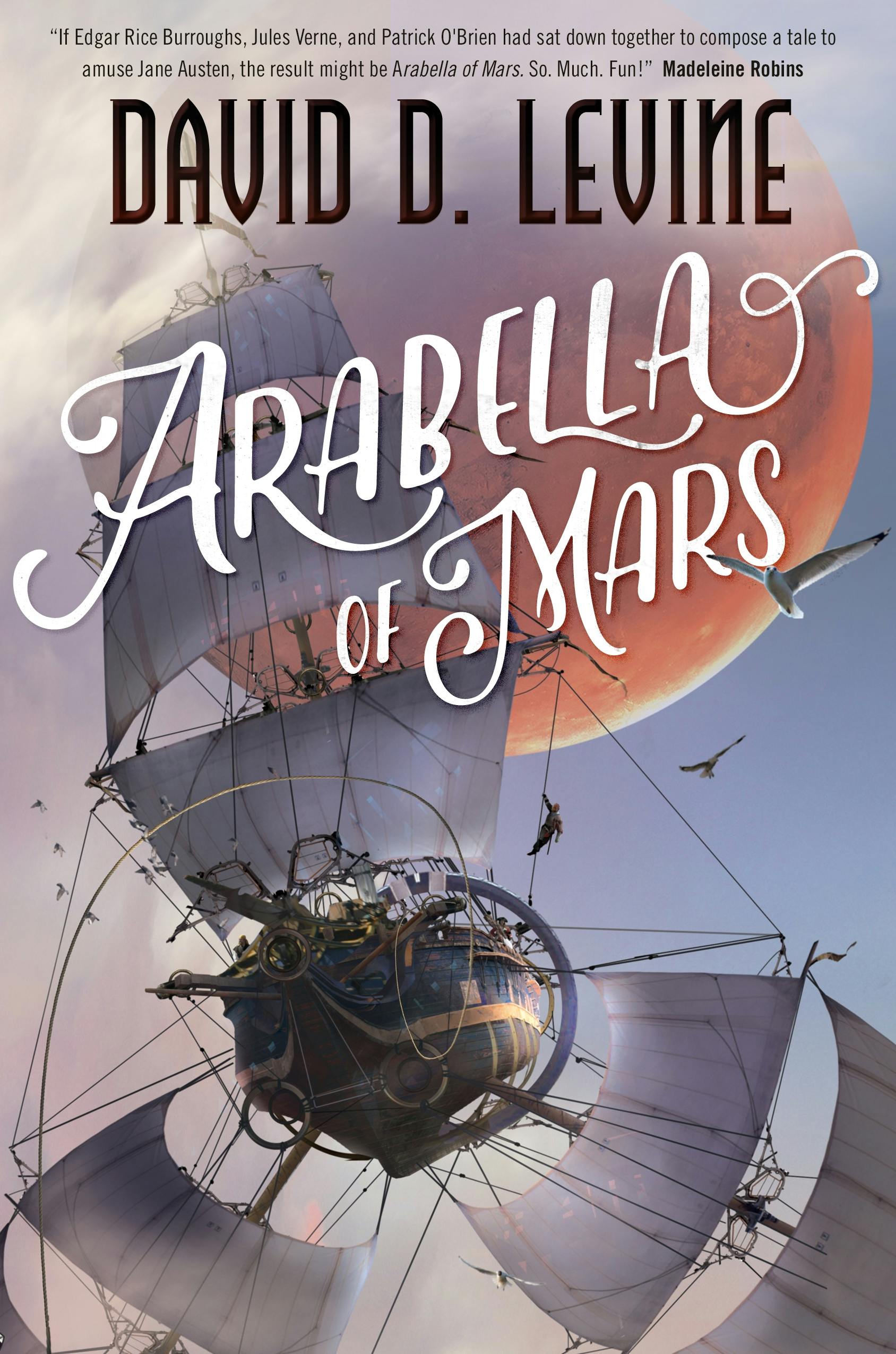
Arabella of Mars, by David D Levine

David D. Levine’s Arabella of Mars is an excellent Age of Sail sci-fi adventure story replete with the drama of Regency-era social expectations.  It has all the requisite ingredients: imperiled family in need of aid, dangerous shipboard voyages (between planets!), subdued romance, personal rebellion, social maneuvering, and a little bit of marriage. I inhaled this book.

I read perhaps a couple pages on Thursday last week and then spent almost all of Friday devouring the rest of the story. I very wisely did not take the book to bed with me on Thursday night, for which I’m glad. I probably wouldn’t have slept much if I had. As it was, I requested the next two books as soon as I finished on Friday afternoon.

This is the kind of story that I love… and having finished it, I have some concerns. I’ll focus on the things I loved first. Just know that (depending on the course of the next two books in this series) I might have to refile this from “delicious new candy” to “problematic fave“ on account of colonialism.

Also, there are a few things that I’ll cover here which might constitute very mild spoilers. I doubt any of them would surprise someone who’s already familiar with the genres involved, but if you want to avoid spoilers entirely I recommend you skip ahead to the last paragraph.

So. First off, I love the setting.

In the late 1600s, Captain Kidd sailed to Mars. There he explored, met and befriended the bug-like locals, and ultimately sailed back home. There are now human colonies elsewhere in the solar system (including on Mars), and ships which regularly make the voyage from planet to planet across the great rivers of air in between. Clockwork exists and automata are an advanced art, and coal gases are used in great quantities to fill the lift envelopes of airships until they’ve crossed “the falling line”—the elevation high enough for a ship to sail out of a planet’s orbit. 

A quibble: I’ve seen this book called steampunk, and I don’t agree. Not yet at least. There are genre similarities, but this story is deeply rooted in the British Regency-era of the Age of Sail. Heck, it’s all set in 1812 or 1813, and the Napoleonic wars are still underway. While certain setting elements overlap with steampunk (clockwork and automata, airships, alternative versions of space) the story has more similarity to Novik’s Temeraire books and other Age of Sail adventures (e.g. C.S. Forester’s Hornblower, or O’Brian’s many naval novels). What’s more, there’s no concern with industrialization or the pressures thereof. So while there’s a little steampunk-ish set dressing, and I can understand using that as a marketing term in 2016 when this book was published, I don’t think it’s accurate.

Back to the setting! Despite the alternate history, social expectations have remained much the same. British Regency Era gender and class conventions are still potent forces, shaping our protagonist Arabella’s world(s). Her taste of something different, what with being raised on Mars by a Martian nanny with very different ideas of gender and class roles, is tantalizing. Levine establishes all of this with admirable efficacy in his quick prologue, setting the stage for the rest of the story and all the conventions that will stymie Arabella in her quest to aid her family.

Actually, I admire Levine’s writing here in general. He’s adopted a markedly period voice, straitlaced and constrained in a way that emphasizes the social restrictions and expectations without sacrificing the feel of personal insight into Arabella’s world. He’s skillful, and it shows. Even when things are predictable (in good, genre-confirming ways) they don’t feel forced.

And, maybe because of all that, this book has lots of fun (mostly quiet) social commentary going for it. Arabella’s struggles and observations around gender and class feel fitting to the genre, and give us a window into Arabella’s growth of her own perspective on what is right, proper, and moral, departing from the ”received perspective” she starts the story with. I really enjoy that growth, and it feels good to see it take place.

But I can’t mention that growth without discussing those concerns I mentioned above.

Stories in the Regency Era, and especially any kind of story involving the creation of colonies in a place with intelligent locals, will unavoidably engage with colonialism. I don’t think it’s possible to avoid in this kind of story, and pretending colonialism (and its problems) doesn’t exist is usually just a way to be an apologist for it. Fortunately, that isn’t the approach this story takes.

Okay, more implicit spoilers ahead, though they should remain pretty general.

For all that Arabella of Mars doesn’t ignore colonialism per se, it also doesn’t address it directly. Partly, I think that’s due to the narrator’s proximity to Arabella’s own perspective; there’s a lot that Arabella hasn’t examined deeply about the social order and her role in it, never mind the ways in which humans and Martians interact. There are, however, many overt hints that Arabella disagrees with or isn’t aligned with the common colonialist assumptions of her society.

This comes out in the little details: Arabella notices the ways in which English depictions of Martians are wrong, and they irk her; Arabella corrects others a number of times, and signals dissatisfaction with their racist and colonialist assumptions; and she is unwilling to embrace the racist and colonialist arguments of others even when they’re not focused on Mars and Martians. As I said, all the little hints are there.

Actually, reflecting on those little details, I wonder whether some of my enjoyment of this story is tied to similarities with how my mother spoke of her childhood in Uganda and the US.

Back to this book, Arabella’s rejection of English colonialism, or her opposition to it, isn’t fully articulated in the way that I think the setting (and the story thus far) calls for. Her own estimations of her fellow landed English gentry start mostly neutral and grow more negative. And she clearly feels more attuned to the social conventions of Martians (or even the crew she serves with) than to the conventions of her peers. But while she appears to judge the existing system as lacking and feels estranged from it, she’s still a part of it and hasn’t articulated a different position.

About par for the course in book one of a series, really. This is part of my reason for both liking the book and trying to reserve judgment.

Anyway. The story thus far feels poised to dive deeper into this struggle with colonialism. And so far, it feels like it’s aware of that. That’s all well and good. But it hasn’t (yet) made that confrontation its focus. If it doesn’t dive into that confrontation with colonialism, or at least face it along its narrative path, I’ll have to revise my opinion of the story.

So.

If you were avoiding reading the spoiler-ish above material, rest assured this is the *END OF SPOILERS*.

I like the book. I like it a lot, and absolutely recommend it to anyone who likes Age of Sail adventure with a splash of Regency drama and a hint of Jules Verne. If you want alternate history science fiction on interplanetary sailing ships, this is your best bet. And if you know a younger reader looking for these sorts of things, this is accessibly YA-ish to boot.

The Last Dreamwalker review is up!

My first review for GeeklyInc is out, and you can read it here! Enjoy.

Even Though I Knew The End, and finding gems

I mentioned in my big thinky post Genre fiction, Mercantilism, Geology that I was probably going to recommend C.L. Polk’s Even Though I Knew The End. I was right. I’ve finished it now and enjoyed it a great deal and I strongly suggest getting it when it comes out.

This post will necessarily be less in depth than the review I’m writing for GeeklyInc (I’ll share a link to that review when it goes live). I got pre-release access to the book through writing a review for them, so that’s where the full review will go. But ETIKTE is good. Finishing it has left me excited to hunt down more of C.L. Polk’s work.

There’s a certain joy to discovering a book I love by an author who has other work I haven’t read yet. As a kid, that was how I chose most of my new reads: I’d discover an author I liked, and then I’d hunt through everything else I could find by them (even when it wasn’t necessarily “age-appropriate”). My approach was also pretty scattershot, because this was before I had access to or knowledge of ways to find an author’s complete bibliography (unevenly distributed access to the internet, etc.). Each visit to the bookstore or library was a treasure hunt, and used bookstores were especially appealing. Any good genre fiction shelf could be full of gold.

That’s felt less true over the years. As I’ve gotten older, I haven’t chased every last book by an author in the same way. I think part of that comes from my discovery that, sometimes, I don’t actually like all of an author’s books. Perhaps it’s because I’m more judgmental and genre-savvy now, or because I’m more willing to put a book down when I don’t like it, or maybe I’m jaded by my access to the internet’s firehose of information… but these days I more often see those shelves and think “ah yes, more of the same.” I read the jacket copy, see the comp titles, and don’t feel hooked. Finding genre-fiction gold feels rarer, and like it takes more work.

All of which is to say… when my friend over at GeeklyInc offered me Even Though I Knew The End, I had no idea I was about to relive that whole giddy treasure-discovery experience. I don’t know whether C.L. Polk’s other stories bear any resemblance to ETIKTE, but I’m damn well going to give them a try. After the fun I had with this book, I’d be a fool not to.

Genre fiction, Mercantilism, Geology

This series of thoughts arose as I started composing a review for Even Though I Knew The End, a book by C.L. Polk coming out this November. I’m really enjoying it so far, I might talk about it more here. The review will be on GeeklyInc.

These thoughts have almost nothing to do with that book.

The genre fiction conversations I grew up hearing, and the ones I’ve usually seen bandied about in pop culture, approach genre fiction the way mercantilists approach markets. By this logic, genre fiction is a zero-sum game of capitalistic bloodsport. Any pieces of art inside the same niche must beat each other to pulp as they fight for limited market share and cultural value, to the exclusion of any other piece of art. This is a perversely Highlander-ish perspective in a world built from layers upon historical layers of art, influence, and nuance.

From an artistic perspective, from the perspective of someone who loves genre fiction, this zero-sum game is a lie. Every new piece of genre fiction isn’t slipping in others’ blood as it bludgeons the opposition in a mercantilist cage match. Instead, it’s adding another layer to the geological strata of our culture and our art.

Art builds on art builds on art, in a continuous dialectic. Genre fiction responds to the pressures and inspirations of culture and life, and it grows out of the art (and other influences) which feeds its artist. Genre fiction isn’t inherently locked in a murderous struggle with itself, because every new piece broadens our experience and our palette—and various pieces may coexist despite their dissonance.

Two (maybe obvious) caveats:

The artists, their ideological perspectives, and the ideologies espoused in their art may all be in conflict with each other. Some points of view aren’t hospitable to the existence of others. I’m just saying that their art isn’t inherently in conflict outside of its ideological disagreements.

And I’m not trying to belittle the marketing departments who struggle to win that aforementioned market share for their companies’ projects. They’re working within the constraints of their system, the constraints of our current publishing industry, and I’m not offering alternatives to that system here. Beyond that, as long as we’re in a capitalist system there is pressure to fight for the audience’s time and attention—artists need to be paid for their art, so they can support themselves. I’m simply saying that the art exists outside the market free-for-all as well.

Back to my geological metaphor for the dialectic…

I like the image of geological strata of culture because it gives me concrete imagery with which to talk about synchronic and diachronic perspectives. In this the synchronic is a snapshot in time across a broad area, a landscape painting or topographical map, while the diachronic is a deeper dive tracing one particular vein of (l)ore as it changes over time, an excavation of one location tracing its history back through time layer by layer. The synchronic speaks to a broad simultaneous state of the cultural experience, giving precedence to the most recent and the most impactful influences at the specified time. But the diachronic reveals how a genre emerges from its precursors, how it differentiates itself and grows, and how it diverges from and interweaves with other pieces of the creative cultural landscape.

I also like this image because it gives the lie to the idea of genre canon. There is no past piece of genre fiction which is mandatory reading, only pieces which give diachronic context for current art. It may be useful to know about the presence of those old stories, ossified to the point of cultural bedrock, but they should be read in context as the product of their own cultural landscape rather than as essential cultural truths.

With that in mind, I find it easier to listen carefully when someone says “you must read this.” Do they mean “I require that you read this before I consider you part of my group”? Or do they mean “this will give you important context for these other pieces of culture”? If it’s the first they’re probably being an asshole. If it’s the second, maybe they’re offering a route into the diachronic cultural depths.

And because of all this, I love asking people about what else they’re reading (or watching) that is similar to other books they’ve mentioned, and what else they’ve enjoyed in general. No one person is broadly read enough to give a full synchronic view, and so each individual snapshot gives me a better understanding of the genre landscape overall. Trying to make my own map from all the different pieces is like a game for me, and sometimes I’m fortunate enough to learn of stories taking their genres in totally new directions.

Speaking of which…

Even Though I Knew The End is so beautifully aligned with noir (so far, I’m not done reading it yet) that it doesn’t feel like it changes anything about its genre. Except… so much noir is almost comedically devoted to male protagonists and period-piece toxic masculinity, and this story—despite all its love of the trappings and conventions of noir—isn’t that. It feels reminiscent of Hammers on Bone by Cassandra Khaw in that way. I love it. Something about how it approaches noir genre fiction from a queer woman’s perspective feels revolutionary, a little like how the first season of Jessica Jones felt years ago (though less gut-wrenching so far). It is a beautiful diachronic gift, so like and yet so unlike its own genre. I haven’t finished it yet, but I expect I’ll recommend it as soon as I do.

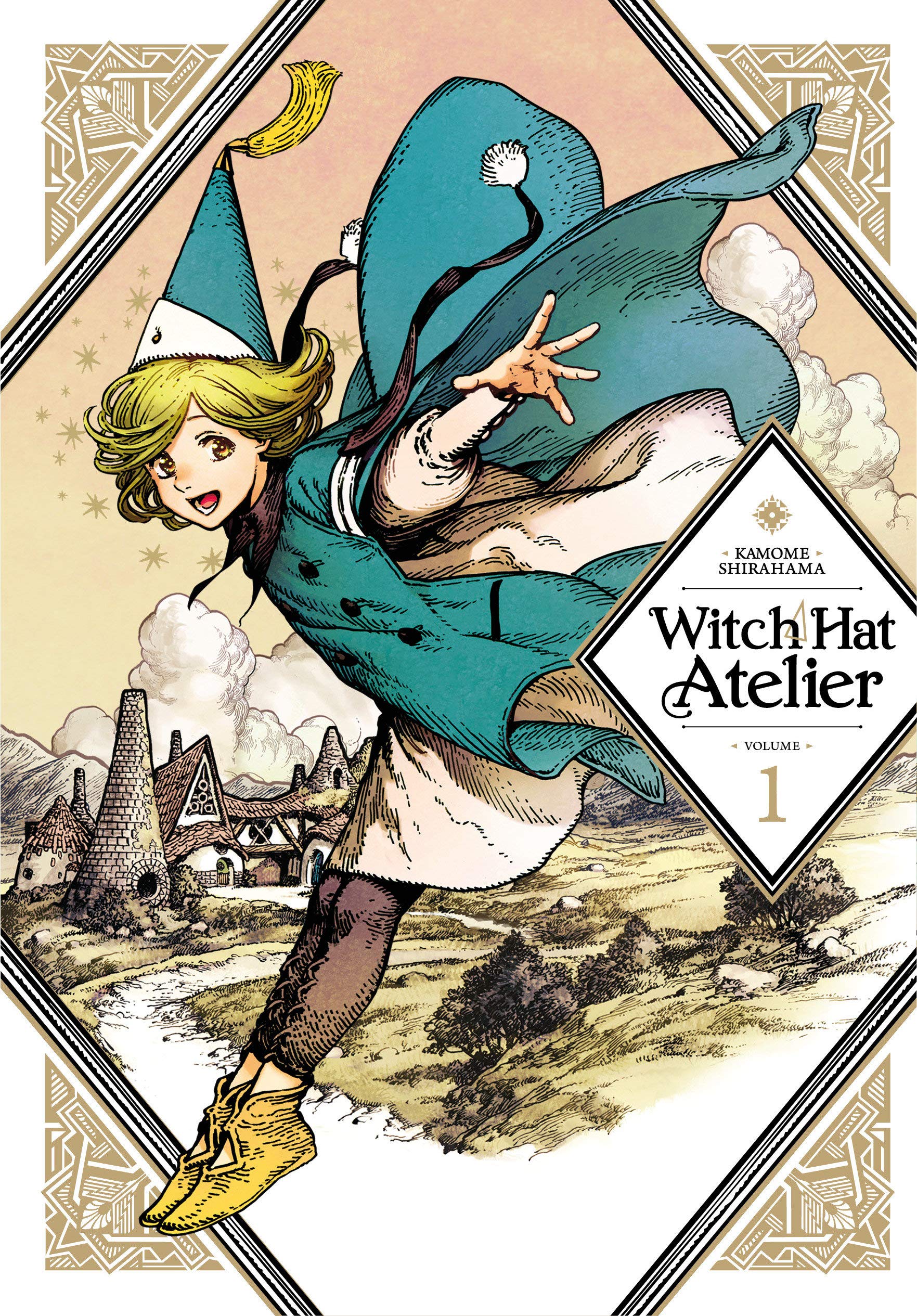
Witch Hat Atelier #1, by Kamome Shirahama

This is strangely great.

No, “strangely” is wrong. Nothing about Witch Hat Atelier feels especially unusual, trope-wise. It feels… expected. And I love it. It smoothly delivers a genre experience that I love, and I want more.

I’ve only read the first book so far. I raced through it this morning, and I’ve already requested the next three. I’m amazed at how well the story manages to move comfortably inside its genre’s expectations while still catching my attention and winning me over.

It’s a healthy reminder of how much delight can be drawn from indulging in competent genre fiction. There are certain themes that I often enjoy (restricted access to magic, young magic users stepping up to face adversity, gradual revelation of infighting and intrigue within the magic world, gradual revelation of deeper complications about *why* magic is restricted), and when given books full of those I frequently fall into the story nose first. The first book of Witch Hat Atelier hits all those notes without knocking me out of the groove at any point. While this means that I haven’t been surprised yet, it moves quickly enough that I’m delighted to just be along for the ride. There’s just something marvelous about watching plucky young magic users improvise their way through magic to get the job done, especially when everyone assumes that they’ll fail.

I haven’t read enough of the series yet to say how it will shape up long term. I haven’t even read enough to say that any of the characters feel like they’ve grown beyond their familiar introductory archetypes. It doesn’t matter. Kamome Shirahama has done well here so far, and I’m looking forward to more.

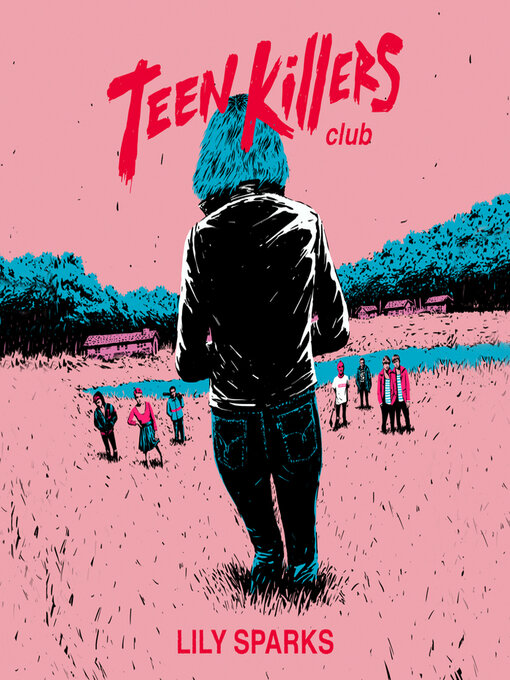
Teen Killers Club, by Lily Sparks

Sometimes books read like TV shows. This is one of those times. Hardly surprising, given that the author has a background writing for TV dramas. She does a good job of it here, too.

Lily SparksTeen Killers Club handled me roughly. I loved it. Riding its ups and downs, I felt emotionally whipsawed and had to set it aside a few times to take breathers and regain equilibrium (something our poor narrator never has a chance to do). By the time I finished, I felt like I’d just gotten off a roller coaster. I wandered around in a daze for an hour or so, still locked in admiration for the ways the story had pulled me back and forth time and again. Because for all that I’d been on a ride, it was an impressive ride. Sparks knew how to grab my heartstrings, and she did it fearlessly. The book had caught me and reeled me in, and pulled me along for the whole thing.

Well, not quite the whole thing: at the start I was partly distracted by needing to finish another book. But it was easy to slip back into it after finishing the other book. Then, of course, it was hard to put it down.

And yes, I’m on board for reading the sequel (which I suspected would exist, but wasn’t certain about until writing this). I’m a little concerned about it, for reasons that are lightly spoiler-y and which I’ll share in more detail below. Blandly put, I’m not sure which genre tropes the story-to-come will follow. There are a variety of options available, after all. But the story’s overall tone could go in several directions, and I won’t know how well it will fit my palate until I read the dang thing—which I will definitely do.

All of which is to say, if you like YA teen drama and serial killers and murder mysteries, this is a great book for you. Be ready for a heck of an emotional ride.

Now.

I can’t go into detail about this without implied spoilers for the book. But this series of observations are eating my brain, so here goes.

*IMPLICIT SPOILERS*

This varies by subgenre, but dramas don’t like to kill characters or let them stay dead. This is especially true of TV dramas, which often suffer from what I’ll call a dramatic conservation of characters.

I say suffer, but in moderation this conservation is a positive thing. Because dramas build up value in their characters, investing them with growth, backgrounds, and relationships that make them richer and more interesting, these dramas are loathe to sacrifice their developed main characters or let them die—even when that death would make sense. This dramatic conservation of characters feeds into the “main character glow” or “plot protection” that shields developed characters from death. But this conservation also provides the audience with reliable narrative focal points, and both encourages and rewards the audience’s emotional investment.

Some stories are more prone to this than others, but I think it’s especially prevalent in character dramas that specialize in arranging (and rearranging) their characters along various social faults of contention. Characters twist or are twisted into new disagreements, the situation is milked for all the drama it can hold, and then some new development arises that prompts another realignment. The longer a story runs, the more realignments happen, and the more strange situations people end up in as the writers try to deliver new and exciting stakes. This is the process that leads to jumping the shark. It’s also the process that results in somebody being caught in a terrible accident or dangerous what-have-you and then miraculously surviving (possibly with some character-altering development, like amnesia).

Usually, dramatic conservation of characters is maintained. Usually the characters don’t actually die, or if they do they aren’t actually gone for all that long. That’s part of the reason that so few character deaths are treated seriously in these stories… or at least, why so few are treated seriously amongst these stories’ audiences. The genre-savvy know from past experience that characters don’t usually die or stay dead.

This, sadly, only makes it harder to actually up the stakes in these genres.

It doesn’t help that these stories sometimes try to up the stakes by killing off people the audience has little attachment to. Instead of demonstrating that the situation is dangerous, this only reinforces the relative safety of the main characters. Scalzi’s Redshirts is all about this trope as it exists in Star Trek. Other stories try to demonstrate how dangerous and gritty they are by killing off characters seemingly at random—sometimes this works, and sometimes it just feels like the author is trying to be edgy.

I think character death in these stories usually works best when it’s given space and weight, or at least makes an impact on other characters (I’ve written a bunch of posts about this). There are a handful of exceptions.

But the thing that’s eating at me, the thing I’m concerned is going to happen in the sequel, is that Sparks won’t let characters die when they really ought to… or will kill more characters just to show that she can. She’s set herself up for a tricky path going forward, and I suspect *EXPLICIT SPOILERS* based on the end of the book that she won’t let characters stay dead when that would actually fit her story well. But I don’t know! Maybe she’s just lulling me into a false sense of security. As I said above, I’ve got to read the sequel to find out. *END SPOILERS*

Still on board for YA drama about teen serial killers, with some murder mystery on the side?

Get thee to the library (or bookstore).

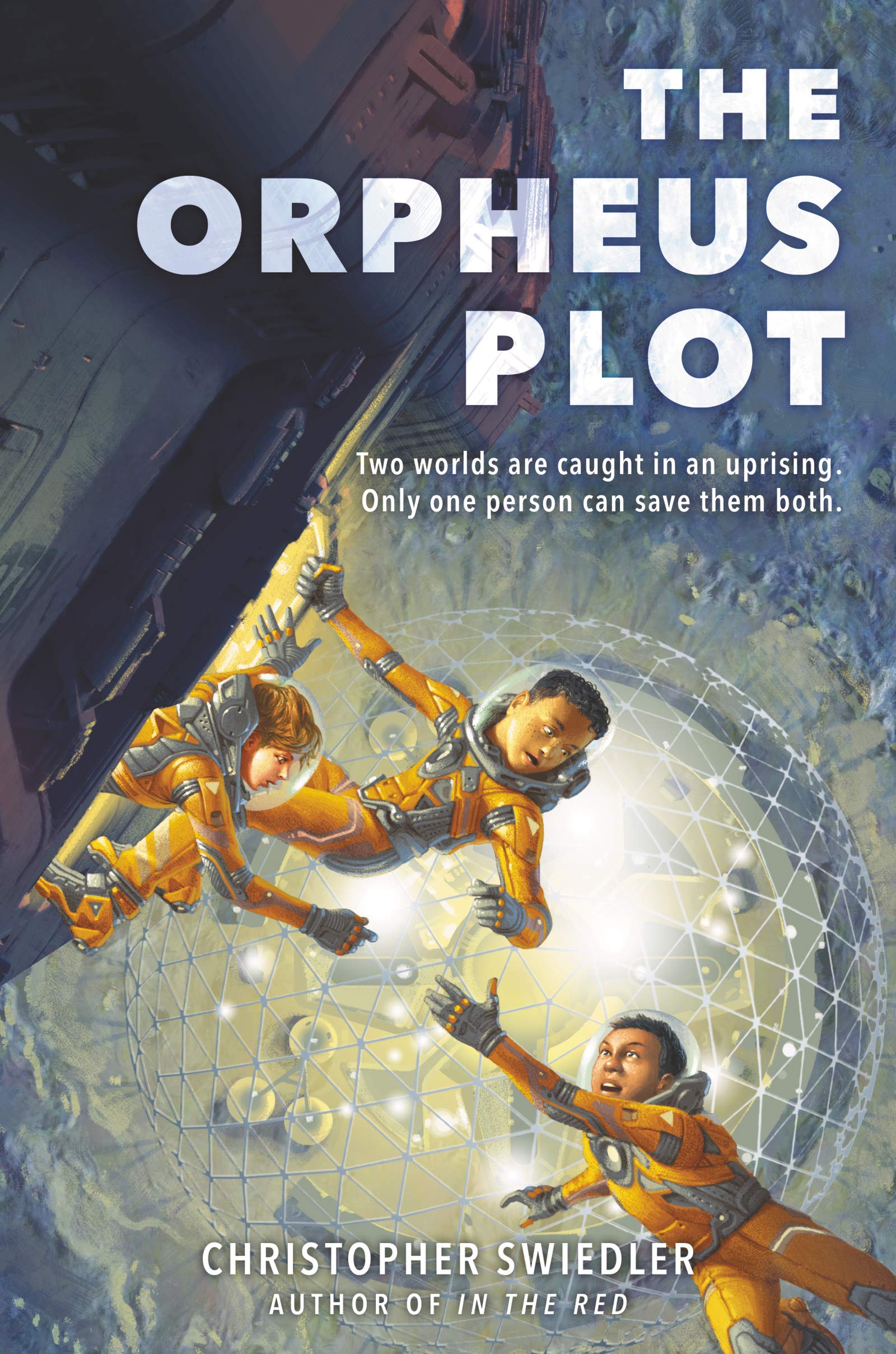
The Orpheus Plot, by Christopher Swiedler

The Orpheus Plot is fun, and an excellent comp title for Bury’em Deep. Its dramatic arc has a similar structure, it has good kid vs adult conflict, and it digs into some moral quandaries. Even better, it’s all about a young teen coming into his own through his larger struggles against the powers that would control him and his world. It’s more than that, too, but those are parallels enough for me to know that I should reference this book. That fact that it’s also space-adventure MG sci-fi, vanishingly rare, is just icing on the cake.

The biggest reservation I had with In The Red is resolved here; The Orpheus Plot clearly digs into the social questions and issues of its setting, rather than more or less pretending those things don’t exist. I’m glad it does. I can see how In The Red’s narrator might not have been aware of those larger struggles, but I think The Orpheus Plot is more interesting and more rewarding for focusing so much on the societal struggles of Inner System-vs-Belter politics and the struggles of life in the Belt in general.

Now, because of how similar our stories are (and because I do actually think both my story and Swiedler’s are good) most of my quibbles about this book are smaller scale and more personal. If you want middle grade space sci-fi I can already tell you to pick this up. If you want me to pry a little deeper, keep reading.

First, a few thoughts about some of the emotional arcs.

Some of the emotional resolution later on felt a little rushed or unexpected. There were hints of social and emotional arcs that had outgrown the established material without enough support in place for their final end points—mostly in the narrator’s interactions with other students towards the end. And there were a few places as the climax rolled on where it felt like a scene or interaction happened because it needed to be in the story and the main character needed that push, rather than because the story world led us there… just normal issues, spots where I felt like I could see the seams that revealed the story’s artifice. Also, those interactions are classic genre tropes, and they don’t feel out of place so much as they feel noticeable.

Now, a bigger difference between The Orpheus Plot and Bury’em Deep: I think Christopher Swiedler has more positive opinions of hegemony, authority, and the system than I do. That, or he’s less willing to question such things in fiction for middle grade readers.

Relatedly, there are some ways in which Swiedler’s space-future feels remarkably staid. There isn’t much queerness (I think I recall one mention of a non-het couple?), and neither the hegemonic center nor the frontier fringe have much visible divergence from our own social norms. That feels odd.

Historically speaking, divergence from shared social norms increases with time and distance. “The past is a foreign country,” to quote L.P. Hartley. People telling stories about the past usually put considerable effort into rewriting, recontextualizing, and even obscuring pieces of the past in order to make history match the author’s social standards, preferring to highlight the places where things are still the same (and make up commonalities where they need more). Many Westerns are an excellent example of that, ignoring the queer, non-traditional, and racially intermixed communities that developed on the frontier of the expanding US in favor of writing about strong independent straight white men.

But the future is a foreign country too. I wanted more of a departure from our own ideas of how society works, more ‘foreign-but-recognizable’ social conventions. The Orpheus Plot clearly has some, and highlights the differences between Belters and Inner System folks, but I wanted more of them. I wanted to know that there were “total weirdos” out there somewhere, and I wanted to feel more confident that life as we know it feels totally foreign to our narrator—that, from our narrator’s perspective, we readers would be uncannily different.

But I think the key to this, the reason this story feels more staid or in line with authority, comes back to the stories it most reminds me of. This story’s narrative arc reminds me of Treasure Island, or a reimagining of something from C. S. Forester’s Hornblower or Patrick O’Brien’s series. And whatever issues this story might raise with authority (the Navy, Inner System-dominated politics, etc) those authorities are still presented as less-bad than the alternative.

I’ll go into further detail, but there’ll be some *SPOILERS*.

So, this story is more than a modernization of those old Age of Sail adventure stories. But while we’re exposed to the ways in which the system is clearly bad for Belters, and we’re given a sympathetic view of Belters’ complaints, the story’s key revolutionaries are never painted with anything but a villainous brush. Heck, the big villain—leading the revolution—is almost comically evil, engaging in some really tropey, mustache-twirling bad stuff. And we never see enough of his side of things, or hear enough about his story, for those actions to feel anything but melodramatic. Moreover, he’s enough of a scumbag the rest of the time that it’s easy to ignore the validity of his larger complaints. No matter how much sense some of his complaints might make, and no matter how the narrator might pointedly agree at times, he’s still obviously bad rather than complicated.

It’s okay to have bad guys in your stories. But I wanted there to be more complication to the central conflict, rather than having the most sympathetic revolutionary (not that main baddie) feel more like a less-charming Long John Silver. 

Part of the struggle here is just time and focus in the book, I think. That less-charming Long John Silver, a Navy crewmate involved in the lower decks’ conspiracy with the revolutionary Belters, never quite has enough narrative focus to become a helpful replacement parental figure. Without that narrative focus, without the warm fuzzies of a friendly older ally on the ship, we (and the narrator) don’t quite feel close enough to him to wonder why he makes the choices he does. That means that even when he offers us a little more moral complexity near the end of the story, it doesn’t carry as much narrative weight as it could have, had there been more connection there.

Plus, our narrator is so concerned with making it in the Navy and not rocking the boat that we never get as much honest reflection on how the Navy isn’t doing well by the Belters. There’s a brief scene where that becomes relevant, but it’s not in the forefront enough of the time, the way it’d need to be if the story were really digging into the oppression experienced by the Belters. Honestly, I’m not sure how the story would have worked if that had been written differently. I suspect the book would have had to be longer. *END SPOILERS*

Anyway.

I don’t know that I did a better job (in Bury’em Deep) with any of the issues I’m critiquing in The Orpheus Plot. But I think interrogating those points, poking the issues and digging deeper, is really important. And maybe, I hope, doing that in fiction for kids will invite their further reflection.

The Orpheus Plot is good space adventure fun. If that’s what you’re hankering for, do yourself a favor and pick it up.

Update, 3/17/22

Today’s been an odd one. I’ve been productive on other projects, but without a specific book or game lined up to review, I’m at a bit of a loss here.

I’m partway through two books, Teen Killers Club by Lily Sparks, and The Orpheus Plot by Christopher Swiedler. The Orpheus Plot is another middle grade sci-fi book in the same setting as In The Red, this time with slightly more focus on politics and intrigue (a Belter kid wants to join the space navy, which is almost entirely composed of people from Earth, Mars, and the Moon). It does some of the things I’d wanted to see from In The Red, dealing a bit more with the social expectations of people in this setting and how that creates and influences political conflict, so that’s a plus. I’m about halfway through; I’m enjoying it, and I won’t render any verdict yet.

Teen Killers Club caught my attention for being a potential comp title for one of my friend’s YA projects. I’m about a quarter of my way through that one, so I have even less to go on, but at the moment I’d call it a fusion of Holes, Suicide Squad, and the surge in fiction about serial killers from a couple years back. It feels like one-part thriller, one-part mystery, one-part teen camp drama, and it ate a good deal of my time earlier this week and stopped me dead in my tracks in the middle of The Orpheus Project. I’m enjoying it so far.

I’m also rereading Naomi Novik’s socialist-Harry-Potter-but-different The Last Graduate, this time out loud to my partner. They’ve been loving these books (they insisted that I start this one the day after I finished reading the first book, A Deadly Education, to them). That’s good, because I love them too. But I’m not able to read multiple chapters a day because by the time I start reading it’s usually already late. So there’s been an amusing and agonizing dance of trying to find places where I can stop each evening that will both keep them hooked and give them enough breathing room to actually be okay with stopping. The first has been much easier than the second.

Edit: I realized while writing this that I never reviewed The Last Graduate here. I’ll have to rectify that.

I, like several friends of mine, have picked up Vampire Survivors. It’s not an especially complex game, but it does a stunningly good job of catching my attention and holding it. Compulsive. That’s what I’d call it. Usually that’s not a quality I want in a game, but I used it to distract myself from some unwanted thoughts earlier today and that seemed to work pretty well. Maybe not the healthiest solution, but quick and effective at the time.

With a little luck, next week I’ll have finished one of those books and be ready to share my thoughts on it with you.