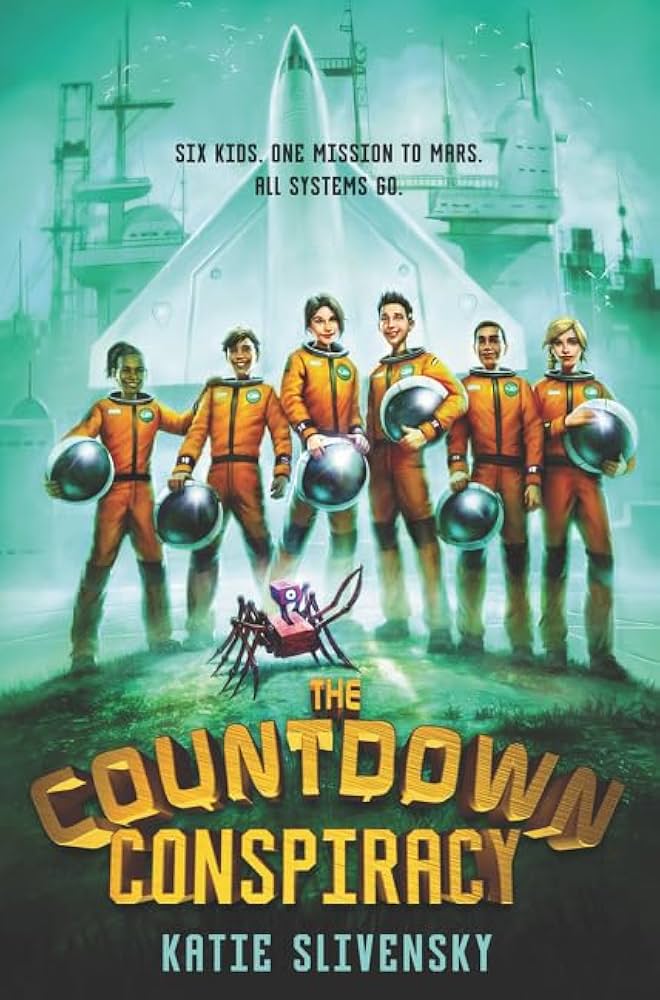
Katie Slivensky’s The Countdown Conspiracy is an upper middle grade adventure story all about six young astronaut candidates preparing for an international mission to Mars. Set on a near-future Earth still recovering from a global war fought over asteroid-mining rights, the story begins with a captivating slow burn and piles of intrigue. The Countdown Conspiracy builds from there to high stakes thrills and a satisfying, ever-escalating race towards the conclusion. I really liked it. A lot.
I’ve fallen off the querying-wagon again, but this book has revived my excitement and renewed my hope. Surely if people enjoy this they’d enjoy Bury’em Deep.
Dandadan is a lot. Episode one made me nervous. It also caught my attention. I stuck with the show, and now episode seven has made me cry big, heartfelt tears.
This show is not what I expected. It frequently has an extremely middle school-ish feel, yet it has also sent me on an emotional rollercoaster. It’s goofy and weird, with an upbeat and sometimes jarring energy. While it is written about (and presumably for) young teens, it feels less siloed in its gender appeal than many other shows I’ve seen aimed at a similar age range.
This show is definitely not for everyone, but… I really like it. Let me tell you why.
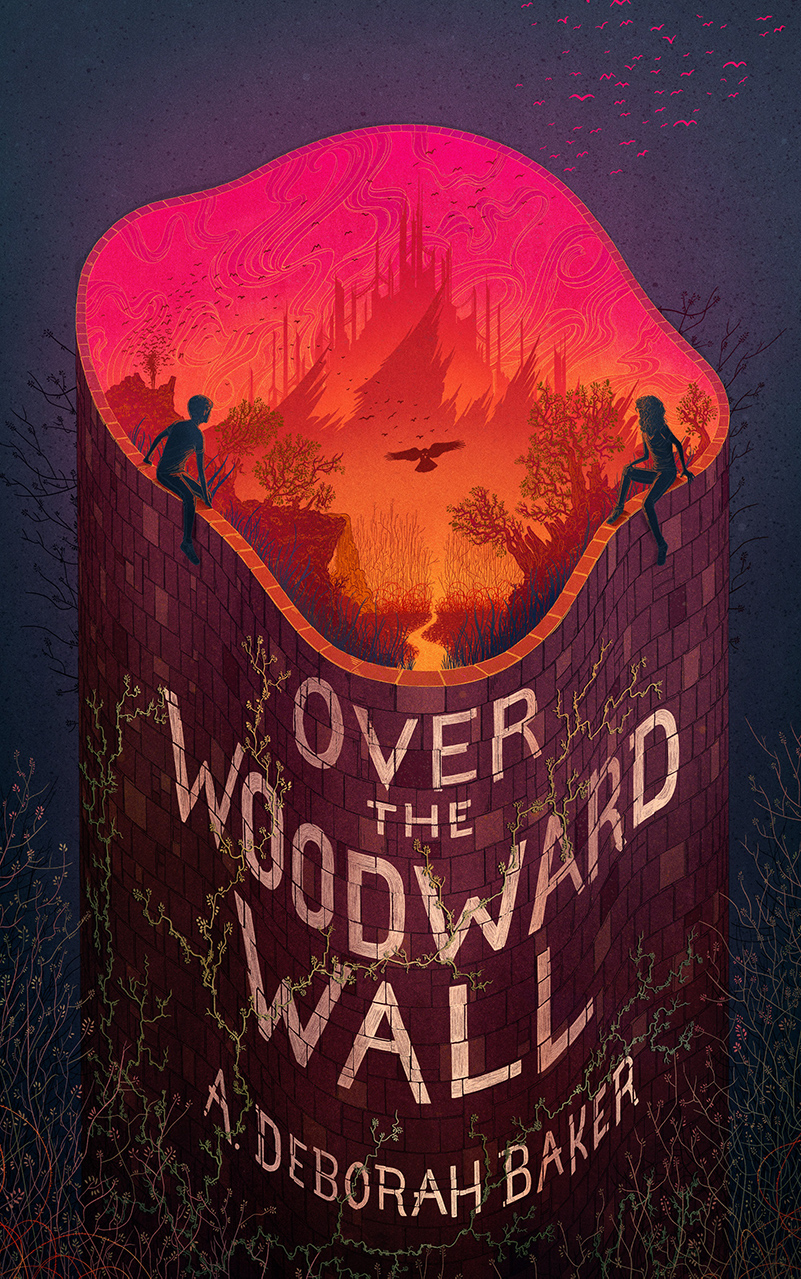
Over the Woodward Wall (written by Seanan McGuire under her pen name A. Deborah Baker) is the first in a series of middle grade adventure stories in a mixed up sometimes-lovely sometimes-scary fairytale land. In many ways, it evokes Alice’s Adventures in Wonderland. The setting’s surreality contrasts perfectly with the very real-feeling children who are this story’s stars, and the book does an excellent job of conveying earnestly true human experiences and life lessons while taking us on a dreamy-and-nightmarish impossible (sorry, I mean improbable) journey.
This should be a guaranteed home run for me. However, my fondness for this book ebbs and flows, a cycle driven by my mixed opinions about the narrator. It is my fondness that shifts though—I like it, I just like it by varying amounts depending on my mood. So what do I simultaneously admire and want to complain about?
The 5e alignment system is a useful shorthand and a misleading trap. The Outer Planes as presented in the 2014 Player’s Handbook and Dungeon Master’s Guide only make the alignment system’s problems worse. The perfect overlap between alignments and planes—and the total lack of alternative Outer Planes—reinforces the alignment system’s worst inclinations: easy stereotyping, reductionist thinking, and a restriction of creative possibilities.
In so many ways this made me think of something from Hayao Miyazaki. There’s a certain blend of wonder and fright within a gradually accelerating story that feels so distinctively Miyazaki-esque to me. This story captures that.
It has the meditative pacing. It has the gentleness over slowly growing undertones of threat that I associate with Studio Ghibli’s work. And it has Ogma, a classic Miyazaki-heroine; as the pressure mounts and Ogma’s world slips out from under her feet, her understanding of the world is transformed while her stubborn and hopeful nature remains.
Like I said, Fog & Fireflies feels extremely Miyazaki. I think it would thrive as a Studio Ghibli creation.
This doesn’t surprise me, as I’ve known T.H. Lehnen for years. We’ve been friends since we were in college and have played many hours of roleplaying games together, particularly Call of Cthulhu. I can see some of the horror that I know T.H. Lehnen enjoys creeping around inside this story. It’s that horror which I think completes the Miyazaki comparison.
This show suffers greatly from my expectations. If I’d never seen the animated show, I’d be more excited about this live action version. I also just rewatched some of the animated A:TLA because I feared that my memories of it might have been too fond, and…
I love fantasy strategy games. I’ve played piles of them. That includes most of the Age of Wonders series, Master of Magic (the original and the new version), Warlock, Fallen Enchantress, Heroes of Might and Magic 1 through 5, and more. But Dominions outshines those games in multiple ways.
If you’re already someone who plays the Dominions games, you’ll have heard about Dominions 6 and you’ll (probably) already have it—or you’re waiting for the right moment to buy it. I’m more interested in those of you who haven’t played Dominions.
The last time I wrote at length about a Dominions game was a decade ago (damn), for Dominions 3. I said around then that I feared falling into the game, feared losing myself in its intricacies. That fear was appropriate. But I also wrote about the lure of a game that offered such stories—can my demon monkey kingdom raise enough hordes of undead and bleed the land dry fast enough to destroy the other would-be godly tyrants?—and I was right about that too. Dominions 6 isn’t accessible in the same way that I’d want if I were introducing novices to strategy games, but if you’re willing to dig into this game it will scratch itches that other games could never satisfy.
Check out a game that will let you turn your warriors’ skin to tree bark, throw fireballs, hunt the minds of enemy mages, accelerate time so that the whole world withers and dies, and steal the sun.
I reviewed The Three Musketeers: D’artagnan recently, but I only realized I hadn’t yet reviewed it because I was deep in the process of creating a T3M inspired setting for an RPG. I knew I wanted the intrigue, the swordplay, the ambition, and the thrill of being small players discovering a much larger political game. So I hunted for and pulled out the themes that felt crucial to T3M’s fun, trying to find ways to create a setting that would evoke those while also incorporating the elements my players contributed.
Vast is admirably ambitious. It’s designed for up to five interlocking, competing, asymmetrical roles that all fit together beautifully to make this boardgame a nail-biting, neck-and-neck race toward victory. With a few important caveats, each player has their own rules reference sheet for their role, encompassing everything they could need to know in order to play the game. And with another few important caveats, everything can flow smoothly as each player chases their own victory conditions, pushing the game onward towards a thrilling conclusion.